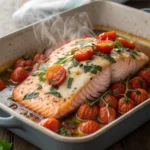
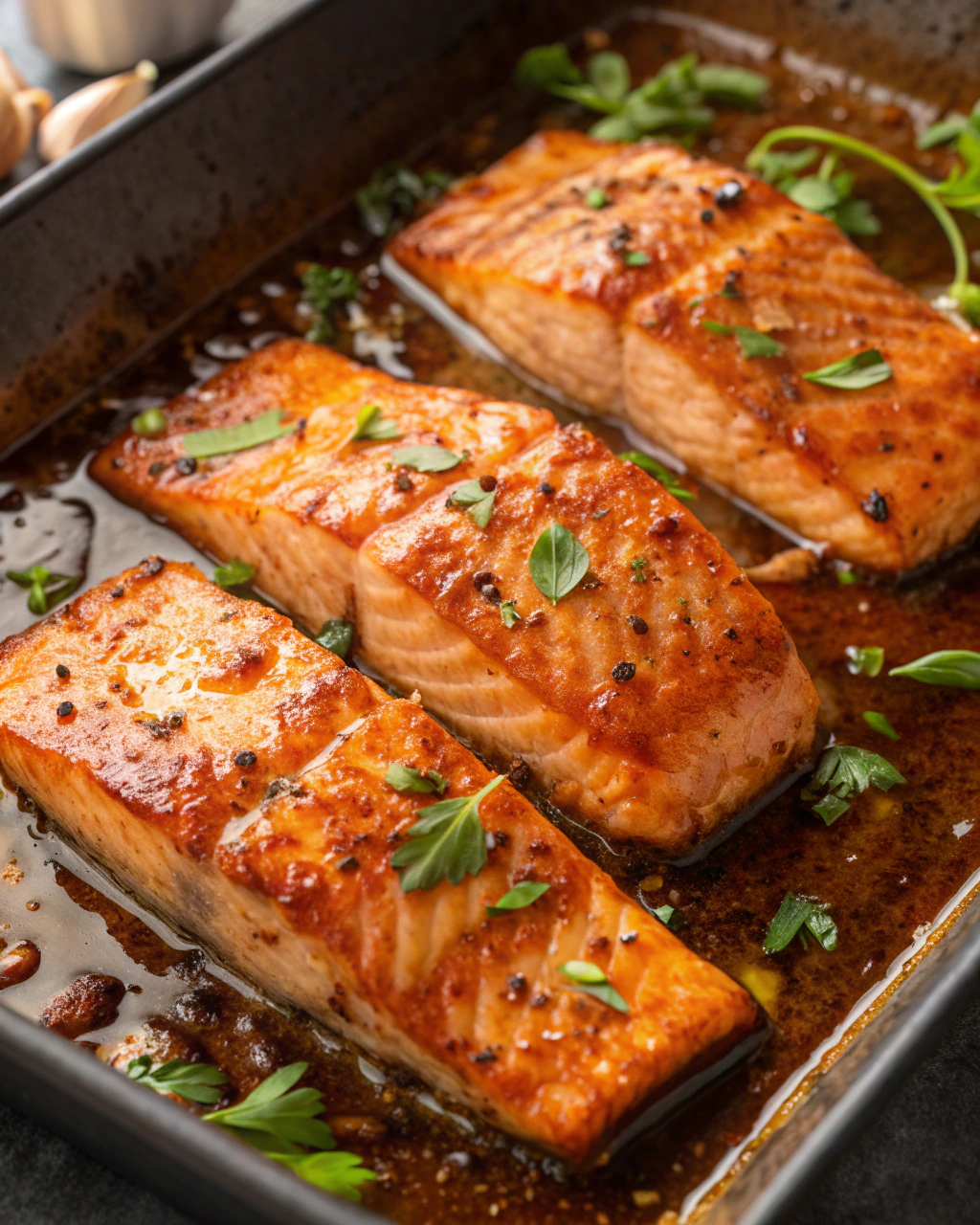
Okay, imagine this: I open the fridge, and a jar of honey winks at me like it has a secret. Salmon fillets? Check. Garlic? Always. I throw on an apron that still smells faintly of last week’s garlic bread and decide dinner will be glorious. This honey garlic glazed salmon recipe lives in my weeknight rotation because it takes the panic out of cooking fish and replaces it with sticky, savory-sweet goodness. The kitchen hums, the pan sizzles, and within 20 minutes I get a dinner that looks restaurant-level but tastes like something I actually baked into my memory. If you like glossy glazes and a bit of char around the edges, you’ll love this one.
Quick Facts
- Yield: Serves 4
- Prep Time: 10 minutes
- Cook Time: 12 minutes
- Total Time: 22 minutes
Why This Recipe is Awesome
This recipe hits that sweet spot between fast and showy. The glaze caramelizes into a shiny, slightly sticky coating while the salmon stays tender and flaky. It smells like a honey-garlic dream, offers a crispy edge if you sear it right, and finishes with a bright squeeze of lemon that wakes up every bite. It’s so easy even your oven can’t mess it up — and yet it looks like you actually planned ahead.
Ingredients
For the Main Dish:
- 1.5 pounds salmon fillets, skin on, about 4 pieces (6 oz each)
- Salt and freshly ground black pepper, to taste
- 1 tbsp olive oil
- 2 tbsp butter (or use oil — see FAQ)
- 2 cloves garlic, minced (about 2 tsp)
- 1/4 cup honey
- 2 tbsp low-sodium soy sauce (or coconut aminos for gluten-free)
- 1 tbsp rice vinegar or apple cider vinegar
- 1 tsp cornstarch mixed with 1 tbsp water (optional, for thicker glaze)
- 1 lemon, cut into wedges
- 2 green onions, thinly sliced, for garnish
- Sesame seeds, optional, for garnish
For the Sauce / Garnish (if applicable):
- Extra honey or soy for drizzling, and extra lemon wedges for serving.
How I Make It
Step 1:
I pat the salmon dry with paper towels and season both sides with a little salt and pepper. Dry fish sears better, so don’t skip this step. Meanwhile I whisk together honey, soy sauce, and rice vinegar in a small bowl. The mixture smells sweet and bright — like a promise.
Step 2:
I heat a large nonstick or stainless steel skillet over medium-high heat and add 1 tbsp olive oil and 2 tbsp butter. When the fat shimmers and gives a happy sizzle, I place the fillets skin-side down. Listen for that satisfying sizzle — that sound means brown, flavorful edges are on their way. Press gently for 10 seconds so the skin makes good contact.
Step 3:
After about 4–5 minutes, when the skin turns crisp and the sides of the fillets look cooked about two-thirds of the way up, I flip them. They should release easily if they have a good sear. Add the minced garlic to the pan and let it bloom for 20–30 seconds until fragrant, but watch it so it doesn’t burn. Pour the honey-soy mixture around the fillets and tilt the pan so the glaze kisses every piece.
Step 4:
Turn the heat down to medium-low and spoon the glaze over the fish as it cooks, about 2–4 minutes more depending on thickness. If you want a thicker glaze, whisk the cornstarch slurry into the sauce and cook until the glaze coats the back of a spoon. Watch the glaze caramelize and turn a deep golden color — it smells like toasted sugar and soy. For a slightly rare center, aim for an internal temp near 125–130°F; for fully cooked, heat to 145°F. I usually go for that tender, slightly rosy center.
Step 5:
Remove the fillets from the pan and rest them for 2–3 minutes. Spoon any remaining glaze over the top, sprinkle with sliced green onions and sesame seeds, and serve with lemon wedges. The skin stays crisp, the flesh stays juicy, and the glaze gives a glossy, irresistible finish.
Pro Tips
- Use room-temperature salmon for even cooking; it sears more predictably than cold fish.
- If your glaze starts to burn, lower the heat and add a splash of water or extra vinegar to loosen it.
- For extra crunch, finish fillets under a hot broiler for 30–60 seconds—watch closely!
- Don’t overcrowd the pan; cook in batches if needed so each fillet gets that perfect sear.
Common Mistakes to Avoid
- Skipping preheating: Classic rookie move. It changes texture and bake time.
- Overmixing: Leads to dense or chewy results. Mix until just combined.
- Guessing cook time: Always use visual cues or a timer, not just vibes.
- Overcrowding pans: Give your food some breathing room to crisp properly.
Alternatives & Substitutions
- No soy sauce? Use tamari or coconut aminos for a gluten-free option; expect slightly different saltiness.
- Swap honey for maple syrup or agave; maple adds a woody sweetness.
- Replace salmon with firm tofu or chicken thighs — tofu will absorb the glaze, chicken needs longer cooking time.
- Make it dairy-free: skip the butter and use all olive oil or a neutral oil.
Variations & Tips
- Spicy: Add 1 tsp sriracha or 1/2 tsp red pepper flakes to the glaze for a kick.
- Citrus-herb: Stir in 1 tbsp orange juice and a handful of chopped cilantro for brightness.
- Asian sesame: Use toasted sesame oil (1 tsp) and finish with lots of sesame seeds.
- Kid-friendly: Reduce soy and skip the vinegar for a milder, sweeter glaze.
- Smokehouse twist: Add a pinch of smoked paprika to the glaze for a smoky note.
- Creamy side: Serve over mashed cauliflower or buttered rice for an indulgent plate.
FAQ (Frequently Asked Questions)
- Can I make this ahead of time?
- Yes! You can make the glaze and store it in the fridge for up to 3 days. Cook the salmon just before serving for the best texture. Reheat gently in a 300°F oven for 5–8 minutes covered with foil so it doesn’t dry out.
- Can I double the recipe?
- Sure thing. Use a larger pan or cook in two batches to avoid overcrowding. The glaze quantities scale linearly; keep an eye on cook times if your pan gets crowded.
- Can I substitute butter with oil?
- Technically yes, but you’ll miss that buttery magic. Use ¾ the amount of oil (so 1½ tbsp) and finish with a tiny pat of butter if you want that flavor without the extra smoke point issues.
- How do I know it’s done?
- Look for flaking at the thickest part and a glossy, slightly firm texture. The center should feel springy. If you use a thermometer, 125–130°F gives a tender, medium result; 145°F gives a fully cooked fillet.
- What if I don’t have ingredient X?
- No soy sauce? Use tamari or extra salt. Out of honey? Swap maple syrup or even brown sugar in a pinch; the flavor will change slightly but stay delicious.
How I Like to Serve It
I love serving this salmon over a pile of buttery jasmine rice with steamed broccoli or a crunchy slaw on the side. A chilled glass of dry white wine or a crisp lager complements the sweet-savory glaze. It also works great as a casual lunch on mixed greens the next day. It fits weeknights, date nights, and last-minute guests with equal charm.
Notes
- Store leftovers in an airtight container in the fridge for up to 2 days. Reheat gently to avoid drying out.
- Food safety: the USDA recommends cooking fish to 145°F, though many cooks prefer 125–130°F for a moist, slightly pink center.
Final Thoughts
Closing: Go on — make this honey garlic salmon tonight and enjoy the soundtrack of your pan sizzling, the smell of caramelized glaze, and the proud feeling of dinner pulled off with flair. Now go impress someone — or just yourself — with your homemade masterpiece!

Hi, I’m Lina, the creator of Lina Easy Recipes.Cooking has always been my passion, and I love sharing simple, homemade dishes that anyone can prepare.
Love What You See?
Join me on Pinterest and Facebook for daily cooking inspiration, new recipe ideas, and behind-the-scenes kitchen stories. Let’s cook something wonderful together!