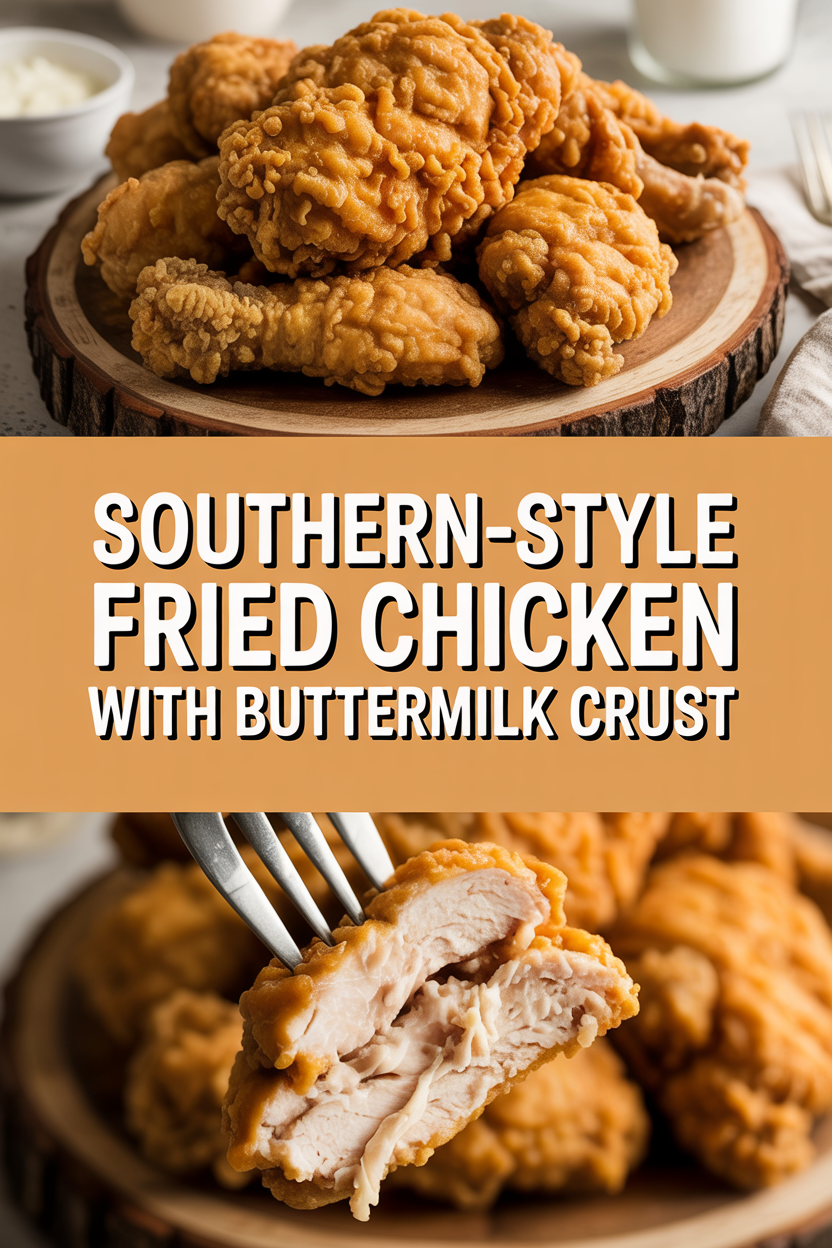
Southern-style fried chicken with buttermilk crust
Spread the love
Some of my happiest nights involve a skillet, a radio playing low, and the smell of frying chicken that makes the whole house feel like a hug. I learned this recipe from my aunt — she never measured much, just smiled and said “a little of this, a little of that,” but the secret was always the tang of the buttermilk and the crunch that sings when you bite it. I like to make a big batch on a slow Sunday, let the neighbors wonder what smells so good, and then eat the first piece still steaming, skin crackly, meat tender and juicy. If comfort food had a mascot, this would be it.
Quick Facts
Yield: Serves 4–6
Prep Time: 20 minutes (plus 8 hours marinating)
Cook Time: 25–30 minutes
Total Time: 45–50 minutes (plus 8 hours marinating)
Why This Recipe is Awesome
This Southern-style fried chicken gives you a crunchy, golden crust and a pillowy, juicy interior every time. The buttermilk tang tenderizes the meat while the flour-and-cornstarch dredge creates a crust that crackles when you bite it. It tastes classic, looks impressive, and smells like the best kind of indulgence. Seriously, who doesn’t love crispy edges and a juicy center? Plus, it’s forgiving — little missteps won’t ruin the whole batch.
Vegetable oil or peanut oil, about 4 cups for frying
2 tbsp melted butter (optional — brush for glossy finish)
For the Sauce / Garnish (if applicable):
Honey or hot honey for drizzling
Chopped parsley and lemon wedges
How I Make It
Step 1:
I start by seasoning the chicken lightly and dropping it into a bowl with 2 cups buttermilk, 1 tbsp kosher salt, and 1–2 tbsp hot sauce if I want a little kick. I stir until every piece gets a milky coating. Then I cover and refrigerate for at least 8 hours — overnight usually. The buttermilk tang tenderizes the meat and gives the crust something to cling to. If you forget to marinate overnight, give it at least 30–60 minutes; it still helps.
Step 2:
When I’m ready to fry, I whisk together 2 cups flour and 1/2 cup cornstarch with the spices: 2 tsp paprika, 1 tsp garlic powder, 1 tsp onion powder, 1 tsp black pepper, and 1/2 tsp cayenne if you like heat. I use a shallow dish so each piece gets a good dredge. Tip: shake off excess marinade, then press the chicken into the flour mix so the crust adheres — don’t be shy about a gentle pat.
Step 3:
I pour oil into a heavy skillet or Dutch oven to a depth of about 1–1.5 inches and heat to 350°F on a candy or deep-fry thermometer. You’ll smell a faint toasty aroma when the oil is ready. I fry in batches so the oil temperature stays steady; overcrowding makes chicken soggy. Cook for about 12–15 minutes per batch, turning once or twice so the crust browns evenly. Listen for that steady sizzle — it means the crust forms properly.
Step 4:
I check doneness with an instant-read thermometer — the chicken reads 165°F near the bone when it’s done. Look for a deep golden color, crisp edges, and juices that run clear. If pieces brown too fast, I drop the heat a touch so the inside finishes without burning the crust. If the crust takes on a dark color too quickly, reduce the heat by 25°F and continue cooking.
Step 5:
I transfer finished pieces to a wire rack set over a baking sheet to rest for 5–10 minutes; resting keeps the juices from running out and the crust stays crisp. If I want a little glossy, buttery finish, I brush each piece with 2 tbsp melted butter and sprinkle with flaky salt. Serve with lemon wedges and honey for drizzling if you like sweet-and-salty. I always let the kitchen smell linger a little before guests arrive — it builds anticipation.
Pro Tips
Fry at a steady 350°F. Keep a thermometer in the oil and adjust the heat to maintain it.
Rest chicken on a wire rack, not paper towels. The rack preserves crispness and avoids steam-sogginess.
Use cornstarch in the dredge for extra crunch; it gives a light, glassy crust.
Check internal temp at the thickest part near the bone — aim for 165°F.
Common Mistakes to Avoid
Skipping preheating: Classic rookie move. It changes texture and bake time.
Overmixing: Leads to dense or chewy results. Mix until just combined.
Guessing cook time: Always use visual cues or a timer, not just vibes.
Overcrowding pans: Give your food some breathing room to crisp properly.
Alternatives & Substitutions
For a gluten-free crust, swap in a 1:1 gluten-free flour blend and use cornstarch; expect a slightly different crunch.
For dairy-free buttermilk, stir 2 tbsp lemon juice or white vinegar into 2 cups unsweetened almond or soy milk and let sit 5 minutes.
If you prefer boneless, use chicken thighs or breasts cut into large pieces; reduce fry time to 6–9 minutes depending on size.
Replace some flour with finely ground cornmeal for a more cornmeal-forward, slightly gritty texture.
Variations & Tips
Make it spicy: add 1 tsp cayenne or 2 tbsp hot sauce to the buttermilk and increase cayenne in the dredge.
Kid-friendly: omit cayenne and serve with ketchup or honey mustard for dipping.
Herbed crust: add 1 tbsp chopped fresh thyme and rosemary to the flour mix.
Oven-finish: after browning in oil, bake at 375°F for 8–10 minutes to ensure doneness while keeping crisp.
Southern twist: drizzle with hot honey (honey + hot sauce) right before serving for that sweet-heat contrast.
Vegetarian option: use thick tofu steaks marinated in seasoned plant-based “buttermilk,” dredged, and shallow-fried; texture changes but crunch stays.
FAQ (Frequently Asked Questions)
Can I make this ahead of time?
Yes! Marinate the chicken up to 24 hours ahead. Cooked chicken keeps in the fridge for 3–4 days. Reheat in a 400°F oven on a wire rack for 8–10 minutes to revive the crisp.
Can I double the recipe?
Sure thing. Fry in separate batches and keep finished pieces warm in a 225°F oven on a wire rack while you finish the rest. Don’t crowd the fryer — work in manageable batches.
Can I substitute butter with oil?
Technically yes, but you’ll miss that buttery magic. Use ¾ the amount of oil.
How do I know it’s done?
Look for deep golden-brown crust, crisp edges, and an internal temperature of 165°F. Juices should run clear when you pierce near the bone.
What if I don’t have ingredient X?
Swap paprika with smoked paprika for a smoky note, or use a pinch more garlic powder if you lack onion powder. For cornstarch, you can use potato starch or an extra 1/4 cup flour — the crust will differ slightly.
How I Like to Serve It
I serve this chicken with buttery mashed potatoes, quick vinegar slaw, and cold sweet tea for a classic spread. For a summer BBQ, I add corn on the cob and pickles. For weeknight comfort, I pile chicken on soft rolls with a swipe of mayo and a pickle; it turns dinner into instant bliss. It fits holidays, lazy Sundays, and any moment you need a crispy hug.
Notes
Store leftovers in an airtight container for up to 4 days. Reheat in a hot oven (400°F) on a wire rack to restore crispness.
Safe internal temp for chicken: 165°F — always check near the bone.
Final Thoughts
Closing: Go on — fry up a pan of this golden goodness and enjoy the crunchy music, the warm aroma, and those first glorious bites. Now go impress someone — or just yourself — with your homemade masterpiece!
Hi, I’m Lina, the creator of Lina Easy Recipes.Cooking has always been my passion, and I love sharing simple, homemade dishes that anyone can prepare.
Spread the love
Love What You See?
Join me on Pinterest and Facebook for daily cooking inspiration, new recipe ideas, and behind-the-scenes kitchen stories. Let’s cook something wonderful together!