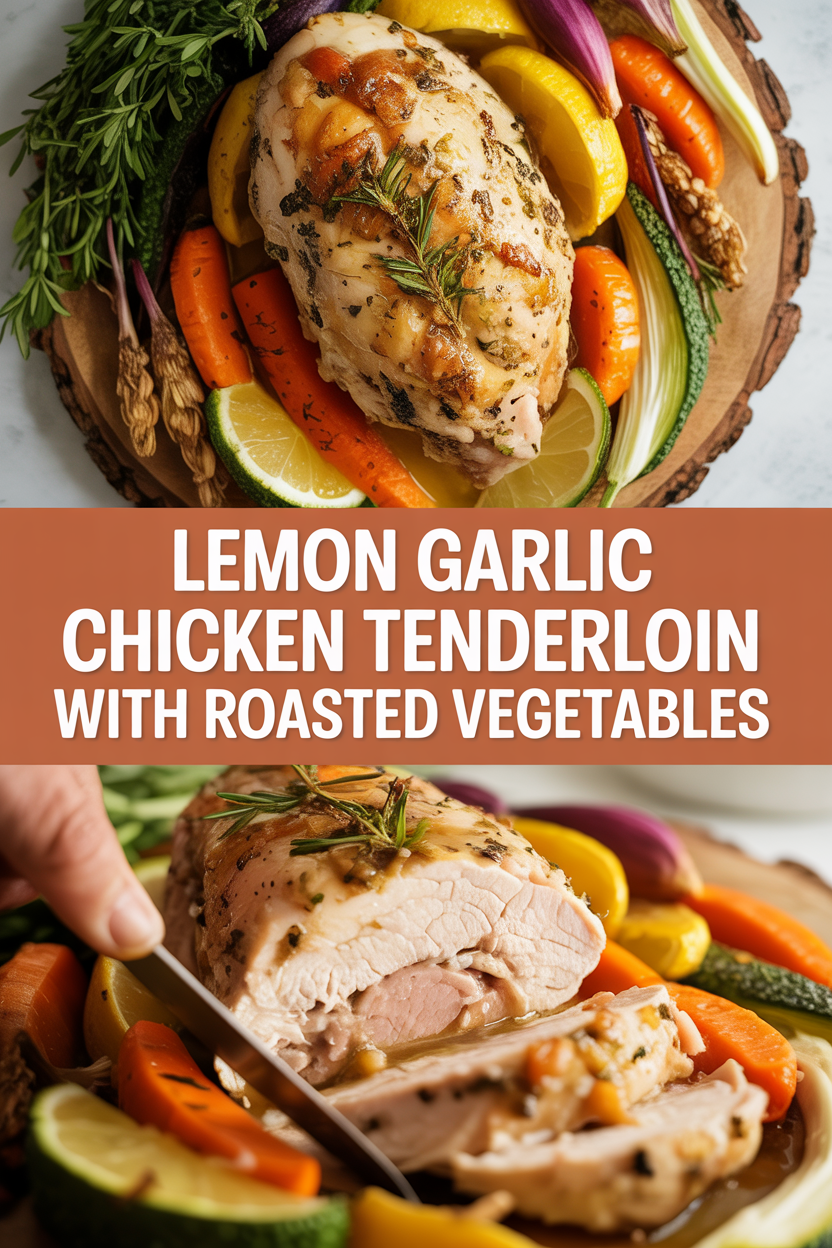
Lemon garlic chicken tenderloin with roasted vegetables
Spread the love
I’m about to let you in on a little chef’s secret I stole from a busy weeknight: a simple lemon-garlic marinade that turns humble chicken tenderloins into juicy, bright, slightly caramelized bites every single time. I learned it the hard way—after overcooking more than my fair share of protein—so I refined the marinade, the roast time, and the way I arrange vegetables so everything finishes at the same golden moment. This dish smells like sunshine and garlic, with a little crisp at the edges that makes you want to shout “dinner’s ready!” from the porch. If you want a reliably impressive meal with minimal fuss, this one’s your shortcut to dinner glory.
Quick Facts
Yield: Serves 4
Prep Time: 15 minutes
Cook Time:20–25 minutes
Total Time: 35–40 minutes
Why This Recipe is Awesome
It’s fast, fresh, and forgiving. The bright zing of lemon and the warm punch of garlic wake up the tender chicken, while the roasted veggies get sweet, caramelized edges. Texture plays nicely here: juicy centers meet crisp, golden edges. It’s so easy even your oven can’t mess it up—unless you crowd the pan (don’t do that). This meal screams weeknight hero but dresses up nicely for guests.
1 teaspoon dried oregano or 1 tablespoon fresh chopped
Salt and black pepper, to taste (about 1 teaspoon salt, ½ teaspoon pepper)
1 tablespoon butter (optional, for finish)
For the Roasted Vegetables:
1 pound baby potatoes, halved
2 cups baby carrots or chopped carrots
2 cups Brussels sprouts, halved (or use broccoli florets)
1 small red onion, cut into wedges
2 tablespoons olive oil
Salt and pepper
Fresh parsley, chopped, for garnish (optional)
How I Make It
Step 1:
I preheat the oven to 400°F and line a rimmed baking sheet with foil for easy cleanup. While the oven heats, I whisk together olive oil, minced garlic, lemon juice, zest, honey, Dijon, oregano, salt, and pepper in a bowl until glossy. The aroma of lemon and garlic hits me immediately—sharp and comforting at once.
Step 2:
I toss the halved potatoes and carrots with 1 tablespoon olive oil, a pinch of salt, and a few cracks of pepper, then spread them on one half of the baking sheet. I give Brussels sprouts and onion their own small toss with the remaining oil and nestle them on the other half. I make a little space for the chicken so everything heats evenly. Pro tip: smaller veggies cook faster, so cut big ones down.
Step 3:
I place the chicken tenderloins into the lemon-garlic mixture and stir so each piece shines with the marinade. I arrange the tenderloins on top of the veggies in a single layer—don’t overlap—so heat hits every edge. The kitchen fills with a bright, toasty scent as the garlic and lemon hit the hot pan.
Step 4:
I roast everything at 400°F for about 20–25 minutes, flipping the chicken once halfway if I remember (helps the edges brown evenly). Watch for golden edges and sticky-sweet spots on the vegetables; the sound of a gentle sizzle means caramelization. I check doneness by piercing a tenderloin—juices run clear and the meat feels springy—or by using an instant-read thermometer showing 165°F.
Step 5:
I pull the tray from the oven and drop the optional tablespoon of butter over the hot chicken so it melts into glossy pockets. I let everything rest for 5 minutes, sprinkle with fresh parsley, and squeeze another wedge of lemon on top. Then I serve straight from the sheet for casual charm or plate it neatly if I feel fancy.
Pro Tips
Pat the chicken tenderloins dry before marinating; dry meat browns better and gets those tasty edges.
If your veggies finish early, tent them loosely with foil to keep warm while the chicken reaches 165°F.
Use a thermometer for foolproof results—chicken reaches safety and peak juiciness at 165°F.
Want extra char? Broil for 1–2 minutes at the end, but watch closely so nothing burns.
Common Mistakes to Avoid
Skipping preheating: Classic rookie move. It changes texture and bake time.
Overmixing: Leads to dense or chewy results. Mix until just combined.
Guessing cook time: Always use visual cues or a timer, not just vibes.
Overcrowding pans: Give your food some breathing room to crisp properly.
Alternatives & Substitutions
Chicken ↔ Tofu: Swap chicken tenderloins for 1 pound extra-firm tofu, pressed and cut into strips. Toss in the same marinade and roast, but check sooner—tofu crisps faster.
Butter substitute: Use olive oil or a dairy-free butter to finish if you need dairy-free; the dish remains bright but loses that rich shine from butter.
Honey substitute: Use maple syrup or agave for a vegan option; the flavor shifts slightly sweeter and deeper.
Gluten-free: This recipe stays gluten-free by default—just double-check your Dijon.
Variations & Tips
Spicy: Add ½ teaspoon red pepper flakes to the marinade or a drizzle of sriracha before roasting.
Herby: Swap oregano for chopped rosemary and thyme for a woodsy twist.
Kid-friendly: Reduce lemon to 1 tablespoon and leave out red pepper flakes.
Sheet-pan dinner party: Add sliced apples and a sprinkle of rosemary for a fall-friendly version that impresses guests.
One-pan grain bowl: Serve over cooked quinoa or farro tossed with a little olive oil and lemon zest.
Creative twist: Finish with a splash of white wine or a tablespoon of capers for a briny punch.
FAQ (Frequently Asked Questions)
Can I make this ahead of time?
Yes! Marinate the chicken up to 4 hours in the fridge and chop the veggies ahead. Store separately and roast just before serving for best texture. Reheat gently in a 350°F oven so the chicken doesn’t dry out.
Can I double the recipe?
Sure thing. Use two baking sheets or roast in two batches to avoid overcrowding. Rotate sheets halfway through if your oven has hot spots.
Can I substitute butter with oil?
Technically yes, but you’ll miss that buttery magic. Use ¾ the amount of oil.
How do I know it’s done?
Look for golden, slightly crisp edges on both chicken and veggies, a juicy, tender center, and clear juices when pierced. Use an instant-read thermometer to confirm 165°F for chicken.
What if I don’t have ingredient X?
No problem. No lemon? Use 2 tablespoons white wine vinegar plus 1 teaspoon sugar. No Dijon? Just use a pinch of mustard powder or skip it—honey and garlic still carry plenty of flavor.
How I Like to Serve It
I usually serve this straight from the sheet with crusty bread to mop up juices and a crisp green salad. It feels perfect for weeknights—quick, colorful, and satisfying. For a weekend twist, pair it with a chilled Sauvignon Blanc or an easy rosé. It fits sunny spring dinners and cozy fall suppers alike.
Notes
Store leftovers in an airtight container for up to 3 days. Reheat gently at 350°F for 8–10 minutes or in a skillet with a splash of water to rehydrate.
Safe cooking temperature for chicken: 165°F.
Final Thoughts
Closing: Now go impress someone — or just yourself — with your homemade masterpiece!
Hi, I’m Lina, the creator of Lina Easy Recipes.Cooking has always been my passion, and I love sharing simple, homemade dishes that anyone can prepare.
Spread the love
Love What You See?
Join me on Pinterest and Facebook for daily cooking inspiration, new recipe ideas, and behind-the-scenes kitchen stories. Let’s cook something wonderful together!