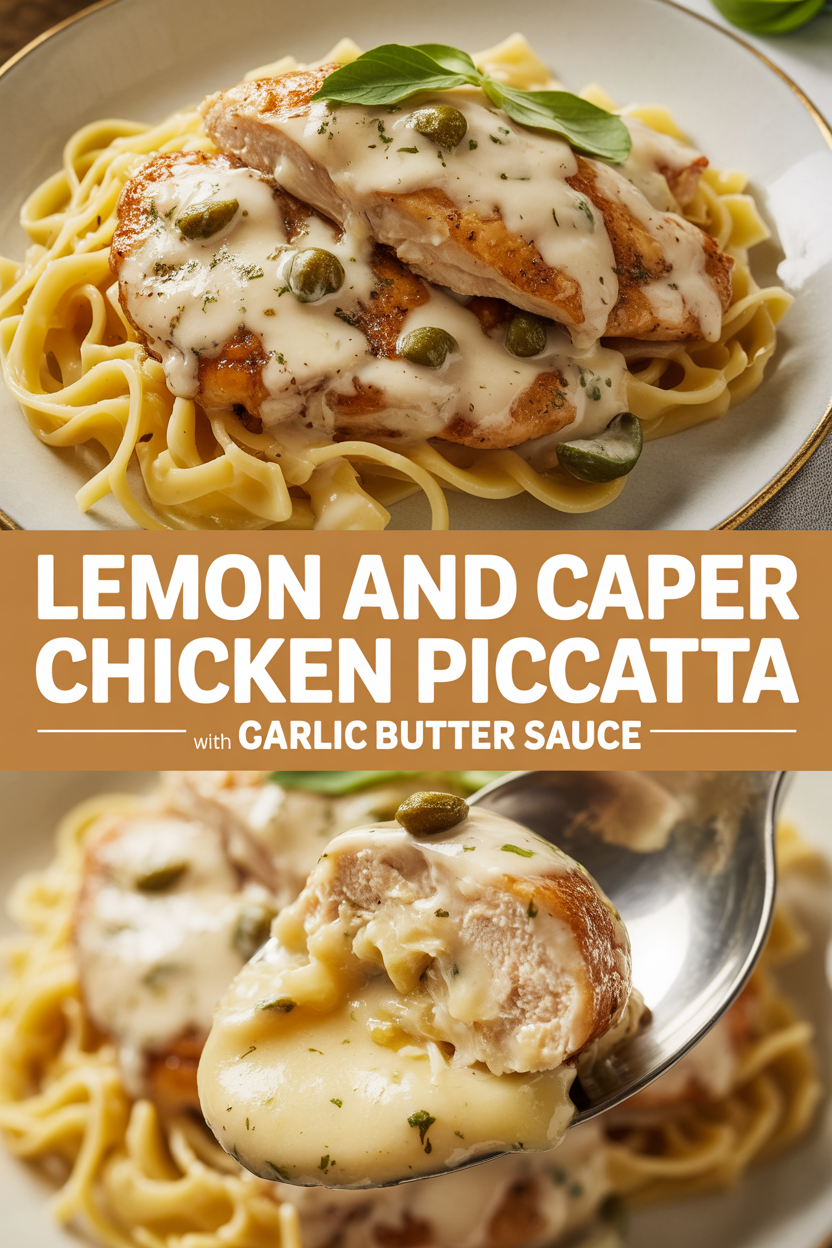
Chef’s Secret: I’ll spill a little kitchen witchery right up front — this piccata belongs in the “trust-me” file. I learned to press chicken thin, throw in a splash of wine, and finish with cold butter like a chef finishing a sauce, and suddenly something ordinary turns bright and luxurious. The first time I made it for guests, the garlic and lemon scent announced dinner down the block; people showed up early. Keep this recipe tucked in your back pocket for nights when you want dinner that feels fancy but takes under 30 minutes. I’ll walk you through the small tricks that make the sauce glossy, the chicken tender, and the capers sing.
Quick Facts
- Yield: Serves 2–3
- Prep Time: 15 minutes
- Cook Time: 15 minutes
- Total Time: 30 minutes
Why This Recipe is Awesome
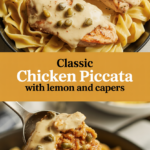
This Lemon and Caper Chicken Piccata tastes bright, buttery, and a little sassy — like sunshine on a plate. You get crisp, golden edges on thin chicken cutlets, a tangy, silky garlic-butter sauce, and pops of briny capers. It feels restaurant-level without a long ingredient list or fancy technique. It’s so easy even your oven can’t mess it up — and the kitchen fills with lemony steam that makes everyone hungry.
Ingredients
For the Main Dish:
- 1 lb boneless skinless chicken breasts (about 2 large; halve and pound thin)
- 1/2 cup all-purpose flour, for dredging (sub GF 1:1 if needed)
- 1 tsp kosher salt plus more to taste
- 1/2 tsp black pepper
- 2 tbsp olive oil
- 4 tbsp unsalted butter, divided
- 2 cloves garlic, minced
- 1/2 cup dry white wine (or extra chicken broth)
- 1/2 cup low-sodium chicken broth
- 3 tbsp fresh lemon juice (about 1 large lemon)
- 2 tbsp capers, drained
- 2 tbsp fresh parsley, chopped (for garnish)
- Lemon slices, for serving (optional)
For the Sauce / Garnish (if applicable):
- Optional: 2 tbsp heavy cream for a silkier sauce
How I Make It
Step 1:
Trim the chicken and slice each breast horizontally to make 4 cutlets. Lay each piece between two sheets of plastic wrap and pound to about 1/4 inch thick with a rolling pin or meat mallet — you want quick, even cooking. Season both sides with 1 tsp kosher salt and 1/2 tsp black pepper, then dredge quickly in 1/2 cup flour, shaking off excess. The flour gives you those irresistible golden edges.
Step 2:
Heat a large skillet over medium-high. Add 2 tbsp olive oil and 2 tbsp butter. When the butter foams and the pan smells warm and nutty, add the cutlets — don’t overcrowd; cook in batches. Let them sizzle undisturbed until the edges turn golden brown, about 3–4 minutes per side. Transfer cooked cutlets to a plate and tent loosely with foil.
Step 3:
Lower heat to medium, add remaining 2 tbsp butter and the minced garlic. Stir until fragrant — you’ll smell the garlic bloom and hear a soft hiss. Pour in 1/2 cup white wine and scrape the brown bits off the bottom with a wooden spoon; those bits carry flavor. Let the wine reduce by half, about 2 minutes.
Step 4:
Add 1/2 cup chicken broth, 3 tbsp lemon juice, and 2 tbsp capers. Simmer for another 2–3 minutes so the sauce thickens slightly and tastes concentrated. If you want a richer sauce, stir in 2 tbsp heavy cream now. Taste and adjust salt and lemon — balance makes this shine.
Step 5:
Return the chicken to the pan and spoon sauce over each piece for a minute to reheat and marry flavors. Finish by swirling in a small pat of cold butter if you like extra gloss. Sprinkle with 2 tbsp chopped parsley and serve with lemon slices. You want hot chicken, glossy sauce, and bright citrus aroma when you plate.
Pro Tips
- Pound the chicken evenly for fast, juicy cooking; thin cutlets cook in minutes and stay tender.
- Use a mix of butter and oil so the butter browns without burning — olive oil raises the smoke point.
- Don’t skip scraping the brown bits; they give the sauce depth of flavor.
- If you don’t have wine, swap with extra chicken broth plus 1 tsp white wine vinegar for acidity.
Common Mistakes to Avoid
- Skipping preheating: Classic rookie move. It changes texture and bake time.
- Overmixing: Leads to dense or chewy results. Mix until just combined.
- Guessing cook time: Always use visual cues or a timer, not just vibes.
- Overcrowding pans: Give your food some breathing room to crisp properly.
Alternatives & Substitutions
- Chicken ↔ Tofu: Use firm tofu, pressed and pounded, for a vegetarian swap. Expect a different texture and soak up sauce well.
- Flour: Use gluten-free 1:1 flour mix to keep dredging similar.
- Butter ↔ Oil: Use avocado or olive oil if dairy-free, but you’ll miss that buttery magic. Use about ¾ the amount of oil.
- Capers: Chopped green olives provide a similar briny hit if you’re out of capers.
Variations & Tips
- Spicy kick: Add a pinch of red pepper flakes to the garlic step for heat.
- Kid-friendly: Skip capers and add a little extra lemon zest instead of briny flavors.
- Herby: Stir in 1 tsp chopped thyme or rosemary for an earthy twist.
- Pasta piccata: Toss cooked spaghetti with the sauce and top with cutlets for a saucy one-pan meal.
- Creamy version: Add 2 tbsp heavy cream to mellow the lemon and make a silky sauce.
- Pan-roast: After searing, pop the pan in a 375°F oven for 5 minutes to finish if your cutlets run thick.
FAQ (Frequently Asked Questions)
- Can I make this ahead of time?
- Yes! Cook the sauce and chicken separately, refrigerate up to 2 days, and reheat gently on the stovetop. Add a splash of broth while reheating to revive the sauce and finish with a fresh squeeze of lemon before serving.
- Can I double the recipe?
- Sure thing. Use two pans or work in batches so you don’t overcrowd. Sauce quantities scale well; just taste and adjust lemon and salt at the end.
- Can I substitute butter with oil?
- Technically yes, but you’ll miss that buttery magic. Use ¾ the amount of oil and add a little extra acidity (a splash of lemon) to brighten the sauce.
- How do I know it’s done?
- Look for golden-browned edges and firm, slightly springy centers. Cut a small slit to check juices run clear, or use an instant-read thermometer — chicken reaches safe doneness at 165°F.
- What if I don’t have ingredient X?
- Out of capers? Try chopped green olives. No wine? Use extra broth plus a teaspoon of white wine vinegar. No fresh lemon? Use 2 tbsp bottled lemon juice and a little zest if available.
How I Like to Serve It
I love this with buttered angel hair pasta tossed in the sauce, a simple green salad, and crusty bread to sop up the lemony butter. On a weeknight, I pair it with roasted asparagus; for guests, I add garlicky mashed potatoes. It suits spring and summer with a chilled white wine, but it comforts in winter too — who doesn’t like bright flavors on a cold night?
Notes
- Store leftovers in an airtight container in the fridge up to 2 days. Reheat gently on the stove, adding a splash of broth.
- Safe internal temp for chicken: 165°F. Use an instant-read thermometer for best results.
Final Thoughts
Closing: Now go impress someone — or just yourself — with your homemade masterpiece! The lemon will sparkle, the butter will shine, and you’ll love how little effort rewards you with big flavor.

Hi, I’m Lina, the creator of Lina Easy Recipes.Cooking has always been my passion, and I love sharing simple, homemade dishes that anyone can prepare.
Love What You See?
Join me on Pinterest and Facebook for daily cooking inspiration, new recipe ideas, and behind-the-scenes kitchen stories. Let’s cook something wonderful together!