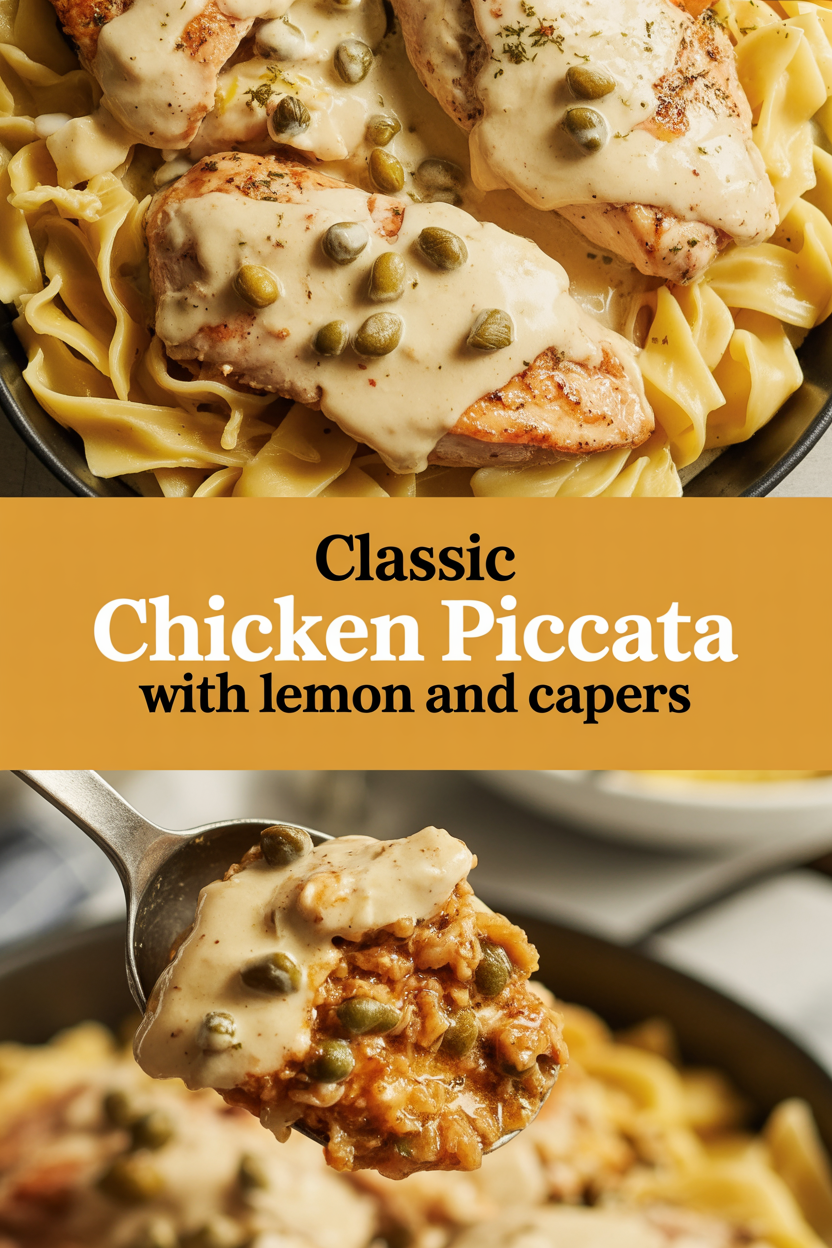
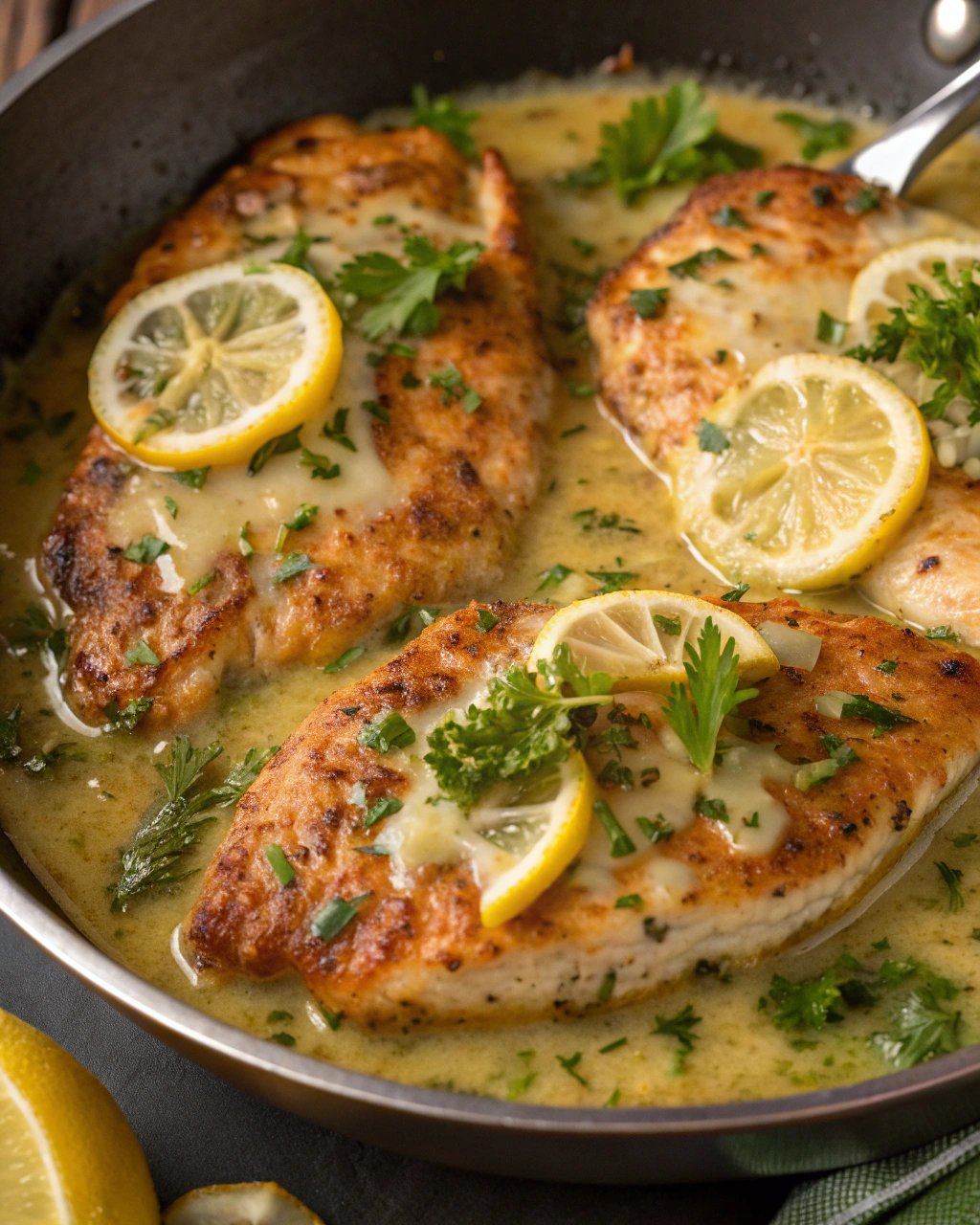
Here’s a little kitchen secret I love to whisper: the bright punch of lemon and the briny pop of capers can turn simple chicken into a dish that feels restaurant-fancy without drama. I learned it from a chef friend who swore by quick pans, loud sizzles, and finishing with cold butter—trust me, that trick makes the sauce sing. Whenever I crave something tangy, silky, and just a little theatrical, I pull out this recipe. The aroma of lemon hitting hot butter gets me every time — zesty, buttery, a tiny bit like summer and Sunday brunch all at once. Stick with me and I’ll show you how to get golden chicken, a glossy sauce, and dinner on the table in under 30 minutes.
Quick Facts
Yield: Serves 4
Prep Time: 15 minutes
Cook Time: 15–20 minutes
Total Time: 30–35 minutes
Why This Recipe is Awesome
This chicken piccata delivers bright lemon, salty capers, and a silky pan sauce that clings to the meat — tangy, buttery, and surprisingly easy. You get crisp, golden edges and a juicy center without complicated steps. It tastes like you fussed all afternoon, but your kitchen only needs 30 minutes and a single pan. Who doesn’t love a saucy shortcut that smells like citrus and butter and makes the whole house wake up?
Ingredients
For the Main Dish:
4 boneless, skinless chicken breasts (about 1.5 lb; slice in half horizontally to make 8 cutlets or pound to 1/4″ thickness)
1/2 cup all-purpose flour (or gluten-free 1:1 blend)
1 tsp kosher salt
1/2 tsp freshly ground black pepper
3 tbsp unsalted butter
2 tbsp olive oil
For the Sauce / Garnish (if applicable):
1/3 cup dry white wine (optional; substitute extra chicken broth)
1/2 cup low-sodium chicken broth
1/3 cup fresh lemon juice (about 2 lemons)
1/4 cup capers, drained
2 tbsp chopped fresh parsley
Optional: lemon slices for garnish
How I Make It
Step 1:
I start by slicing the chicken breasts in half horizontally or pounding them to an even 1/4″ thickness so they cook fast and evenly. Season each cutlet with 1/2 tsp salt and 1/4 tsp pepper (reserve the rest for the flour). Dredge the cutlets in the 1/2 cup flour, shaking off the excess so you keep just a thin coating — that gives you a crackly, golden exterior when they hit the pan.
Step 2:
Heat a large skillet over medium-high heat until hot and shimmering. Add 2 tbsp olive oil and 1 tbsp butter. When the fat starts to smell nutty and you hear that sizzle, gently add the cutlets (work in batches to avoid overcrowding). Cook until the edges turn a bright golden brown, about 3 minutes per side. Flip and repeat. Transfer the browned chicken to a plate and tent loosely with foil.
Step 3:
Lower the heat to medium and add the wine to deglaze the pan, scraping up those toasted bits — that smell, by the way, is pure flavor. Let it reduce for about 1–2 minutes, then stir in 1/2 cup chicken broth, 1/3 cup lemon juice, and 1/4 cup capers. Bring the sauce to a gentle simmer so it starts to thicken and become glossy. The color brightens to a pale gold and the lemon scent wakes up the whole kitchen.
Step 4:
Return the chicken to the pan and spoon the sauce over each piece. Simmer gently for another 2–3 minutes so the flavors mingle and the chicken finishes cooking. I check doneness with a quick tip: the juices should run clear and the center should feel springy — or check with a thermometer for 165°F.
Step 5:
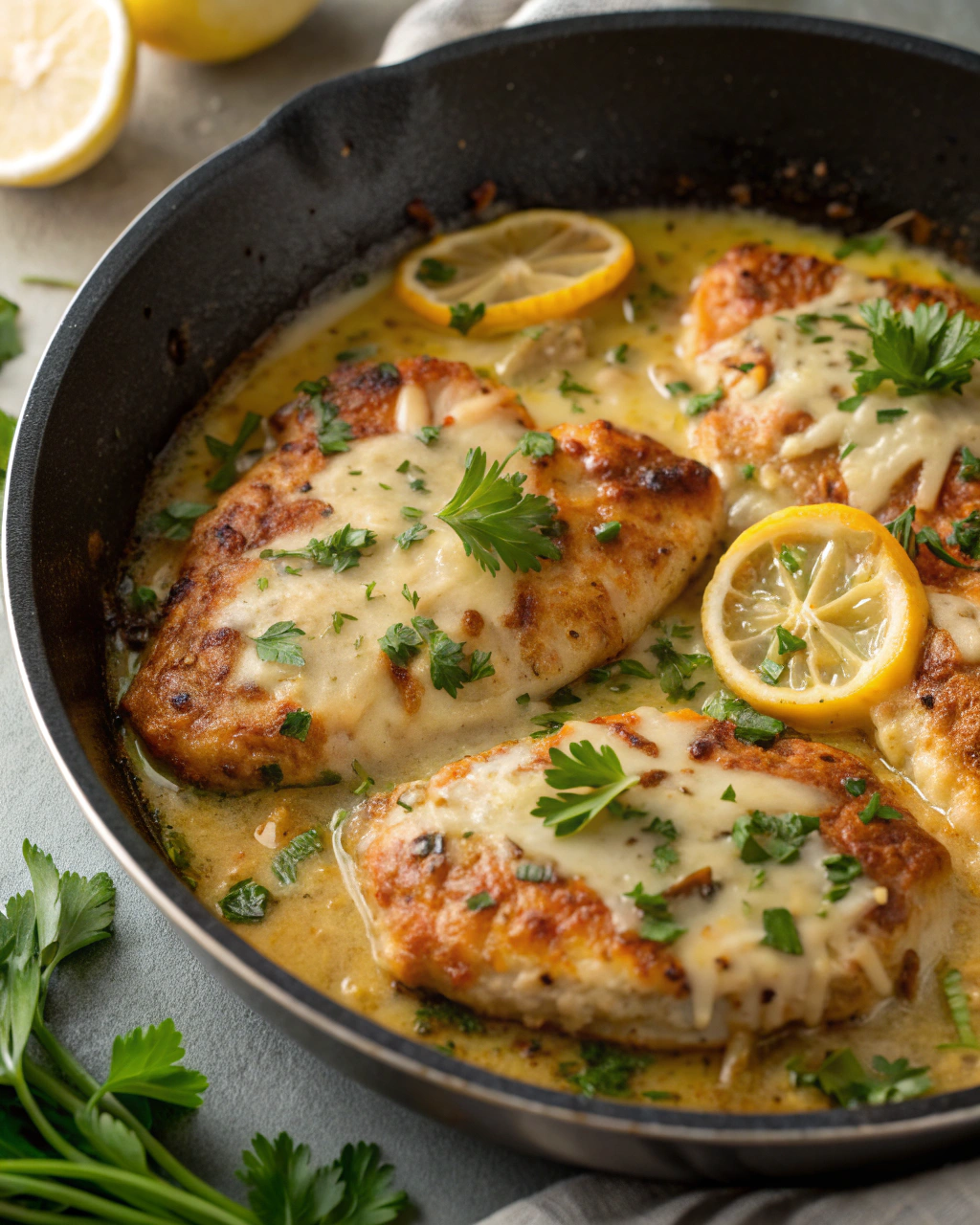
Turn off the heat and whisk in the remaining 2 tbsp butter (cold if you want a silkier emulsion). That final swirl gives the sauce a glossy sheen and soft mouthfeel. Scatter 2 tbsp chopped parsley and a few lemon slices over the top, spoon extra sauce over the chicken, and serve immediately with pasta, rice, or roasted veggies.
Pro Tips
Pat the chicken dry before dredging so the flour sticks and the crust browns quickly.
Don’t crowd the pan — cook in batches if needed. Crowding causes steaming, not browning.
If you skip wine, add an extra splash of broth plus a pinch of sugar to balance acidity.
For a silkier sauce, finish with cold butter (whisk it in off the heat) for a glossy, velvety texture.
Common Mistakes to Avoid
Skipping preheating: Classic rookie move. A cold pan prevents that satisfying golden crust.
Overmixing: Leads to dense or chewy results. When dredging, handle the chicken gently and don’t pack on flour.
Guessing cook time: Always use visual cues or a timer, not just vibes. Aim for about 3 minutes per side for thin cutlets.
Overcrowding pans: Give your food some breathing room to crisp properly; work in batches if needed.
Alternatives & Substitutions
Chicken ↔ firm tofu: Press tofu, slice into cutlets, dredge and pan-fry the same way for a vegetarian version. Texture will be firmer and soak up the sauce nicely.
White wine ↔ extra chicken broth or a splash of dry vermouth if you prefer alcohol-free — flavor stays bright but slightly less complex.
All-purpose flour ↔ cornstarch or gluten-free 1:1 flour for a gluten-free version; cornstarch gives a thinner, crisper coating.
Butter ↔ olive oil for dairy-free: use 3–4 tbsp oil and finish with an extra splash of broth to mimic the silky mouthfeel (you’ll miss the buttery magic though).
Variations & Tips
Spicy piccata: Add a pinch of red pepper flakes to the sauce for gentle heat.
Mushroom piccata: Sauté 6 oz sliced mushrooms after removing the chicken and before deglazing for an earthy twist.
Kid-friendly: Reduce lemon to 2 tbsp and omit capers for a milder, crowd-pleasing sauce.
Brown-butter lemon: Let the butter brown briefly before adding wine for a nutty depth that pairs beautifully with the lemon.
Tomato-kissed: Add halved cherry tomatoes in the last 2 minutes for color and sweetness.
Vegetarian twist: Use cauliflower steaks seared and sauced like the chicken for a gorgeous plant-forward plate.
FAQ (Frequently Asked Questions)
Can I make this ahead of time?
Yes! Cook the chicken up to the simmer stage, cool, and store the chicken and sauce separately in airtight containers in the fridge for up to 2 days. Reheat gently in a skillet over low heat, spooning the warmed sauce over the chicken just before serving so the sauce stays glossy.
Can I double the recipe?
Sure thing. Use a larger skillet or cook in batches to avoid overcrowding. Keep the sauce proportions the same and simmer a touch longer if you double the liquid.
Can I substitute butter with oil?
Technically yes, but you’ll miss that buttery magic. Use ¾ the amount of oil (so about 3–4 tbsp) and finish with a splash of broth for richness.
How do I know it’s done?
Look for golden-brown edges, clear juices, and a slight spring when you press the chicken. For accuracy, use an instant-read thermometer: the internal temp should hit 165°F.
What if I don’t have ingredient X?
Out of capers? Add 2–3 chopped green olives and a pinch of salt for briny notes. No wine? Use extra chicken broth plus a splash of vinegar to lift the sauce.
How I Like to Serve It
I love this piccata over a bed of buttered spaghetti or alongside roasted asparagus and baby potatoes — the sauce soaks into pasta like sunshine. For a light summer meal, serve it with a crunchy green salad and a chilled glass of Pinot Grigio. It shines at weeknight dinners and feels special enough for guests, too. I often double the sauce because I’m greedy that way.
Notes
Store leftovers in the fridge up to 2 days; reheat gently in a skillet to preserve sauce texture.
Safe cooking temp for chicken: 165°F. Let the chicken rest a minute before slicing to keep it juicy.
Final Thoughts
Closing: Now go impress someone — or just yourself — with your homemade masterpiece!
Hi, I’m Lina, the creator of Lina Easy Recipes.Cooking has always been my passion, and I love sharing simple, homemade dishes that anyone can prepare.
Spread the love
Love What You See?
Join me on Pinterest and Facebook for daily cooking inspiration, new recipe ideas, and behind-the-scenes kitchen stories. Let’s cook something wonderful together!