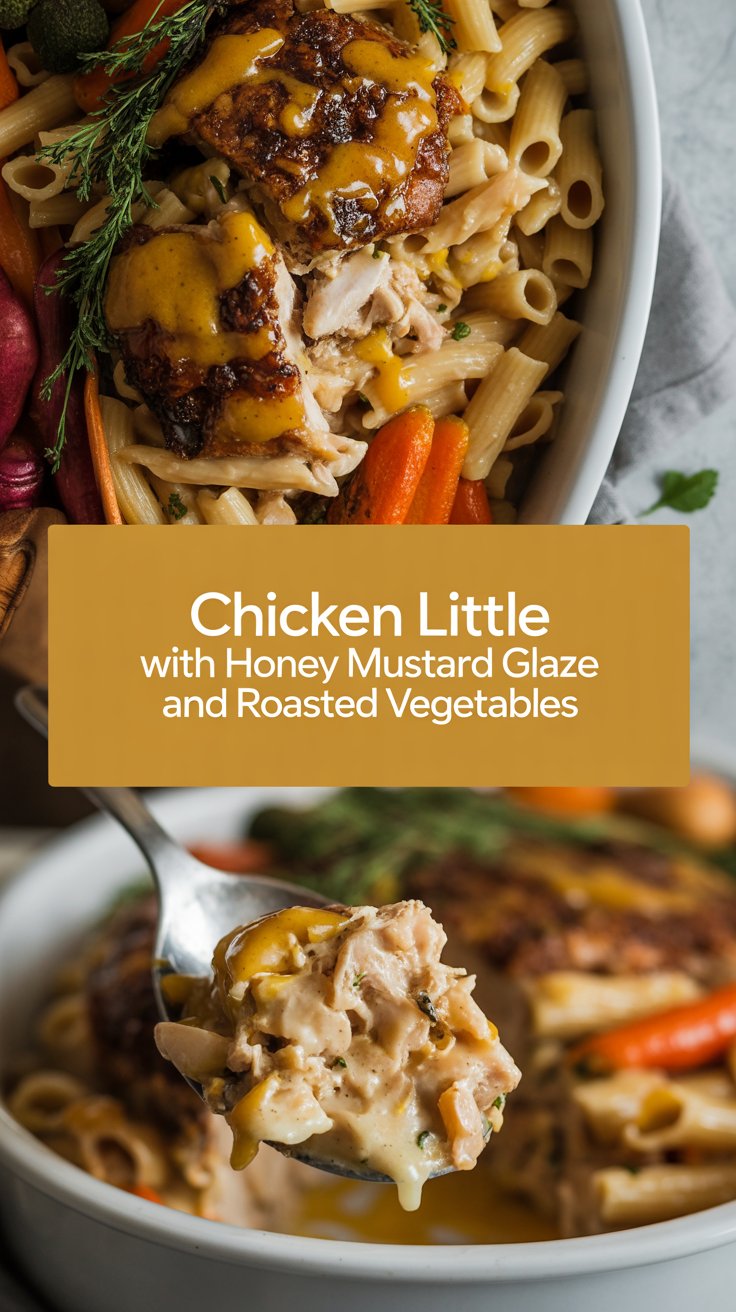
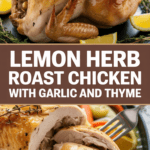
Chicken Little with Honey Mustard Glaze and Roasted Vegetables
Spread the love
I once named a chicken “Little” because it was the only bird in the yard small enough to fit under my apron — yes, I am that person. I also learned that tiny bites of chicken glazed in honey and mustard can make a grown cook giggle like a kid at a bakery window. This recipe takes that silly little idea and turns it into a weeknight superstar: juicy, bite-sized chicken bits with a glossy honey-mustard glaze and a pile of caramelized roasted vegetables that crackle when you fork them. If you like sweet meeting tangy and a roast that fills the house with cozy, sticky, savory aromas, you’re in for a treat.
Quick Facts
Yield: Serves 4
Prep Time: 20 minutes
Cook Time:35–40 minutes
Total Time: 55–60 minutes
Why This Recipe is Awesome
This dish balances sweet, tangy, and savory in a way that makes people reach for seconds without thinking. The chicken pieces caramelize at the edges and stay juicy inside; the glaze gives a shiny, slightly sticky finish; the vegetables roast until they show golden, nutty spots and a little crisp. It’s simple enough for a weeknight and pretty enough for guests. Plus, it’s so forgiving even a distracted cook (guilty) can pull it off.
Ingredients
For the Main Dish:
1.5 lb boneless chicken (thighs or breasts), cut into 1–1.5 inch pieces
2 tbsp olive oil
1 tsp kosher salt
½ tsp black pepper
1 tsp smoked paprika
1 tsp garlic powder
1 tbsp fresh thyme leaves or 1 tsp dried thyme
1 lb baby potatoes, halved (or 2 medium potatoes, cubed)
8 oz Brussels sprouts, trimmed and halved
2 medium carrots, cut into 1/2-inch sticks
1 small red onion, thickly sliced
For the Sauce / Garnish:
3 tbsp Dijon mustard
2 tbsp whole-grain mustard (optional for texture)
3 tbsp honey
1 tbsp apple cider vinegar
1 tbsp olive oil (or 1 tbsp butter for richness)
Salt & pepper to taste
Chopped parsley for garnish (optional)
How I Make It
Step 1:
Preheat your oven to 425°F. Toss the vegetables in a large bowl with 1 tbsp olive oil, a pinch of salt, and ½ tsp black pepper. Spread the vegetables on one half of a large rimmed baking sheet so air can circulate — give them space so they brown instead of steam. I love the sound of them hitting a hot pan; it reminds me dinner is happening.
Step 2:
In the same bowl, combine the chicken pieces with 1 tbsp olive oil, 1 tsp kosher salt, 1 tsp smoked paprika, 1 tsp garlic powder, and thyme. Toss so every piece gets coated. Arrange the chicken on the other half of the baking sheet in a single layer, leaving a little room between pieces for crisping. Pro tip: don’t overcrowd — I learned the hard way and ended up with soggy edges.
Step 3:
Roast everything at 425°F for 20 minutes. You’ll start to smell the sweet carrot sugars and the savory, almost toasty aroma of browned chicken. Flip the chicken and stir the vegetables gently, moving any browned bits back to the center of the pan so they keep cooking evenly.
Step 4:
While the sheet returns to the oven, whisk the glaze: 3 tbsp Dijon, 2 tbsp whole-grain mustard (if using), 3 tbsp honey, 1 tbsp apple cider vinegar, and 1 tbsp olive oil or butter. Taste and adjust — I like a little extra honey for kids, a little more vinegar if I want a tangy kick. Brush about half the glaze onto the chicken and vegetables, then roast another 10–15 minutes until the chicken shows golden edges and the vegetables have deep caramelized spots. Chicken should reach 165°F internally.
Step 5:
Remove the pan and brush with the remaining glaze for that glossy finish. Let the chicken rest on the pan for 5 minutes before serving so juices redistribute. Sprinkle chopped parsley for color and a fresh hit. Listen: the vegetables should give a light crackle when you fork them, and the glaze should gleam like a promise.
Pro Tips
Pat chicken dry before seasoning to ensure the surface browns quickly — moisture slows caramelization.
If your potatoes take longer than the vegetables, parboil them 5 minutes first so everything finishes together.
Use a metal baking sheet for better browning; ceramic prevents the same crisp edge.
Make extra glaze. It doubles well as a dipping sauce and keeps the chicken shiny if you reheat leftovers.
Common Mistakes to Avoid
Skipping preheating: Classic rookie move. It changes texture and bake time.
Overmixing: Leads to dense or chewy results. Mix until just combined.
Guessing cook time: Always use visual cues or a timer, not just vibes.
Overcrowding pans: Give your food some breathing room to crisp properly.
Alternatives & Substitutions
Use tofu (1 lb extra-firm, pressed and cubed) instead of chicken for a vegetarian version — toss in cornstarch for extra crispness and roast the same time.
Swap honey with maple syrup for a deeper flavor; it adds a woodsy note and keeps the glaze vegan.
Use Greek yogurt (¼ cup) mixed into the glaze for a tangier, creamier finish — reduces sweetness.
For gluten-free, ensure your mustard and any pre-made seasonings state “gluten-free,” otherwise this recipe naturally fits.
Variations & Tips
Spicy: Add 1 tsp chili flakes to the glaze and a dash of smoked cayenne to the chicken.
Kid-friendly: Reduce mustard to 2 tbsp and add an extra tablespoon of honey.
Herb-forward: Swap thyme for rosemary and toss in a handful of chopped sage with the vegetables.
Fall twist: Add cubed butternut squash and a pinch of cinnamon to the veg mix for cozy notes.
Sheet-pan dinner: Add a can of drained chickpeas for extra texture and protein diversity.
Creative twist: Finish with a squeeze of fresh orange juice in the glaze for bright citrus lift.
FAQ (Frequently Asked Questions)
Can I make this ahead of time?
Yes! Roast chicken and vegetables a day ahead, store in airtight containers, and reheat at 350°F for 10–12 minutes or until warmed through. Keep extra glaze separately and brush on after reheating to revive shine.
Can I double the recipe?
Sure thing. Use two baking sheets and rotate them halfway through cooking so everything browns evenly. Don’t pile everything onto one pan.
Can I substitute butter with oil?
Technically yes, but you’ll miss that buttery magic. Use ¾ the amount of oil if swapping; olive oil adds a fruity note while a neutral oil keeps flavors focused on the glaze.
How do I know it’s done?
Look for golden, slightly charred edges on the chicken and vegetables and an internal chicken temperature of 165°F. The glaze should stick and become slightly tacky.
What if I don’t have ingredient X?
Swap ingredients simply: no Dijon? Use yellow mustard plus a pinch of vinegar. Out of thyme? Use oregano or a pinch of dried Italian seasoning.
How I Like to Serve It
I plate this with a squeeze of lemon and a scattering of parsley, alongside crusty bread or a simple green salad. It makes a cheerful weeknight meal and still looks impressive for a casual dinner party. Pair with a light white wine in summer or a malty beer in cooler months — comfort food that flexes with the season.
Notes
Store leftovers in the fridge for up to 3 days. Reheat in a 350°F oven to preserve crispness.
Safe cooking temp for chicken: 165°F. Use an instant-read thermometer for confidence.
Final Thoughts
Closing: Go ahead — make this sticky, bright, roast-pan wonder. It’ll smell like dinner at Grandma’s and taste like a tiny celebration. Now go impress someone — or just yourself — with your homemade masterpiece!
Hi, I’m Lina, the creator of Lina Easy Recipes.Cooking has always been my passion, and I love sharing simple, homemade dishes that anyone can prepare.
Spread the love
Love What You See?
Join me on Pinterest and Facebook for daily cooking inspiration, new recipe ideas, and behind-the-scenes kitchen stories. Let’s cook something wonderful together!