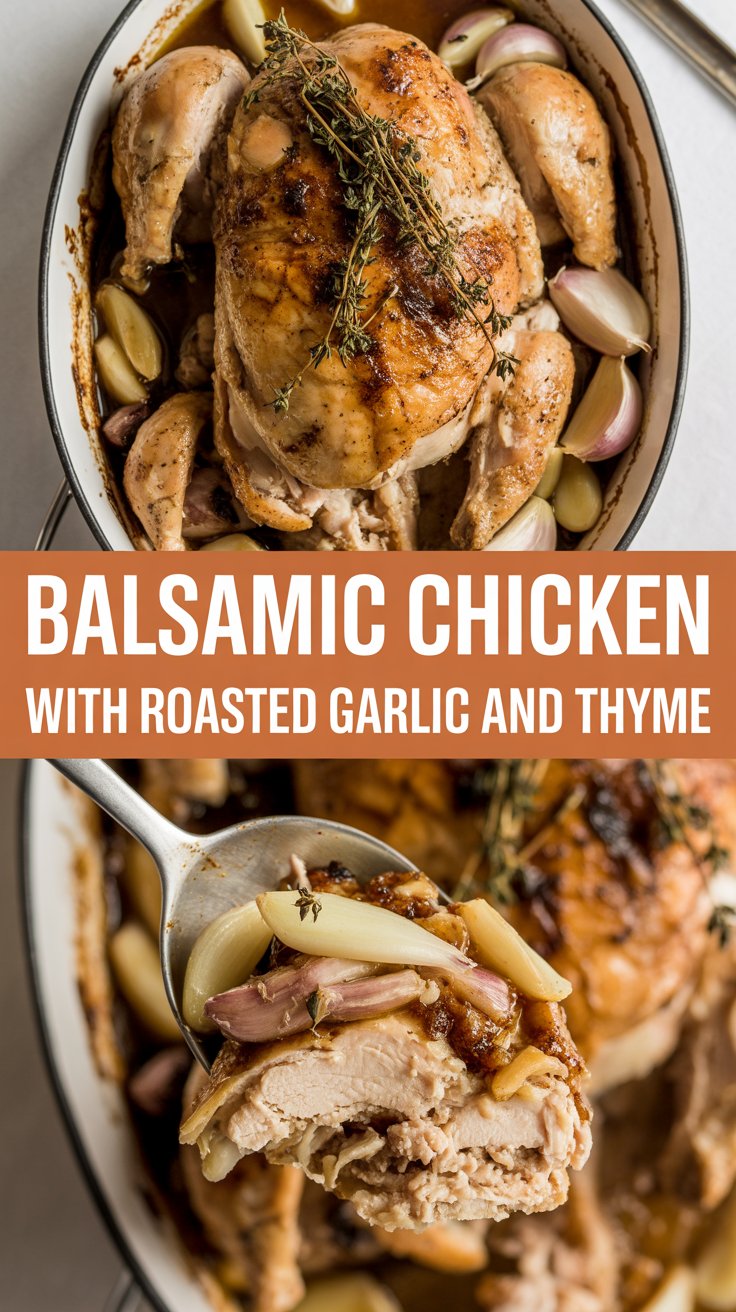
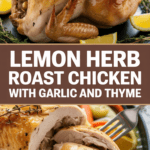
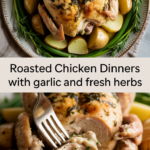
Okay, here’s a little chef’s secret I can’t keep to myself: roast a head of garlic until it melts into buttery sweetness, then stir it into a tangy glaze and watch ordinary chicken turn into dinner that people remember. I learned this trick during a frantic dinner shift where a loud oven and a very forgiving sauce saved the night — and I’ve used it ever since for weeknight dinners and small celebrations. The roasted garlic deepens the balsamic, thyme brightens the whole thing, and the pan glaze gives the chicken a glossy, caramelized finish that smells like comfort and confidence.
Quick Facts
Yield: Serves 4
Prep Time:15 minutes
Cook Time:45 minutes
Total Time:60 minutes
Why This Recipe is Awesome
This recipe balances sweet-tart balsamic vinegar with mellow, roasted garlic and fresh thyme, so you get a sauce that clings to the chicken and makes every bite sing. You get crispy edges, a glossy caramel glaze, and a juicy center — all with pantry-friendly ingredients and minimal fuss. It’s so forgiving even your busy brain can handle it.
Ingredients
For the Main Dish:
4 boneless, skinless chicken breasts (about 6–7 oz each)
1 head garlic
1/3 cup balsamic vinegar
2 tbsp honey
2 tbsp extra-virgin olive oil, plus 1 tbsp for garlic
1 tsp Dijon mustard
1/2 cup low-sodium chicken broth
1 tbsp fresh thyme leaves (or 1 tsp dried thyme)
2 tbsp unsalted butter (optional for richer sauce)
1 tsp kosher salt and 1/2 tsp black pepper
2 tbsp chopped fresh parsley for garnish
1 lemon, cut into wedges (optional)
For the Sauce / Garnish (if applicable):
1 tbsp honey or brown sugar (optional to taste for extra glaze)
1 tsp cornstarch mixed with 1 tbsp water (optional quick-thickener)
How I Make It
Step 1:
I preheat the oven to 400°F. I slice the top off the head of garlic, drizzle about 1 tbsp olive oil over the exposed cloves, wrap it tightly in foil, and roast for 35–40 minutes until the garlic smells sweet and the cloves turn golden and soft. You’ll hear a quiet pop as the sugars caramelize and the aroma fills the kitchen — that’s the good stuff.
Step 2:
While the garlic roasts, I pat the chicken breasts dry, season both sides with salt and pepper, and whisk together the glaze: 1/3 cup balsamic vinegar, 2 tbsp honey, 2 tbsp olive oil, 1 tsp Dijon, and 1/2 cup chicken broth. I tuck a tablespoon of chopped thyme into the mix for brightness. If I have time, I let the chicken sit in the glaze for 10–15 minutes; if I don’t, I brush it on during cooking and call it a day.
Step 3:
I heat a large oven-safe skillet over medium-high heat until it shimmers, then add 1 tbsp oil. I sear each chicken breast for about 3–4 minutes on the first side until it whistles with a nice brown crust, then flip and sear the other side for another 2–3 minutes. Avoid overcrowding the pan — you want that satisfying sizzle, not steamed meat.
Step 4:
When the garlic comes out of the oven, I squeeze the softened cloves into the glaze and mash them with a fork until they dissolve into the liquid. I pour the garlic-balsamic sauce over the seared chicken, toss in a few extra thyme sprigs, then slide the skillet into the oven at 400°F and roast for about 12–15 minutes, until the thickest part of the chicken reaches 165°F on an instant-read thermometer. You’ll see the glaze thicken, bubble, and turn glossy; that shine means flavor.
Step 5:
I transfer the chicken to a cutting board and let it rest for 5 minutes so juices redistribute. Meanwhile, I simmer the pan sauce on the stovetop for 2–3 minutes to tighten it up, whisk in 1–2 tbsp butter for silkiness if I’m feeling indulgent, and finish with chopped parsley and a squeeze of lemon. I spoon the warm sauce over the chicken and serve.
Pro Tips
Use an instant-read thermometer and pull chicken at 165°F. No guesswork, just juicy results.
If your pan starts to brown too quickly, lower the heat; high heat gives flavor but burns fast.
Swap boneless thighs for breasts if you want a little more forgiving, juicy meat — they need a few extra minutes.
Don’t skip resting the chicken for at least 5 minutes; resting keeps it tender and juicy.
Common Mistakes to Avoid
Skipping preheating: Classic rookie move. It changes texture and bake time.
Overmixing: Leads to dense or chewy results. Mix until just combined.
Guessing cook time: Always use visual cues or a timer, not just vibes.
Overcrowding pans: Give your food some breathing room to crisp properly.
Alternatives & Substitutions
Swap chicken for extra-firm tofu or thick portobello caps for a vegetarian option; expect a firmer texture and less chickeny flavor.
Replace honey with maple syrup or brown sugar; maple adds a woodsy depth, brown sugar gives deeper caramel notes.
Use olive oil instead of butter for a dairy-free version; you’ll lose a touch of richness but keep great flavor.
Substitute balsamic with red wine vinegar plus a teaspoon of sugar—tangier and slightly less sweet.
Variations & Tips
Spicy: Add 1/4–1/2 tsp crushed red pepper to the glaze for a warm kick.
Kid-friendly: Reduce balsamic to 1/4 cup and add 1 tbsp extra honey for milder tang.
Herb-forward: Swap thyme for rosemary or sage for a different aromatic profile.
Sheet-pan meal: Roast the chicken and root vegetables together at 400°F for an easy one-pan dinner.
Creamy twist: Stir 2 tbsp heavy cream into the finished sauce for a velvety finish (skip for dairy-free).
Creative twist: Add sliced pears or apples to the pan in the last 10 minutes for sweet contrast.
FAQ (Frequently Asked Questions)
Can I make this ahead of time?
Yes! Roast the garlic and make the glaze up to 2 days ahead. Store chicken and sauce separately in airtight containers in the fridge. Reheat gently in a 325°F oven until warm, then spoon fresh sauce over the top to revive gloss.
Can I double the recipe?
Sure thing. Use two skillets or a large baking dish to avoid overcrowding. You might need to roast in batches if your pan gets crowded to keep that crisp sear.
Can I substitute butter with oil?
Technically yes, but you’ll miss that buttery magic. Use ¾ the amount of oil.
How do I know it’s done?
Check the internal temperature at the thickest part; the safe temp for chicken reads 165°F. You’ll also see clear juices and slightly firm, springy meat.
What if I don’t have ingredient X?
No worries — if you lack balsamic, mix red wine vinegar with a pinch of sugar. If you run out of thyme, use rosemary or oregano. If you don’t have fresh garlic, use 2 tsp garlic paste but skip the roasted garlic flavor.
How I Like to Serve It
I serve this chicken with creamy mashed potatoes or buttered pasta to soak up the sauce, and a crisp green salad to cut the richness. For cozy nights, pair it with roasted winter veggies; in warmer months, it shines beside grilled asparagus and a glass of chilled white wine. It works for weeknights and for when you want to pretend you’ve been fancy all afternoon.
Notes
Store leftovers in the fridge for up to 3 days. Reheat gently in a low oven or on the stovetop to preserve moisture.
Remember the safe internal temp for chicken: 165°F. Use an instant-read thermometer for accuracy.
Final Thoughts
Closing: Give this one a try — the roasted garlic and balsamic combo feels special but plays nice with your everyday pantry. Now go impress someone — or just yourself — with your homemade masterpiece!
Hi, I’m Lina, the creator of Lina Easy Recipes.Cooking has always been my passion, and I love sharing simple, homemade dishes that anyone can prepare.
Spread the love
Love What You See?
Join me on Pinterest and Facebook for daily cooking inspiration, new recipe ideas, and behind-the-scenes kitchen stories. Let’s cook something wonderful together!