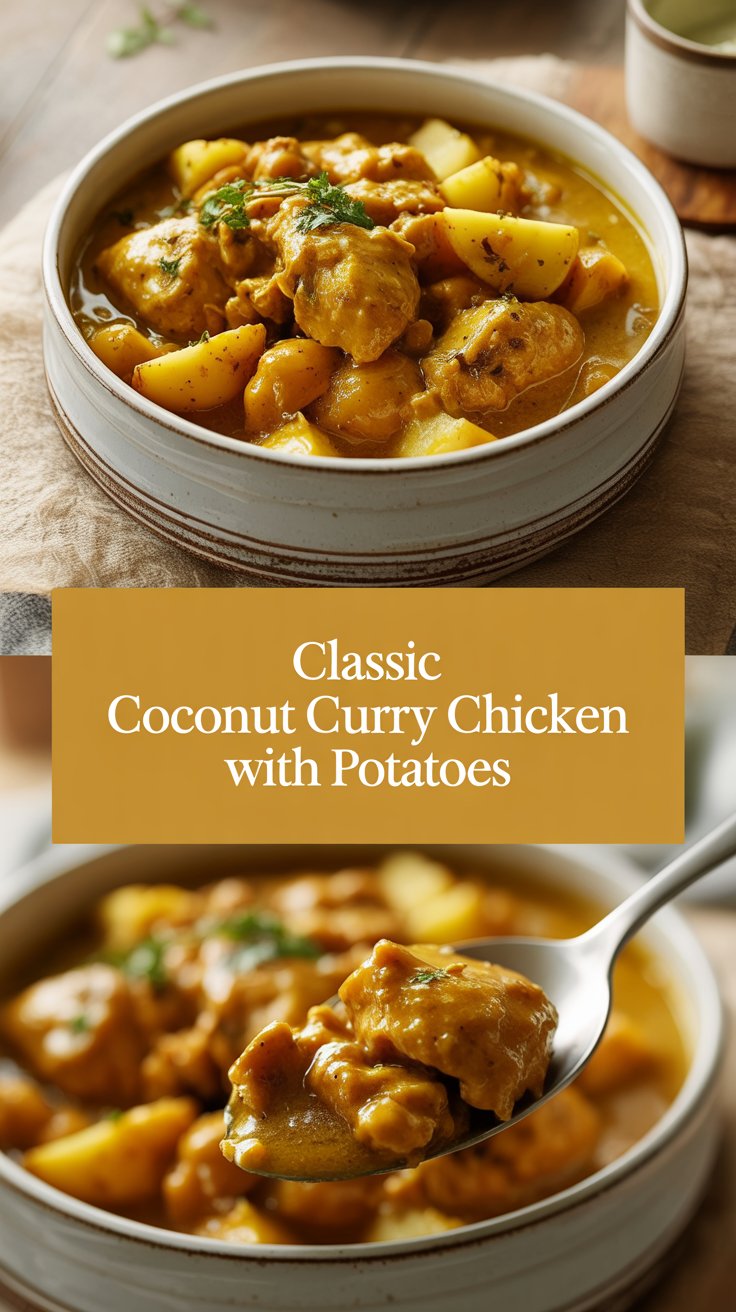
When I was a kid, my kitchen smelled like coconut and curry at least once a week — my mom would laugh as the pot on the stove sent out warm, spicy clouds that made the whole house feel like a hug. I still chase that cozy memory whenever I cook this dish. This coconut curry chicken with potatoes gives you golden, tender potatoes bathing in a fragrant, slightly sweet coconut sauce, and juicy chicken that soaks up every bit of flavor. It takes about an hour from start to finish, and it rewards you with bright aromas, a creamy texture, and the kind of comfort food that refuses to be complicated.
Quick Facts
Yield: Serves 4
Prep Time: 15 minutes
Cook Time: 35–40 minutes
Total Time: 50–55 minutes
Why This Recipe is Awesome
This recipe delivers big flavor with simple pantry ingredients. You get silky coconut milk, warm spices from curry powder, and comforting, fork-tender potatoes that soak up the sauce. It’s cozy, saucy, and forgiving — perfect for weeknights when you want something satisfying without sweating every step. Plus, it smells amazing while it simmers. Who doesn’t love that kitchen sizzle and the bright color of turmeric-orange curry? It’s so easy even your oven can’t mess it up.
Ingredients
For the Main Dish:
1 1/2 lbs boneless, skinless chicken thighs, cut into 1–1½ inch pieces (or breasts if you prefer)
1 lb baby potatoes (red or Yukon), halved or quartered so pieces measure about 1 inch
1 can (13.5 oz) full-fat coconut milk
1 cup low-sodium chicken broth (or water)
2 tbsp curry powder (mild or hot depending on taste)
1 medium yellow onion, thinly sliced
3 cloves garlic, minced
1 tbsp fresh ginger, grated
1 tbsp tomato paste
2 tbsp neutral oil (canola, vegetable, or coconut oil)
1 tbsp brown sugar (optional, balances acidity)
Salt and black pepper, to taste
Juice of 1 lime
Fresh cilantro for garnish
Red pepper flakes or chopped fresh chili, optional for heat
For the Sauce / Garnish (if applicable):
1 tbsp cornstarch + 2 tbsp water (optional slurry to thicken)
Toasted coconut flakes for garnish (optional)
How I Make It
Step 1:
Heat a large, heavy skillet over medium-high heat with 2 tbsp oil. Season the chicken lightly with salt and pepper. When the oil shimmers, add the chicken in a single layer and brown for 3–4 minutes per side until you hear a satisfying sizzle and the pieces show golden edges. Transfer the chicken to a plate — don’t worry about fully cooking it now; searing locks in flavor.
Step 2:
Reduce the heat to medium and add the sliced onion. Cook until soft and translucent, about 5 minutes, stirring so you taste sweet, caramelized notes. Add the garlic and ginger and stir for 30 seconds until fragrant — you’ll smell a bright, spicy lift. Mix in the curry powder and tomato paste, stirring for another 30–45 seconds to bloom the spices; the oil will turn a beautiful orange and smell deeply aromatic.
Step 3:
Add the halved potatoes, return the seared chicken to the pan, then pour in the coconut milk and chicken broth. Stir in the brown sugar and a pinch of salt. Bring the pot to a gentle simmer (little bubbles around the edges). You’ll see the sauce go from milky to glossy and fragrant as it heats.
Step 4:
Lower the heat, cover partially, and simmer for 20–25 minutes, stirring occasionally. Check the potatoes with a fork — they should be fork-tender — and check that chicken pieces reach an internal temp of 165°F. If you want a thicker sauce, whisk together 1 tbsp cornstarch with 2 tbsp water and stir it in for the last 2 minutes of cooking; the sauce will thicken and cling to the chicken and potatoes.
Step 5:
Finish with the juice of 1 lime and a handful of chopped cilantro. Taste and adjust salt or heat. Serve the curry over steamed rice or with warm naan, and sprinkle toasted coconut flakes if you like a crunchy contrast. The sauce should coat the spoon, the potatoes stay tender, and the chicken should feel juicy when you bite it.
Pro Tips
Use chicken thighs for more forgiving, juicy results; breasts dry out faster. If you use breasts, check temp earlier.
Brown the chicken well — those golden bits add big flavor to the sauce when you deglaze the pan.
Want creamier sauce? Stir in an extra 1/4 cup coconut milk or a spoonful of Greek yogurt off the heat (yogurt curdles if you boil it).
Make the curry spicier with chopped fresh chiles or 1/2 tsp cayenne, and add a teaspoon of fish sauce for a deeper umami hit.
Common Mistakes to Avoid
Skipping preheating: Classic rookie move. It changes texture and bake time.
Overmixing: Leads to dense or chewy results. Mix until just combined.
Guessing cook time: Always use visual cues or a timer, not just vibes.
Overcrowding pans: Give your food some breathing room to crisp properly.
Alternatives & Substitutions
Chicken ↔ Tofu: Use firm tofu, press and brown it like the chicken. Texture becomes more tender and plant-forward; keep coconut milk for creaminess (dairy-free).
Coconut milk ↔ Greek yogurt or heavy cream: Greek yogurt gives tang and a lighter texture (add off heat to avoid curdling). Heavy cream makes it richer but not dairy-free.
Potatoes ↔ Sweet potatoes or cauliflower: Sweet potatoes add sweetness and softer texture; cauliflower reduces carbs and cooks faster.
For a gluten-free meal: stick with coconut milk and gluten-free broth; serve over rice or GF flatbread.
Variations & Tips
Spicy: Add sliced Thai chiles or 1 tsp crushed red pepper and a drizzle of chili oil at the end.
Kid-friendly: Reduce curry powder to 1 tbsp and leave out chiles; add a splash of cream for a milder finish.
Vegetarian: Swap chicken for extra firm tofu and add chickpeas for protein.
Thai-style: Use green curry paste instead of curry powder and add a splash of fish sauce and basil at the end.
Roasted potato twist: Roast potatoes separately at 425°F for 25–30 minutes until crispy, then toss into the curry for crunch contrast.
Creative twist: Stir in 2 tbsp creamy peanut butter for a satay-inspired coconut-peanut curry.
FAQ (Frequently Asked Questions)
Can I make this ahead of time?
Yes! Cook fully, cool, and store in an airtight container in the fridge for up to 3 days. Reheat gently on the stove over medium-low (add a splash of water or broth if the sauce tightens). The flavors often deepen overnight.
Can I double the recipe?
Sure thing. Use a wider, larger pot so everything browns evenly. You may need to simmer a few extra minutes if you add more potatoes.
Can I substitute butter with oil?
Technically yes, but you’ll miss that buttery magic. Use ¾ the amount of oil if swapping to keep richness without heavy greasiness.
How do I know it’s done?
Chicken should reach an internal temp of 165°F and the potatoes should be fork-tender. The sauce should reduce slightly and coat the back of a spoon.
What if I don’t have ingredient X?
No panic — swap curry powder for a mix of 1 tsp turmeric + 1 tsp cumin + 1 tsp coriander in a pinch, or use broth instead of water and add a splash of soy or fish sauce for depth.
How I Like to Serve It
I love this over steaming jasmine rice with extra cilantro and lime wedges on the side. For a heartier plate, add roasted vegetables or naan for sopping the sauce. It works for a cozy solo dinner or a weekend potluck — people always ask for seconds. In summer, I serve it with a crisp cucumber salad to cut the richness.
Notes
Store leftovers in the fridge for up to 3 days. Reheat on the stove over low heat and add a splash of broth if the sauce thickens too much.
Safe cooking temp for chicken: 165°F. Use an instant-read thermometer to check the thickest piece.
Final Thoughts
Closing: Now go impress someone — or just yourself — with your homemade masterpiece!
Hi, I’m Lina, the creator of Lina Easy Recipes.Cooking has always been my passion, and I love sharing simple, homemade dishes that anyone can prepare.
Spread the love
Love What You See?
Join me on Pinterest and Facebook for daily cooking inspiration, new recipe ideas, and behind-the-scenes kitchen stories. Let’s cook something wonderful together!