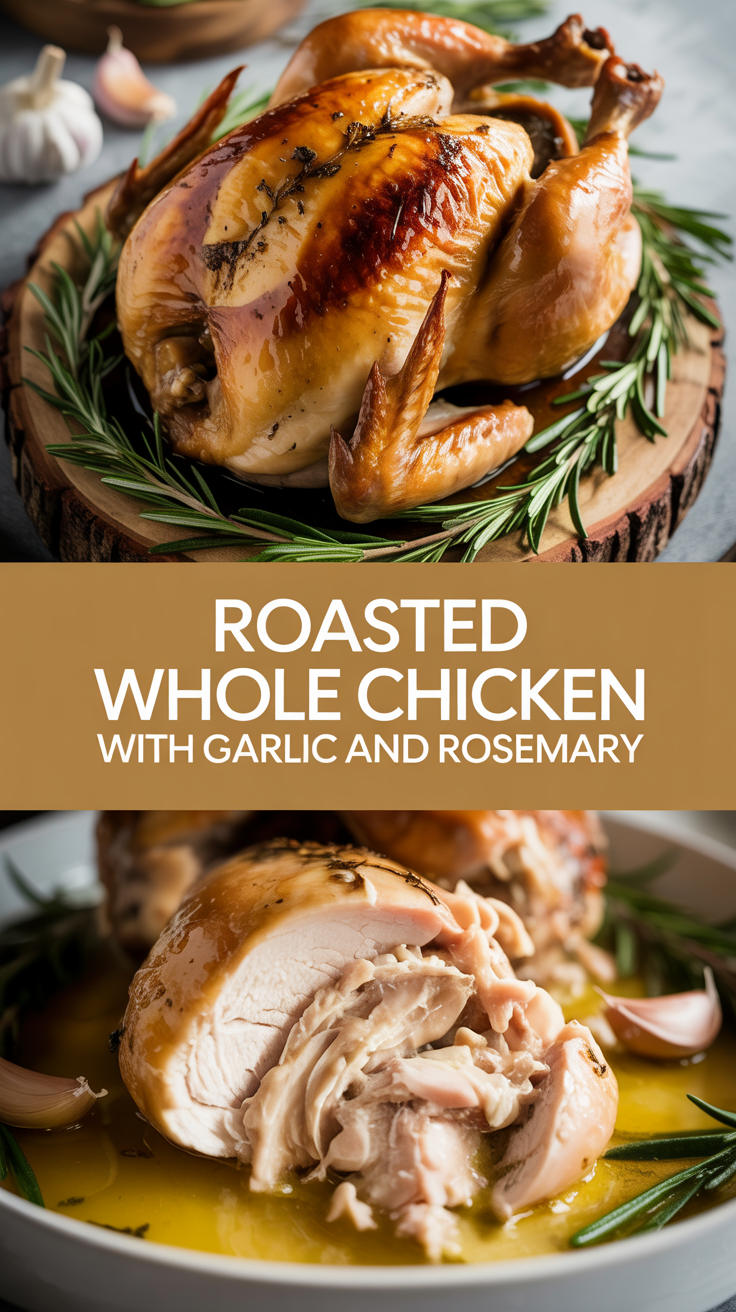
I remember the first time I roasted a whole chicken and actually felt like a grown-up chef: my tiny kitchen filled with garlicky steam, rosemary perfume, and that triumphant crackle when the skin hit the pan. I still get that little thrill every time. This recipe keeps things simple—nothing fussy, just a few pantry staples that turn into golden, juicy comfort. If you want crispy skin, plush meat, and a pan sauce that soaks into mashed potatoes like a love letter, you’re in the right place. I’ll walk you through my favorite tricks so you can stop worrying and start savoring.
Quick Facts
Yield: Serves 4–6
Prep Time: 15–20 minutes
Cook Time: 60–75 minutes
Total Time: 75–95 minutes
Why This Recipe is Awesome
This roast feels fancy but behaves like a weeknight hero. You get crackly, golden skin, herb-scented meat that stays juicy, and a pan sauce that’s dangerously good. It’s so easy even your oven can’t mess it up — plus, the kitchen smells like a cozy bistro. Who doesn’t love a meal that looks impressive but practically makes itself?
Ingredients
For the Main Dish:
4–5 lb whole chicken, giblets removed
4 tbsp unsalted butter, softened (or use olive oil for dairy-free)
1 tsp kosher salt per pound of chicken (adjust to taste)
1 tsp freshly ground black pepper
1 medium onion, quartered
3 carrots, cut into 2-inch pieces
1 lb baby potatoes, halved
½ cup low-sodium chicken broth (for the pan)
For the Sauce / Garnish (if applicable):
2 tbsp butter (or 1 tbsp olive oil for dairy-free)
¼ cup dry white wine or extra chicken broth
1 tbsp lemon juice
Chopped parsley to finish
How I Make It
Step 1:
Preheat the oven to 425°F. Pat your chicken dry with paper towels—dry skin equals crisp skin. Gently separate the skin from the breast with your fingers and smear 2 tbsp softened butter under the skin, spreading it toward the wings. Rub the outside with the remaining 2 tbsp butter and 2 tbsp olive oil. Sprinkle the cavity with a few smashed garlic cloves, the reserved rosemary sprig, and the halved lemon. Toss the onion, carrots, and potatoes with a little oil, salt, and pepper, and spread them in a roasting pan.
Step 2:
Truss the chicken loosely with kitchen twine or tuck the wing tips under the body so the legs roast evenly. Season the outside generously with kosher salt and black pepper, and scatter the chopped rosemary and thyme over the top. Place the bird breast-side up on a rack set in the roasting pan (or directly on the vegetables). Slide the pan into the oven and listen for that satisfying sizzle.
Step 3:
Roast at 425°F for about 60–75 minutes (roughly 15 minutes per pound). About halfway through, spoon some of the pan juices and melted butter over the chicken to encourage even browning—this little baste delivers shine and extra flavor. The kitchen will fill with a garlicky, herb-sweet aroma and the skin will deepen to a beautiful golden-brown.
Step 4:
Check doneness by inserting an instant-read thermometer into the thickest part of the thigh without touching bone; aim for 165°F. If you don’t have a thermometer, pierce between thigh and body: the juices should run clear, not pink. When the temp hits 165°F, pull the pan from the oven and let the bird rest on a cutting board for 15–20 minutes. Resting keeps the juices where they belong—inside the meat.
Step 5:
While the chicken rests, make a quick pan sauce. Place the roasting pan on the stove over medium heat, add ¼ cup white wine (or chicken broth) and scrape up browned bits with a wooden spoon. Swirl in 2 tbsp butter (or olive oil), a squeeze of lemon, and adjust salt and pepper. Carve the chicken, drizzle with sauce, and sprinkle with chopped parsley. Serve the roasted vegetables alongside and watch everyone swoon.
Pro Tips
Pat the chicken completely dry before seasoning—moisture ruins crispiness.
Get butter under the skin for deep flavor and juicier breast meat; olive oil works if you need dairy-free.
Use an instant-read thermometer. It removes guesswork and prevents drying out—aim for 165°F.
If the skin browns too fast, tent the bird loosely with foil and finish roasting until done.
Common Mistakes to Avoid
Skipping preheating: Classic rookie move. It changes texture and bake time.
Overmixing: Leads to dense or chewy results. Mix until just combined.
Guessing cook time: Always use visual cues or a timer, not just vibes.
Overcrowding pans: Give your food some breathing room to crisp properly.
Alternatives & Substitutions
If you need dairy-free, swap the butter for olive oil or vegan butter—flavor stays rich but loses a touch of buttery gloss.
No fresh herbs? Use 1 tsp dried rosemary and 1 tsp dried thyme; add them earlier so they bloom.
Short on lemons? Use 1 tbsp white wine vinegar in the pan sauce for brightness.
Want vegetarian? Roast a whole cauliflower the same way for a centerpiece—adjust cooking time to about 45–55 minutes.
Variations & Tips
Spicy: Mix 1 tsp smoked paprika and ½ tsp cayenne into the seasoning for a warm kick.
Lemon-garlic roast: Add lemon zest to the butter and stuff the cavity with extra lemon slices.
Kid-friendly: Keep seasoning simple—just butter, salt, and pepper—so little ones dig in.
Herb-forward: Use a herb paste with parsley, sage, rosemary, thyme, garlic, and oil under the skin.
One-pan meal: Toss in Brussels sprouts or root vegetables to roast alongside the chicken for easy cleanup.
Creative twist: Add a tablespoon of Dijon to the butter for a tangy crust—unexpected and delightful.
FAQ (Frequently Asked Questions)
Can I make this ahead of time?
Yes! Roast the chicken and store in the fridge for up to 3 days. Reheat gently in a 350°F oven covered with foil for about 20 minutes, or slice and reheat in a skillet with a splash of broth to keep meat juicy.
Can I double the recipe?
Sure thing. Use two pans or a very large roasting tray and leave space around each bird so air circulates. You may need to rotate pans halfway through cooking for even browning.
Can I substitute butter with oil?
Technically yes, but you’ll miss that buttery magic. Use ¾ the amount of oil.
How do I know it’s done?
Look for deep golden skin and an internal temperature of 165°F in the thickest part of the thigh. Juices should run clear when you pierce between thigh and body.
What if I don’t have ingredient X?
No rosemary? Use thyme or oregano. No white wine? Use extra chicken broth and a splash of lemon juice. Small swaps won’t derail the main attraction—the roast chicken.
How I Like to Serve It
I love this chicken with creamy mashed potatoes, roasted carrots, and a simple green salad so the plate balances rich and bright. For a cozy night, pour a glass of Chardonnay; for summer dinners, serve with a crisp rosé. The leftovers make killer sandwiches and salads—slice cold meat over arugula, add mustard, and you’ve got lunch sorted.
Notes
Store leftovers in an airtight container in the fridge for up to 3 days. Freeze carved meat for up to 3 months.
Safe internal temperature for poultry: 165°F. Always use a thermometer for best results.
Final Thoughts
Closing: Now go impress someone — or just yourself — with your homemade masterpiece!
Hi, I’m Lina, the creator of Lina Easy Recipes.Cooking has always been my passion, and I love sharing simple, homemade dishes that anyone can prepare.
Spread the love
Love What You See?
Join me on Pinterest and Facebook for daily cooking inspiration, new recipe ideas, and behind-the-scenes kitchen stories. Let’s cook something wonderful together!