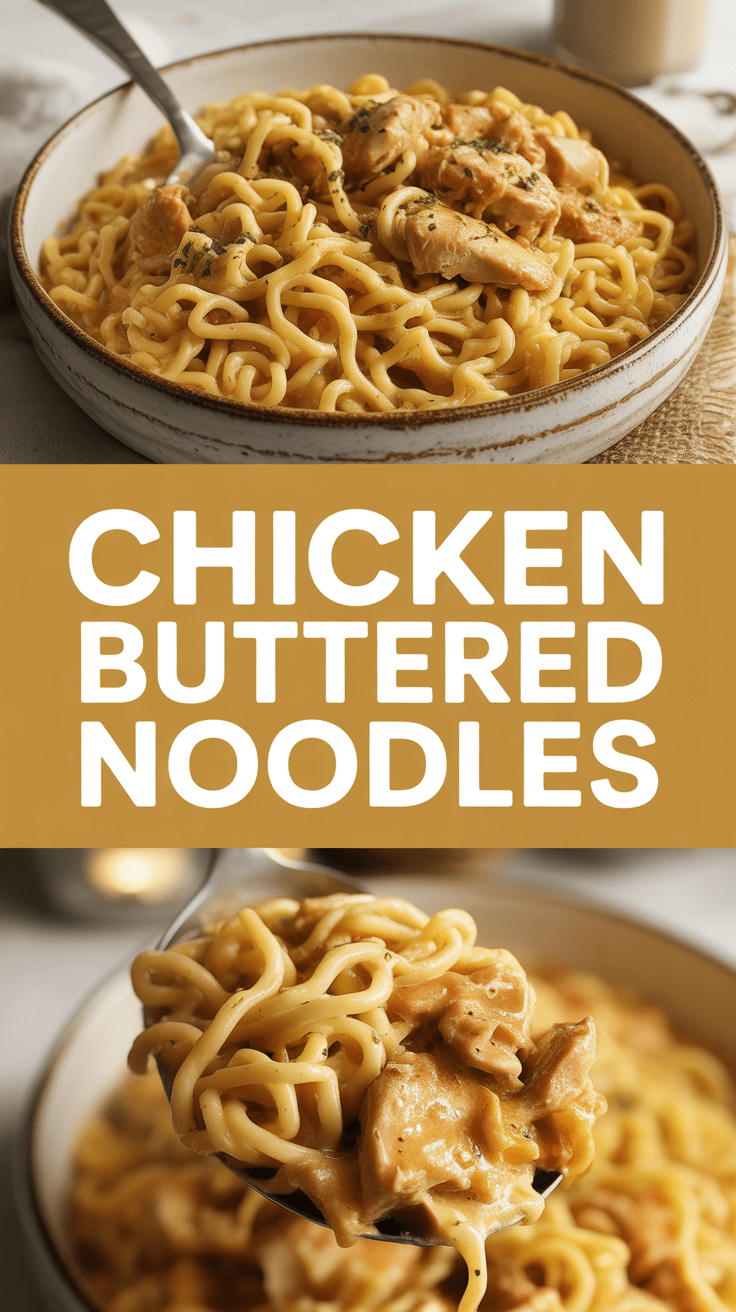
If your dinner mood swings between “I want comfort” and “I don’t want to think,” this is the patch for both. Think buttery noodles that cling to juicy chicken in a way that feels borderline criminal, but without three pans, a scavenger hunt through the fridge, or an oath to haute cuisine. It’s the kind of meal you make when you want to win dinner with the least dramatic effort possible.
Why This Recipe Is Awesome
It’s basically a flavor shortcut: butter, garlic, a splash of broth and lemon, and suddenly plain noodles turn into something worth showing off. The trick is texture—seared chicken for bite, noodles cooked al dente for chew, and a glossy sauce that coats everything without being gluey. Also, it’s forgiving: if the chicken is a touch over, the sauce rescues it; if the noodles are slightly under, they relax in the sauce and become perfect.
Ingredients You’ll Need
12 ounces egg noodles (or any short pasta) — they trap sauce better than spaghetti
1 pound boneless chicken breasts or thighs, trimmed and patted dry — thighs are juicier, breasts are faster
Salt and freshly ground black pepper — yes, use both
1 teaspoon paprika or smoked paprika — warmth and a hint of color
2 tablespoons olive oil — for searing
4 tablespoons (1/2 stick) unsalted butter, divided — because butter is not optional here
1 small onion, finely chopped — sweetens the sauce without drama
3 garlic cloves, minced — press or chop fine, no big chunks
3/4 to 1 cup low-sodium chicken broth — concentrate flavor without salt overload
1 tablespoon lemon juice — brightens everything, don’t skip it
1/3 cup grated Parmesan (optional but loved) — adds savory depth
2 tablespoons chopped fresh parsley or basil — for freshness
Reserved pasta water, 1/2 cup — liquid gold if the sauce needs loosening
Red pepper flakes (optional) — if you like a little kick
Step-by-Step Instructions
Step 1
Season the chicken with salt, pepper and paprika. Heat olive oil in a large skillet over medium-high heat, sear the chicken 3–4 minutes per side until golden and just cooked through, then remove and let rest for a few minutes before slicing into bite-sized pieces. Meanwhile, boil the noodles in generously salted water until al dente (usually 7–9 minutes), and reserve about 1/2 cup of the pasta water before draining.
Step 2
In the same skillet, lower heat to medium, add 2 tablespoons butter and the chopped onion, cook until translucent, then stir in garlic for 30 seconds. Pour in the chicken broth and lemon juice, simmer 2–3 minutes to reduce slightly, whisk in the remaining butter off the heat to make a glossy sauce, then return the sliced chicken and drained noodles to the pan; toss, add Parmesan and parsley, and loosen with reserved pasta water if it needs silkier movement.
Common Mistakes to Avoid
Overcrowding the pan when searing chicken — crowding steals the good crust, so work in batches if needed. Salting pasta water like soup matters; under-salted noodles are a sad undertone. Adding cold butter directly to a hot simmer without whisking can break the sauce, so remove from direct heat when you finish the emulsion. Finally, don’t drown the dish in Parmesan right at the start; sprinkle, taste, then add more if it wants it.
Alternatives & Substitutions
No egg noodles? Use fusilli or rigatoni to catch the sauce. Out of fresh chicken — toss in shredded rotisserie chicken at the end and skip the sear; it’s a shortcut that still tastes like effort. Swap half the butter for olive oil if you’re avoiding dairy, and stir in a splash of cream for a richer, restaurant-style finish. If you’re feeding vegetarians, Gardein or browned tofu cubes stand in fine with a longer simmer in broth to soak up flavor.
FAQ
Question 1?
Can I make this ahead and reheat? Yes. Toss the pasta and chicken with a touch more butter or olive oil, store in the fridge, and reheat gently on the stove with a splash of broth or reserved pasta water. Microwave works too, but use short bursts and stir so the sauce doesn’t separate.
Question 2?
How do I prevent the sauce from being greasy? The trick is emulsion: add butter off the heat and whisk it in, or finish with a small splash of starchy pasta water to bind the fats. Also, use low-sodium broth so you don’t over-salt trying to mask an oily mouthfeel.
Question 3?
Can I freeze leftovers? You can, but texture changes—pasta gets softer and the sauce may separate slightly. Freeze only if you must; when thawing, warm slowly on the stove with a splash of broth and a fresh pat of butter to revive the creaminess.
Final Thoughts
This is one of those recipes that behaves like two ideas in one: comfort food that looks like a little effort and plays well on reheat or a last-minute dinner rescue. Small swaps and timing make it flexible—use what you have, keep the technique simple, and rely on butter and acid to make everything taste thoughtful. If you’re trying to impress someone without staging a culinary opera, this is your move—easy, nearly foolproof, and reliably delicious. Now go cook it, eat it, and tell me what you added or accidentally left out; I want to hear your improvisations.
Hi, I’m Lina, the creator of Lina Easy Recipes.Cooking has always been my passion, and I love sharing simple, homemade dishes that anyone can prepare.
Spread the love
Love What You See?
Join me on Pinterest and Facebook for daily cooking inspiration, new recipe ideas, and behind-the-scenes kitchen stories. Let’s cook something wonderful together!