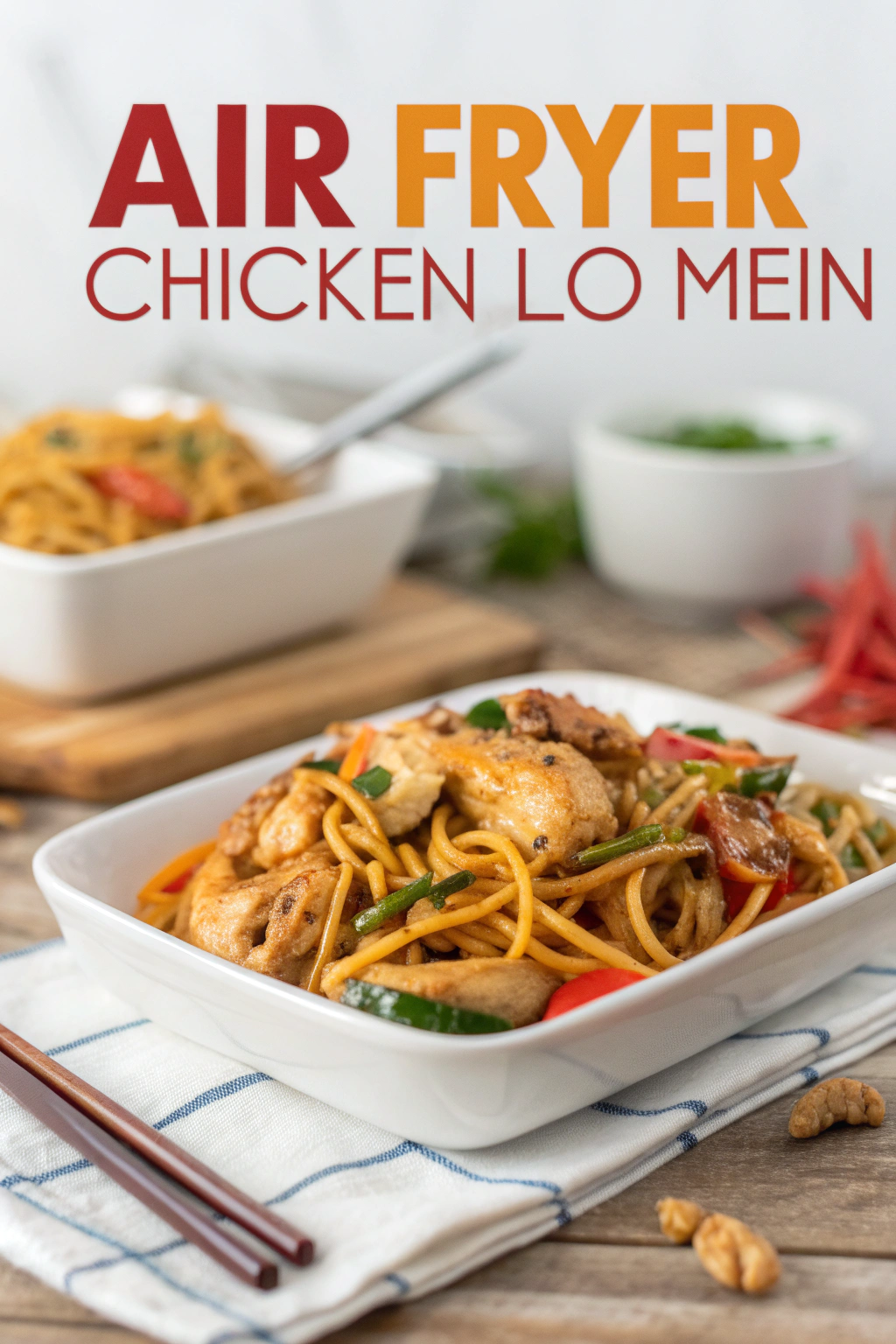
Let me let you in on a little chef’s secret: you can get that takeout-y, saucy lo mein feel with perfectly crisped chicken without firing up a wok. I discovered this trick the night I forgot to thaw my usual stir-fry protein and had to improvise with my air fryer — the result smelled like sesame-and-ginger heaven and had the kind of caramelized edges that make you hush the whole table while you take the first bite. This version keeps things simple: tender, juicy chicken from the air fryer, slippery egg noodles, and a glossy, savory sauce that clings to every strand. You’ll love how fast it comes together and how much flavor that little “secret” technique squeezes out of ordinary ingredients.
Quick Facts
- Yield: Serves 4
- Prep Time: 15 minutes
- Cook Time: 15 minutes (plus noodle boiling)
- Total Time: 30 minutes
Why This Recipe is Awesome
This Air Fryer Chicken Lo Mein tastes like comforting takeout but arrives faster and cleaner. The air fryer gives the chicken crispy, golden edges while keeping the inside juicy; the noodles stay silky and soak up a bold, slightly sweet-salty sauce. It hits texture heaven — chew from the noodles, snap from the veggies, and crisp from the chicken. And honestly? It’s so easy even your busiest weeknights can’t mess it up.
Ingredients
For the Main Dish:
- 12 oz egg lo mein or spaghetti noodles
- 1 lb boneless, skinless chicken breast or thighs, cut into 1/2-inch strips
- 2 tbsp vegetable oil (or avocado oil)
- 1 medium carrot, peeled and julienned
- 1 red bell pepper, thinly sliced
- 1 cup snow peas or snap peas, trimmed
- 3 cloves garlic, minced
- 1 tbsp fresh ginger, minced
- 3 green onions, sliced (white and green parts separated)
- 1 large egg (optional, for scrambling into noodles)
- 1 tbsp cornstarch (to toss with chicken for extra crisp)
- Salt and pepper to taste
For the Sauce / Garnish:
- 3 tbsp soy sauce (or tamari for gluten-free)
- 1 tbsp oyster sauce or 1 tbsp hoisin (optional for depth)
- 1 tbsp toasted sesame oil
- 1 tbsp rice vinegar
- 1 tbsp brown sugar or honey
- 1/3 cup low-sodium chicken broth or water
- 1 tsp chili garlic sauce (optional, for heat)
- Sesame seeds and extra sliced green onions for garnish
How I Make It
Step 1:
I start by boiling the noodles just shy of al dente — follow the package, then drain and toss with a teaspoon of oil so they don’t stick. Next, I toss the chicken strips with 1 tbsp oil, a sprinkle of salt and pepper, and 1 tbsp cornstarch for that crisp-up magic. Preheat the air fryer to 400°F for about 3 minutes so it’s nice and hot.
Step 2:
I spread the chicken in a single layer in the air fryer basket and cook for 8–10 minutes, shaking halfway through so each piece gets golden. Listen for that soft sizzle and watch the edges turn a caramelized brown — that’s flavor. If pieces crowd, they won’t crisp, so work in batches if needed.
Step 3:
While the chicken crisps, I heat a large skillet over medium-high heat and drop in 1 tbsp sesame oil. I add the white parts of the green onion, garlic, and ginger and stir for about 30 seconds until fragrant — you’ll smell that warm, toasty aroma filling the kitchen. Toss in the carrot, bell pepper, and snow peas and stir-fry for 2 minutes so they stay bright and crunchy.
Step 4:
I whisk together the sauce: soy sauce, oyster or hoisin, rice vinegar, brown sugar, chicken broth, and chili sauce. I pour it into the skillet and let it bubble for a minute to marry flavors and slightly thicken. Then I add the noodles and cooked chicken and toss everything until the sauce glosses every strand. If you like a silkier end, scramble the egg in the pan first, then add the noodles on top.
Step 5:
I plate the lo mein and finish with a drizzle of extra toasted sesame oil, a sprinkle of sesame seeds, and the green parts of the scallions. The dish should smell of warm soy and sesame, look glossy and colorful, and offer a satisfying mix of textures. Serve hot and watch everyone dive in.
Pro Tips
- Pat the chicken dry before tossing with cornstarch — moisture kills crispness.
- If your air fryer runs small, cook the chicken in two quick batches to avoid overcrowding and sogginess.
- Use tamari for a gluten-free swap; it won’t change texture, just the label.
- Make the sauce ahead and keep it in the fridge; it deepens in flavor overnight.
Common Mistakes to Avoid
- Skipping preheating: Classic rookie move. It changes texture and bake time.
- Overmixing: Leads to dense or chewy results. Mix until just combined.
- Guessing cook time: Always use visual cues or a timer, not just vibes.
- Overcrowding pans: Give your food some breathing room to crisp properly.
Alternatives & Substitutions
- Swap chicken for firm tofu for a vegetarian version — press and air fry tofu like the chicken for great texture.
- Use brown sugar, honey, or maple syrup interchangeably in the sauce; honey adds floral sweetness, maple adds depth.
- Make it gluten-free with tamari instead of soy sauce and check oyster sauce labels or omit it.
- For a lower-sodium option, use low-sodium soy sauce and add a splash more rice vinegar for brightness.
Variations & Tips
- Spicy: Add 1–2 tsp chili oil or a tablespoon of sriracha to the sauce.
- Kid-friendly: Skip the chili and cut the veggies into fun shapes; add a little more brown sugar for sweetness.
- Veg-forward: Double the veggies and halve the chicken for a lighter meal.
- Seafood twist: Swap chicken for shrimp — air fry at 390°F for 6–7 minutes.
- Creative twist: Add a splash of toasted sesame paste or peanut butter to the sauce for a nutty, satay-style lo mein.
FAQ (Frequently Asked Questions)
- Can I make this ahead of time?
- Yes! Cook the chicken and sauce, store them separately from the noodles and veggies, and assemble within 2–3 days. Reheat in a skillet over medium heat with a splash of water to loosen the sauce so it tastes freshly tossed.
- Can I double the recipe?
- Sure thing. If you double, cook the chicken in batches in the air fryer so pieces crisp properly. You can toss everything together in a very large pan to finish.
- Can I substitute butter with oil?
- Technically yes, but you’ll miss that buttery magic. Use ¾ the amount of oil.
- How do I know it’s done?
- Chicken reaches safe doneness at 165°F. Look for golden, slightly caramelized edges on the chicken and bright, crisp-tender veggies.
- What if I don’t have ingredient X?
- Swap small things freely: no ginger? Use a pinch of ground ginger or extra garlic and a splash of citrus. No oyster sauce? Add a teaspoon of Worcestershire or a touch more hoisin.
How I Like to Serve It
I serve this lo mein straight from the skillet so the sauce stays glossy and warm. It pairs great with a simple cucumber salad or steamed broccoli for freshness, and a cold jasmine tea or lager keeps things relaxed. For a cozy winter night, add extra chili and cuddle up with big bowls; for a picnic-style potluck, let it cool to room temperature — it still tastes fantastic.
Notes
- Store leftovers in an airtight container for up to 3 days. Reheat in a skillet with a splash of broth to revive the sauce.
- Chicken safe internal temp: 165°F. Use an instant-read thermometer for certainty.
Final Thoughts
Closing: Now go impress someone — or just yourself — with your homemade masterpiece!

Hi, I’m Lina, the creator of Lina Easy Recipes.Cooking has always been my passion, and I love sharing simple, homemade dishes that anyone can prepare.
Love What You See?
Join me on Pinterest and Facebook for daily cooking inspiration, new recipe ideas, and behind-the-scenes kitchen stories. Let’s cook something wonderful together!