
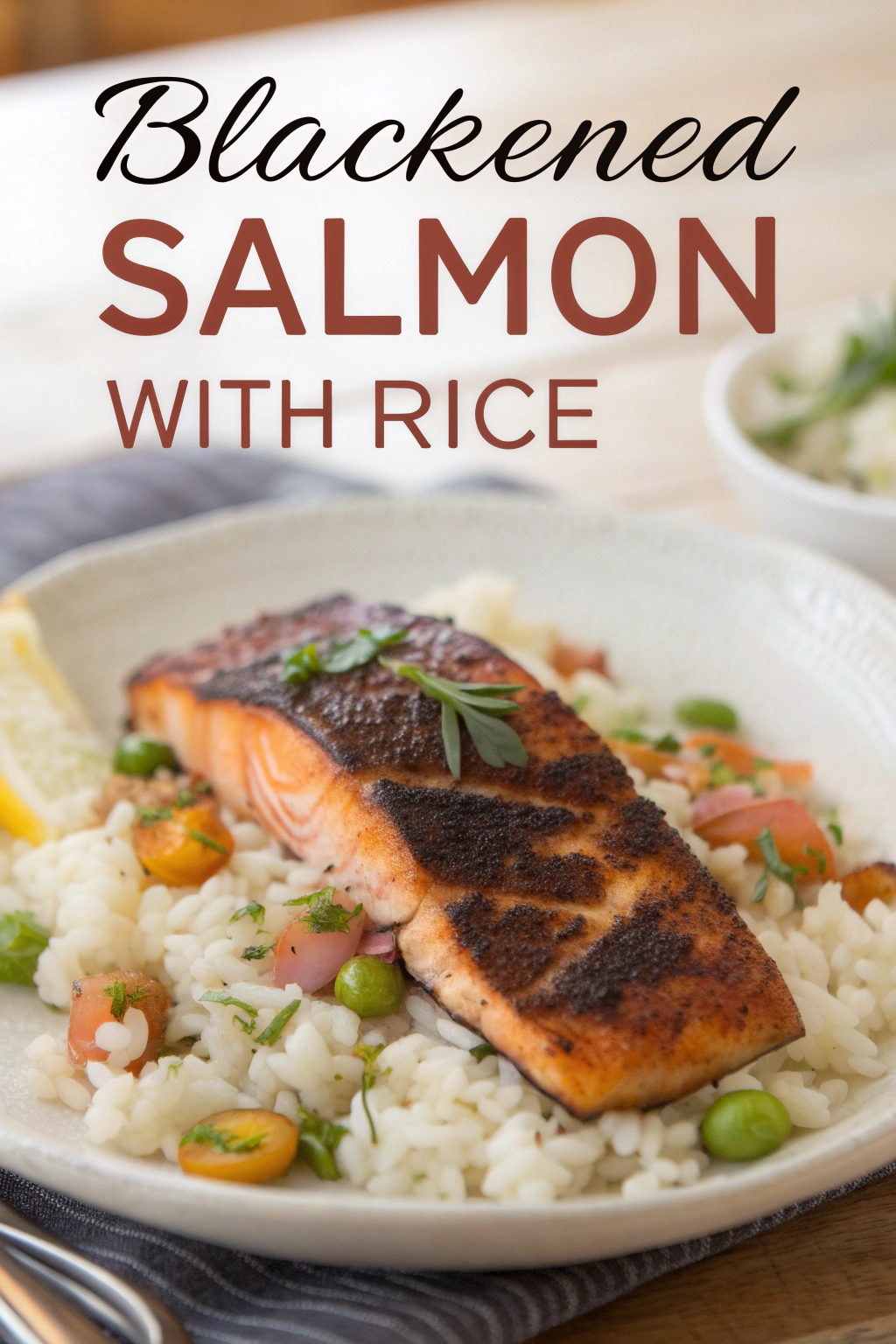
Chef’s Secret: I’ll let you in on a tiny kitchen betrayal: good salmon doesn’t need fancy marinades to sing — it needs a fierce crust. I learned that from a mentor who insisted on piling spices on like a hat, then searing until the air filled with smoky paprika and butter aromas. That charred, peppery exterior with a silky, flakey center? Pure magic. This blackened salmon with rice keeps things simple: bold spice, a hot pan, and a little finishing butter or lemon. Follow my step-by-step and you’ll get restaurant-worthy color and flavor without fuss — plus a few of my favorite tricks so your kitchen smells amazing and your dinner gets eaten in record time.
Quick Facts
- Yield: Serves 4
- Prep Time: 15 minutes
- Cook Time: 25 minutes (rice and salmon together)
- Total Time: 40 minutes
Why This Recipe is Awesome
Because it gives you that crunchy, smoky crust and a juicy center every time. The rice soaks up the savory browned bits and any lemony butter you drizzle over the top. It’s quick, bold, and forgiving — perfect for weeknights when you want big flavor with minimal drama. And honestly, who doesn’t love the sizzle of a hot pan and the smell of toasted spices filling the kitchen?
Ingredients
For the Main Dish:
- 4 skin-on salmon fillets, about 6 oz each
- 1 cup long-grain white rice (or brown rice if you prefer)
- 2 cups low-sodium chicken or vegetable broth (or water)
- 2 tbsp olive oil, divided
- 2 tbsp unsalted butter (optional, for finishing)
- Blackening spice mix: 2 tbsp paprika, 1 tsp cayenne (adjust to taste), 1 tsp garlic powder, 1 tsp onion powder, 1 tsp dried thyme, 1/2 tsp dried oregano, 1 tsp kosher salt, 1/2 tsp black pepper
- 1 lemon, cut into wedges
- 2 tbsp chopped fresh parsley or cilantro, for garnish
For the Sauce / Garnish (optional):
- 2 tbsp melted butter + 1 tbsp lemon juice (quick lemon-butter drizzle)
- OR 1/2 cup plain Greek yogurt + 1 tbsp chopped dill + 1 tsp lemon zest (cool, tangy sauce)
How I Make It
Step 1:
Pat the salmon dry with paper towels — this step matters. Mix the blackening spice in a small bowl and coat each fillet evenly, pressing the rub into the flesh and skin. Heat a heavy skillet (I use cast iron) over medium-high until it’s smoking just a little — you want the pan very hot so the spice charred quickly and the crust forms.
Step 2:
While the pan heats, rinse the rice until the water runs clear for fluffier texture. Add rice and broth to a medium saucepan, bring to a boil, then reduce to a simmer, cover, and cook: white rice 15 minutes or brown rice 35–40 minutes. Fluff with a fork and keep covered until serving.
Step 3:
Add 1 tbsp olive oil to the hot skillet and place the salmon fillets skin-side down. Listen for that satisfying sizzle — it means you’re forming a crispy skin. Sear without moving for 3–4 minutes until the edges go dark and a crust develops. If the spice starts to burn instantly, lower the heat a touch — you want a deep brown, not blackened charcoal.
Step 4:
Flip the fillets and add the remaining 1 tbsp olive oil and optional butter. Spoon some melted butter over the tops and transfer the pan to a 400°F oven for 4–6 minutes (depending on thickness) to finish. Look for opaque flesh that flakes with a fork and a moist, slightly translucent center. If you prefer firmer salmon, add a minute or two.
Step 5:
Rest the fillets for 3 minutes so juices redistribute. Drizzle with the lemon-butter or dollop the yogurt-dill sauce, sprinkle with chopped parsley, and serve over the rice. The contrast of crunchy spice, silky fish, and bright lemon finishes everything beautifully.
Pro Tips
- Bring the salmon to room temperature for 10–15 minutes before cooking so it cooks evenly.
- Pat the skin dry to ensure it crisps. Wet skin steams and stays soft.
- Use a heavy skillet (cast iron or stainless steel) and let it heat thoroughly — that initial sear makes the crust.
- If you don’t have a good oven-safe pan, sear on the stovetop and finish under the broiler for 2–3 minutes, watching closely.
Common Mistakes to Avoid
- Skipping preheating: Classic rookie move. It changes texture and bake time.
- Overmixing: Leads to dense or chewy results. Mix until just combined.
- Guessing cook time: Always use visual cues or a timer, not just vibes.
- Overcrowding pans: Give your food some breathing room to crisp properly.
Alternatives & Substitutions
- Swap salmon with cod or halibut for a milder fish — reduce cook time slightly for thinner fillets.
- Use tofu steaks or thick-cut cauliflower slices for a vegetarian option; press tofu dry and sear the same way for a similar texture.
- Replace butter with olive oil or ghee if dairy-free (ghee still gives buttery notes).
- Use quinoa or cauliflower rice for a gluten-free or lower-carb side; quinoa cooks in about 15 minutes with 1.75 cups water per cup quinoa.
Variations & Tips
- Spicy kick: double the cayenne and add a pinch of smoked paprika for depth.
- Kid-friendly: cut cayenne to 1/4 tsp and add a little brown sugar to the rub to make it sweeter.
- Herb crust: mix chopped parsley, lemon zest, and panko with a little oil and press on top before broiling for a crunchy finish.
- Maple-glazed: brush a thin layer of maple syrup during the last minute of cooking for sweet-savory balance.
- Miso twist: whisk 1 tbsp white miso into the lemon-butter for umami richness and brush before serving.
- Beach picnic version: let the fillets cool, flake, and toss with rice, chopped veggies, and a light vinaigrette for a cold salmon rice salad.
FAQ (Frequently Asked Questions)
- Can I make this ahead of time?
- Yes! You can mix the spice rub and store it, and cook the rice ahead. Cook the salmon just shy of done, refrigerate, then reheat in a hot pan for 2–3 minutes to refresh the crust. Store cooked salmon in an airtight container up to 2 days.
- Can I double the recipe?
- Sure thing. Use two pans or cook in batches to avoid crowding — crowded pans steam instead of sear. You may need extra time if you stack fillets in the oven.
- Can I substitute butter with oil?
- Technically yes, but you’ll miss that buttery magic. Use ¾ the amount of oil.
- How do I know it’s done?
- Look for a flaky texture, opaque color, and internal temperature of 145°F at the thickest part. I also use the fork test: it should flake easily but still feel moist.
- What if I don’t have ingredient X?
- Swap paprika with smoked paprika for a smokier flavor, or use chili powder if you’re out of cayenne. Lemon juice can substitute for vinegar in a pinch.
How I Like to Serve It
I love this salmon over fluffy rice with a wedge of lemon and a crisp green salad on the side. It fits weeknight dinners, date-night meals, or when friends drop by unexpectedly (they’ll think you worked much harder). Pair with a chilled glass of Sauvignon Blanc or a citrusy IPA. In summer, serve with grilled corn; in winter, add roasted root vegetables for comfort.
Notes
- Store leftovers in an airtight container in the fridge for up to 2 days. Reheat gently to avoid drying out.
- Safe cooking temp for salmon is 145°F, but many cooks enjoy pulling salmon at 125–135°F for a moister result — use an instant-read thermometer to be precise.
Final Thoughts
Closing: Now go impress someone — or just yourself — with your homemade masterpiece! The blackened crust, the warm rice, and that citrus finish? Pure dinner joy.

Hi, I’m Lina, the creator of Lina Easy Recipes.Cooking has always been my passion, and I love sharing simple, homemade dishes that anyone can prepare.
Love What You See?
Join me on Pinterest and Facebook for daily cooking inspiration, new recipe ideas, and behind-the-scenes kitchen stories. Let’s cook something wonderful together!