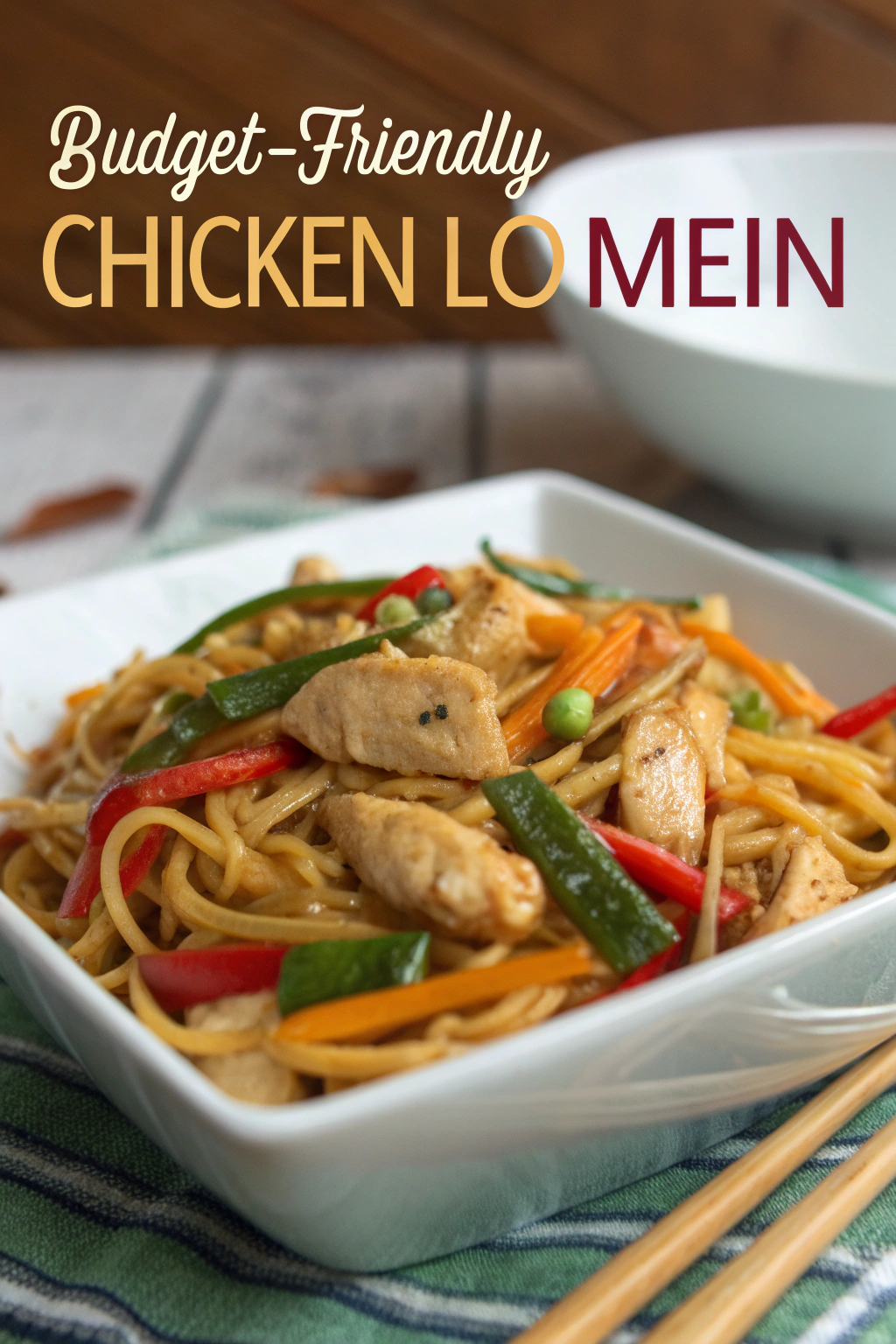
Okay, confession time: I once ordered takeout lo mein so often that my delivery driver knew my dog’s name. True story. But I finally decided to stop funding other people’s dinner habits and make a bowl that tastes just as comforting, for a lot less cash and a lot more pride. This recipe lives at the crossroad of pantry-friendly and totally satisfying — chewy noodles, savory sauce, and that little bit of char on the chicken that makes you smile. It comes together fast, smells like a weekend market in my kitchen, and cleans up without drama. Ready to ditch takeout containers and make the best budget-friendly lo mein you’ve ever twirled with chopsticks (or a fork)?
Quick Facts
- Yield: Serves 4
- Prep Time: 15 minutes
- Cook Time: 15 minutes
- Total Time: 30 minutes
Why This Recipe is Awesome
This lo mein tastes like the good stuff but won’t wreck your wallet. You get slippery, chewy noodles, glossy savory-sweet sauce, and browned, juicy chicken — all in one skillet. It’s quick, forgiving, and perfect for weeknights when you want comfort without fuss. Plus: it makes the kitchen smell amazing (think garlic, ginger, and caramelizing soy) and has a satisfying mix of textures — soft noodles, crisp-tender veggies, and those slightly crispy chicken edges. It’s so easy even your blender can’t mess it up.
Ingredients
For the Main Dish:
- 12 oz dried spaghetti or lo mein noodles
- 1 lb boneless skinless chicken thighs, cut into thin strips (cheaper and juicier than breasts)
- 2 tbsp vegetable oil, divided
- 2 cups shredded green cabbage (or bagged coleslaw mix)
- 1 medium carrot, julienned or thinly sliced
- 1 red bell pepper, thinly sliced (optional for color)
- 3 green onions, sliced (whites and greens separated)
- 2 cloves garlic, minced
- 1 tbsp fresh ginger, minced (or 1 tsp ground ginger)
- Salt and pepper to taste
For the Sauce / Garnish (if applicable):
- 1/4 cup soy sauce (or tamari for gluten-free)
- 2 tbsp oyster sauce (optional — adds depth)
- 1 tbsp brown sugar or honey
- 1/2 cup low-sodium chicken broth or water
- 1 tsp sesame oil
- 1 tsp cornstarch mixed with 2 tbsp cold water
- 1 tbsp toasted sesame seeds (optional garnish)
How I Make It
Step 1:
Bring a large pot of salted water to a boil and cook the noodles until just shy of al dente (usually 7–9 minutes for spaghetti). Drain, toss with a splash of oil to prevent sticking, and set aside. While the water heats, pat the chicken dry, season with a pinch of salt and pepper, and get your sauce mixed (soy, oyster sauce, brown sugar, broth, sesame oil) in a bowl.
Step 2:
Heat a large skillet or wok over medium-high heat until it sizzles. Add 1 tbsp vegetable oil, then place the chicken in a single layer. Let it sear without fussing for about 3–4 minutes until you hear that satisfying sizzle and the edges get golden. Toss and cook another 2 minutes until cooked through and juicy. Transfer chicken to a plate.
Step 3:
Add the remaining 1 tbsp oil to the hot pan and toss in the garlic, ginger, and the white parts of the green onions. Stir for about 30 seconds until fragrant — you’ll smell the aroma right away. Add the carrot, bell pepper, and cabbage. Stir-fry for 2–3 minutes until the vegetables are bright, slightly softened, and still have a bite.
Step 4:
Return the chicken to the pan, pour in the sauce, and bring it to a gentle boil. Stir the cornstarch slurry and add it in; the sauce will thicken and become glossy in about 1 minute. Add the drained noodles and toss vigorously for 1–2 minutes so every strand gets coated, and the edges pick up a little caramelization (that’s flavor!). Taste and adjust with salt, pepper, or a splash more soy.
Step 5:
Turn off the heat, stir in the green parts of the green onions, and finish with 1 tsp sesame oil for an aromatic punch. Sprinkle with toasted sesame seeds if you like, and serve hot. The noodles should glisten, the chicken should have golden edges, and the vegetables should still offer a slight crunch. Dig in!
Pro Tips
- Use chicken thighs for more forgiving, juicier meat — they brown nicely and stay tender.
- If your noodles stick, toss them with a splash of oil right after draining. Don’t rinse — you want that starch to help the sauce cling.
- Work on high heat and keep everything moving. That high sizzle gives you color and a little smoky flavor (the good kind).
- Want the sauce thicker? Mix another 1/2 tsp cornstarch with water and stir in; it thickens fast.
Common Mistakes to Avoid
- Skipping preheating: Classic rookie move. It changes texture and bake time.
- Overmixing: Leads to dense or chewy results. Mix until just combined.
- Guessing cook time: Always use visual cues or a timer, not just vibes.
- Overcrowding pans: Give your food some breathing room to crisp properly.
Alternatives & Substitutions
- Swap chicken for firm tofu or tempeh to make this vegetarian; press and pan-fry tofu first for texture.
- Use tamari or coconut aminos for a gluten-free version — flavor stays similar but labels change.
- Replace spaghetti with rice noodles for a slightly different chew; cook according to package and toss quickly.
- Dairy-free: the whole recipe uses no dairy, so no changes needed for lactose-free diets.
Variations & Tips
- Spicy: add 1–2 tsp chili garlic sauce or a pinch of red pepper flakes to the sauce.
- Kid-friendly: skip the oyster sauce and extra pepper, add a little honey for sweetness.
- Veg-forward: double the veggies and use half the chicken to stretch the meal.
- One-pan twist: cook noodles directly in a bit more broth (3/4 cup) and cover for a few minutes — you’ll get a saucier pan sauce.
- Garnish upgrade: top with chopped roasted peanuts and cilantro for a Thai-ish spin.
FAQ (Frequently Asked Questions)
- Can I make this ahead of time?
- Yes! Cook everything, but keep the noodles and sauce slightly underdone. Store in airtight containers in the fridge for up to 3 days. Reheat in a skillet with a splash of water or broth to revive the sauce and noodles.
- Can I double the recipe?
- Sure thing. Use a very large skillet or divide the work between two pans to avoid overcrowding — you want that sear.
- Can I substitute butter with oil?
- Technically yes, but you’ll miss that buttery magic. Use ¾ the amount of oil.
- How do I know it’s done?
- The chicken reaches safe doneness when it’s no longer pink inside and juices run clear (or use a thermometer: 165°F). The vegetables should be bright and slightly crisp, and the noodles should feel tender with a little chew.
- What if I don’t have ingredient X?
- No oyster sauce? Use an extra splash of soy and a pinch of sugar. No fresh ginger? Use 1 tsp ground ginger or omit — the dish will still sing.
How I Like to Serve It
I pile this lo mein into big shallow bowls and let everyone add their own chili sauce at the table. It pairs beautifully with simple sides: steamed bok choy, cucumber salad, or a crisp green salad with rice vinegar. It works for weeknight dinners, casual potlucks, or as comfort food after a long day. I reach for it when I want something warm, colorful, and reliably cheerful.
Notes
- Store leftovers in the fridge for up to 3 days. Reheat on the stove with a splash of broth for best texture.
- Safe internal temperature for cooked chicken: 165°F.
Final Thoughts
Closing: You just made a thrift-smart, delicious bowl of lo mein — now go impress someone, or just yourself, with your homemade masterpiece!

Hi, I’m Lina, the creator of Lina Easy Recipes.Cooking has always been my passion, and I love sharing simple, homemade dishes that anyone can prepare.
Love What You See?
Join me on Pinterest and Facebook for daily cooking inspiration, new recipe ideas, and behind-the-scenes kitchen stories. Let’s cook something wonderful together!