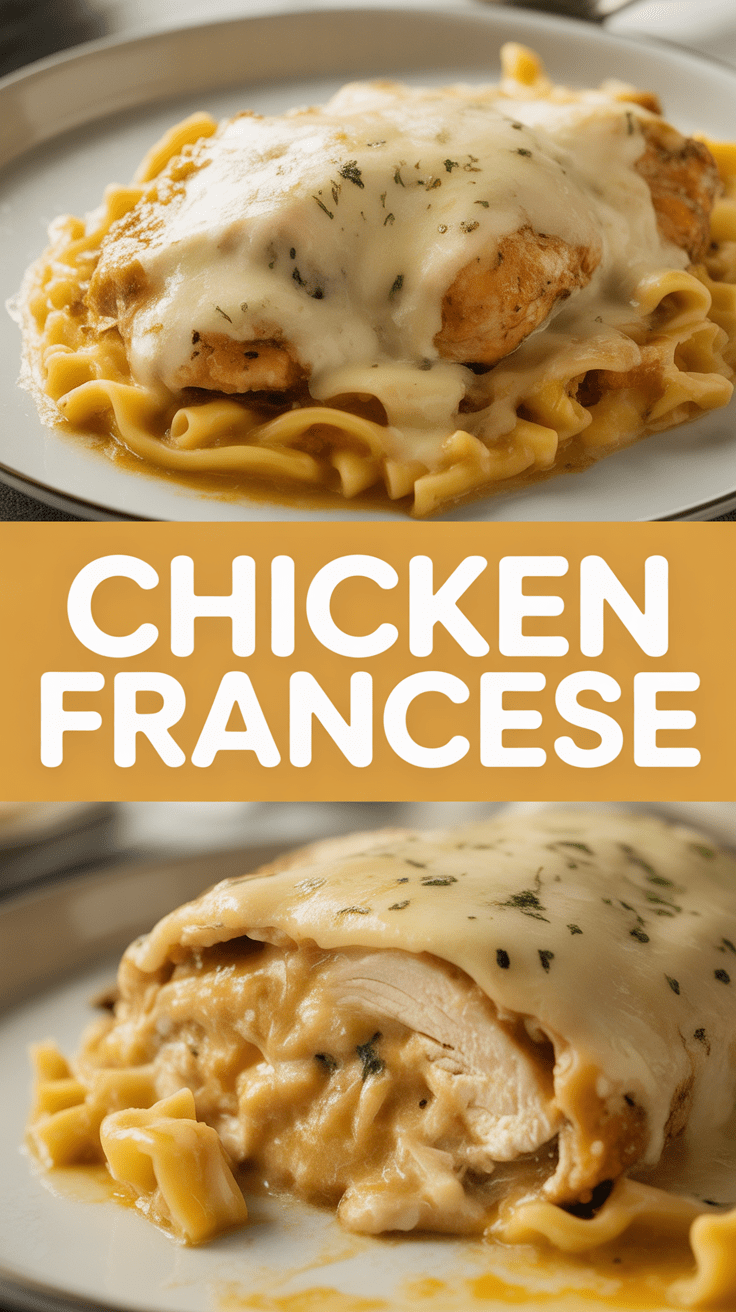
If dinner had a glow-up, it would be Chicken Francese — lemony, lightly battered, and pretending to be fancier than it really is so you can impress people without breaking a sweat. It looks like you spent hours, but really you spent about as much time as it takes to find the good butter in your fridge.
Why This Recipe Is Awesome
This version nails the balance between zing and comfort: a silky lemon-butter-simmer sauce that clings to a tender, crisp-edged chicken cutlet. The magic trick is a quick dredge and a hot pan — no deep frying, no complicated marinades, and almost zero babysitting. Acid from the lemon brightens everything so the sauce feels indulgent rather than heavy, and a brief pan finish keeps the crust intact while melding flavors. In short: dramatic plate, tiny effort, maximum “I made this” confidence.
Ingredients You’ll Need
4 boneless, skinless chicken breasts (about 6–8 oz each) — slice in half horizontally if they’re thick
Salt and freshly ground black pepper — be generous with the salt, not the drama
1 cup all-purpose flour — for the light, crisp coating
2 large eggs
2 tablespoons milk or water — to loosen the eggs
4 tablespoons unsalted butter, divided — we’ll use most of it for sauce; save dignity with good butter
2 tablespoons olive oil — stabilizes the pan heat so butter doesn’t burn
1/2 cup dry white wine or chicken broth — wine adds brightness; broth works if you’re avoiding booze
Juice of 2 large lemons (about 1/3 to 1/2 cup) — fresh is non-negotiable
1/2 cup low-sodium chicken stock — stretches the sauce and keeps it glossy
2 tablespoons chopped flat-leaf parsley — for color and freshness
Optional: 1–2 cloves garlic, thinly sliced — if you love garlic without announcing it
Optional: a pinch of red pepper flakes — if you like a tiny, polite kick
Fresh lemon slices or wedges for serving — because presentation convinces people you tried harder
Step-by-Step Instructions
Step 1
Prep the chicken: pat the breasts dry, then slice horizontally to make thinner cutlets if needed; pound very gently between sheets of plastic wrap to even thickness, about 1/2 inch. Season both sides with salt and pepper, then set up a dredging station — flour in one shallow dish, beaten eggs mixed with milk in another. Heat a large skillet over medium-high with 2 tablespoons butter and the olive oil; when the butter is foamy and just shy of browning, dredge each cutlet in flour, shake off excess, dip in egg, and return to the flour briefly, then place in the skillet. Sear until golden brown, about 3 minutes per side, working in batches so the pan isn’t crowded; transfer cooked cutlets to a warm plate while you make the sauce.
Step 2
Make the lemon-butter sauce: reduce heat to medium, add the wine (or broth) to deglaze the pan and scrape up those brown bits, simmer until slightly reduced, then add chicken stock and lemon juice and let it bubble for a minute. Return the pan to low heat and whisk in the remaining 2 tablespoons butter, a piece at a time, until the sauce is glossy and slightly thickened—taste and adjust salt, pepper, and lemon. Nestle the cutlets back into the skillet just to warm through and spoon sauce over them for the last minute; sprinkle parsley and, if using, the red pepper flakes. Serve immediately with pan sauce drizzled over and lemon wedges on the side.
Common Mistakes to Avoid
Overcrowding the pan — this steam-messes the crust, and you lose the crisp edge that makes Francese interesting. Using bottled lemon juice — it flattens the dish; fresh lemon changes the whole personality of the sauce. Letting the butter burn — if the pan is too hot, you’ll get bitter burnt bits; use oil at the start and moderate the heat. Skipping the deglaze — those brown bits are flavor gold; don’t wipe them off with a paper towel like a culinary amateur.
Alternatives & Substitutions
Chicken thighs: boneless, skinless thighs work if you want a juicier, more forgiving cut — cook a minute or two longer. Gluten-free: swap in rice flour or a 1:1 gluten-free flour blend for dredging. No wine: extra chicken stock plus a splash of white wine vinegar or a teaspoon of Dijon mustard brightens the sauce similarly. Dairy-free: use olive oil as the fat and finish with a knob of dairy-free butter substitute for richness. Herbs: swap parsley for tarragon or basil if you want a different aromatic vibe — I like tarragon with lemon for a slightly upscale taste.
FAQ
Question 1?
Can I make this ahead? Yes, partially — you can bread and sear the cutlets, then cool and refrigerate for same-day service; reheat gently in a low oven and finish in the pan with the fresh sauce so it doesn’t get soggy. The sauce is best made just before serving, but you can keep a reduced stock-and-lemon base chilled and finish with butter when you’re ready.
Question 2?
How do I keep the crust from falling off? Dry the chicken well and don’t overdo the egg wash — a light double-dip (flour, egg, quick flour) is enough. Also, don’t flip too often; let one side form a golden crust before turning, and avoid crowding the pan so the surface temperature stays steady.
Question 3?
What should I serve with it? Keep sides simple: lemony rice, buttered pasta, or roasted asparagus are classic and require minimal thought. Mashed potatoes are not wrong if you want cozy; a crisp green salad balances the richness if you’re trying to look health-conscious.
Final Thoughts
Chicken Francese is the kind of dinner that makes you look like somebody who plans culinary things, without needing planning or a personality transplant. It’s fast, adaptable, and reliably delicious — and it reheats decently if there are leftovers (there probably won’t be). Make it when you want to impress friends, cheer up a weeknight, or convince yourself you have your life together. Now go butter a pan and pretend like you meant to be this fancy.
Hi, I’m Lina, the creator of Lina Easy Recipes.Cooking has always been my passion, and I love sharing simple, homemade dishes that anyone can prepare.
Spread the love
Love What You See?
Join me on Pinterest and Facebook for daily cooking inspiration, new recipe ideas, and behind-the-scenes kitchen stories. Let’s cook something wonderful together!