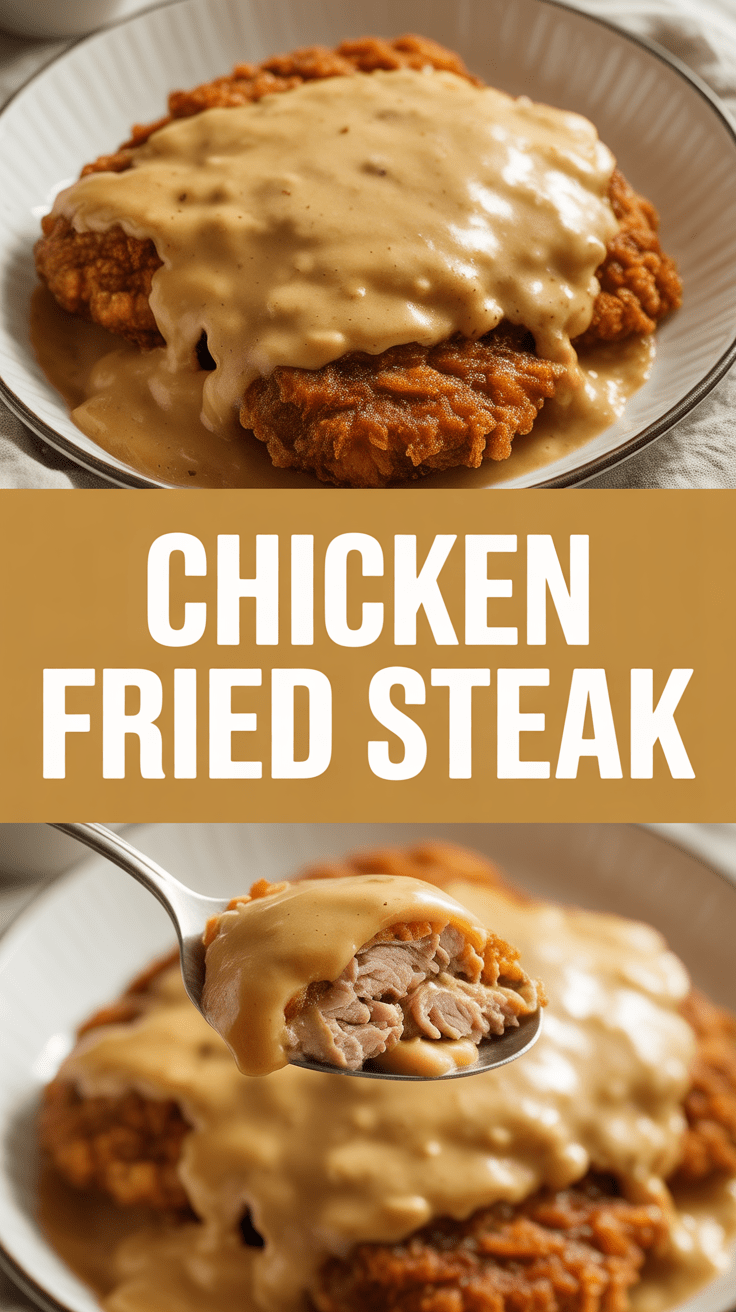
If your idea of a good time is crispy, peppery crust giving way to a tender slab of steak, and you’d rather bribe yourself with gravy than wrestle with complicated technique, you’re in the right place — this is comfort food that doesn’t need a PhD in frying.
Why This Recipe Is Awesome
This chicken fried steak works because it plays to two humors: science and laziness. The science part is simple — pounding thin, inexpensive cube steak breaks down the connective tissue so it eats like a tender cut without costing a mortgage payment. The laziness part is even simpler: a three-bowl dredge (seasoned flour, egg wash, seasoned flour again) creates a crunchy crust that survives short baths in hot oil and a rushed dinner schedule. It’s rustic, forgiving, and loudly satisfying — everything a midweek queen or king needs.
Ingredients You’ll Need
4 cube steaks (about 4–6 oz each) — or tenderized round steak if you like DIY tenderizing
1 1/2 cups all-purpose flour — plus extra for dusting, if you’re fussy
2 teaspoons garlic powder
2 teaspoons onion powder
1 1/2 teaspoons smoked paprika or regular paprika
1 1/2 teaspoons kosher salt (adjust to taste)
1 teaspoon black pepper — freshly cracked if you want to look impressive
2 large eggs
1/2 cup buttermilk or plain whole milk with 1 tsp vinegar stirred in
Vegetable oil or peanut oil for frying (enough to shallow-fry, about 1/2 inch in a skillet)
2 tablespoons butter — for flavor and gravy richness
2 tablespoons flour — to make the gravy roux (use additional if you like thicker gravy)
2 cups whole milk — or more depending on gravy thickness
Salt and pepper to finish the gravy
Optional: hot sauce splash in the egg wash for personality
Step-by-Step Instructions
Step 1
Prep like a calm person: pat steaks dry, then pound each gently with a meat mallet to a uniform thickness (about 1/4 to 1/2 inch). Season both sides lightly with salt and pepper. Set up a dredging station: bowl one with seasoned flour (mix 1 1/4 cups flour with garlic powder, onion powder, paprika, salt, and pepper), bowl two with beaten eggs and buttermilk, bowl three with plain flour for a final coat. Dip each steak in flour, then egg, then press into the plain flour to get a good crust — yes, double-dredging is a tiny cheat that makes the crust hold up. Let them rest on a wire rack or plate while the oil heats; resting helps the crust stick and stops you from dropping sad crumbs into the pan.
Step 2
Heat a heavy skillet over medium-high and pour in oil to reach about 1/2 inch depth. Test it by dropping a pinch of flour — it should sizzle immediately but not burn. Fry steaks in batches so they aren’t crowded: about 3–4 minutes per side until golden brown and internal texture is no longer chewy. Transfer to a paper towel-lined rack to drain and keep warm. For the gravy, pour off most oil leaving about 2 tablespoons and any brown bits, melt in butter, whisk in 2 tablespoons flour and cook briefly to eliminate raw flour taste, then slowly whisk in milk until smooth. Simmer until thickened, season to taste, and strain if you want ultra-silky gravy. Spoon over steaks and serve with mashed potatoes, biscuits, or whatever carb you have suspiciously staring at you from the pantry.
Common Mistakes to Avoid
Underseasoning the flour is the fastest route to blandness; the crust needs salt. Oil that’s too cool will make the crust soggy and oil-logged; too hot and you’ll get burnt shell with raw interior. Crowding the pan drops the oil temp and gives you steamed edges — do fewer pieces, not more. Skipping the rest after dredging increases crumb loss in the pan. And please, don’t skip the gravy — it’s not optional unless you enjoy dry food and sadness.
Alternatives & Substitutions
If you want a shortcut, use pounded pork chops or boneless chicken thighs — same method, slightly different timing. Gluten-free? Use a 1:1 GF flour blend and check how it browns; rice flours crisp faster so watch the heat. Low-milk? Use diluted evaporated milk or unsweetened almond milk for gravy, but add a bit more butter for mouthfeel. For a lighter crust, swap half the flour for fine cornmeal — it gives texture and a Southern twang. Personal opinion: skip the pre-made gravy packets; they scream convenience at the cost of character.
FAQ
Question 1?
Can I make this ahead of time? Yes — you can dredge and refrigerate the steaks for a few hours or overnight. Fry them just before serving so the crust stays crispy. If you must reheat, use a 350°F oven on a rack so steam doesn’t sog the crust; a microwave will betray you.
Question 2?
What cut of meat should I use? Cube steak is classic because it’s cheap and tenderized, but any thinly sliced round or even pork chops can work. If using a non-tenderized piece, pound it more or marinate briefly in buttermilk to break down fibers.
Question 3?
How do I get extra-crispy crust without burning? Keep the oil temperature steady (around 350–375°F), use a heavy skillet to hold heat, and don’t overcrowd. Double-dredging helps, and resting the coated steaks gives the coating time to set before hitting the oil.
Final Thoughts
Chicken fried steak is proof that you can make something indulgent without making your life miserable. A little pounding, a little dredging, and a confident pan do the work; the reward is crunchy, savory, gravy-dripping slices that feel like a hug for your stomach. Try it once as written, then tinker — add cayenne for a kick, swap milks, or serve with a fried egg on top if you’re feeling extra. If you mess up, you learned something and you still ate dinner. That’s a win in my book.
Hi, I’m Lina, the creator of Lina Easy Recipes.Cooking has always been my passion, and I love sharing simple, homemade dishes that anyone can prepare.
Spread the love
Love What You See?
Join me on Pinterest and Facebook for daily cooking inspiration, new recipe ideas, and behind-the-scenes kitchen stories. Let’s cook something wonderful together!