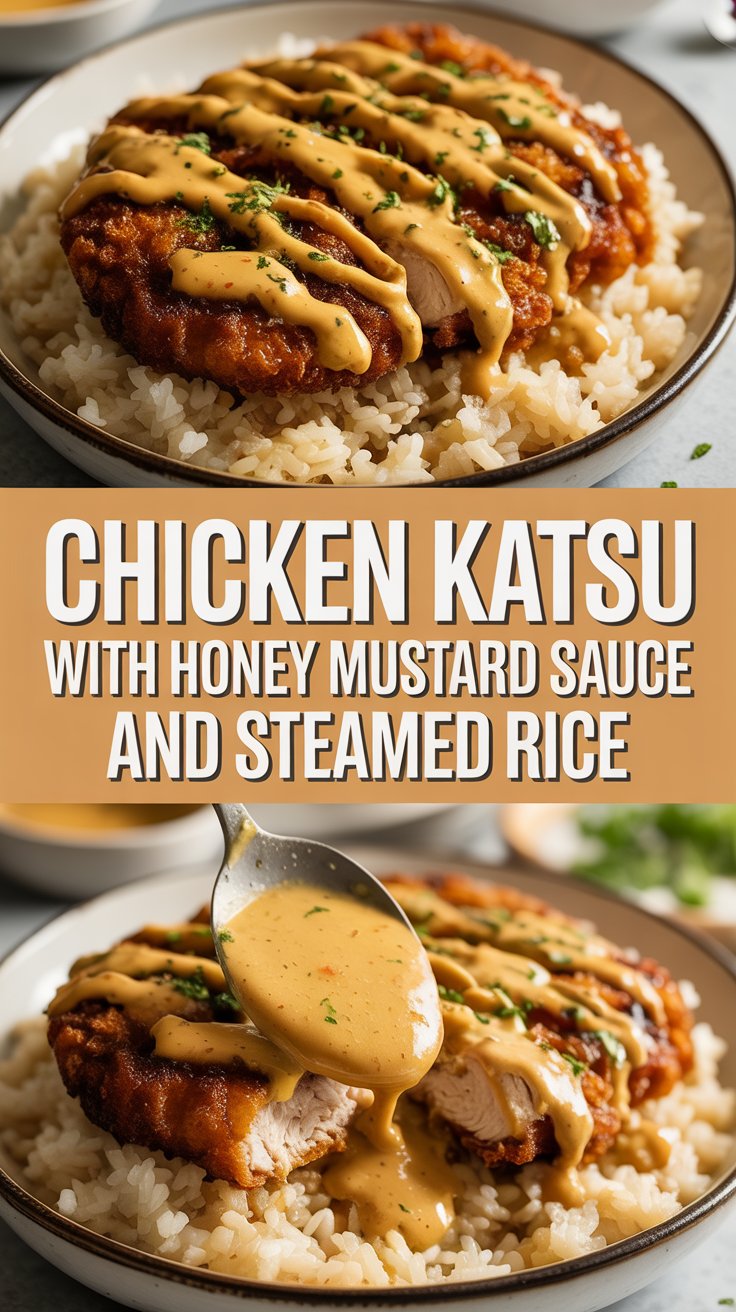
Chicken katsu with honey mustard sauce and steamed rice
Spread the love
Chef’s Secret: Okay, lean in — I found the trick that turns average chicken into something you’ll write home about: a double-hit of texture. First, I pound chicken thin so every bite cooks evenly; second, I press the panko right into the egg so you get maximum crunch. The result? A golden, crackling crust that sings when you slice into it and a juicy center that stays tender. This chicken katsu with honey mustard sauce and steamed rice feels restaurant-fancy, but I promise you’ll make it on a weeknight. I love how the honey and Dijon balance sweet and tangy while the rice soaks up the crispy bits — pure comfort with a little show-off moment.
Quick Facts
Yield: Serves 4
Prep Time:20 minutes
Cook Time:15 minutes
Total Time:35 minutes
Why This Recipe is Awesome
This recipe hits the texture jackpot: a shatteringly crisp exterior, a moist, tender chicken interior, and a sticky-sweet-tangy honey mustard that brightens every bite. It smells like a cozy diner the second the oil hits the pan — that sizzling sound alone will make your kitchen feel celebratory. It uses pantry-friendly ingredients and stays forgiving: if your crust browns faster, lower the heat; if your panko looks pale, give it another minute. It’s easy enough for a weeknight and special enough for guests. Who doesn’t love a crunchy edge and juicy center?
Ingredients
For the Main Dish:
4 boneless, skinless chicken breasts (about 1.5–2 lbs) — trim and halve if large
1 cup all-purpose flour
2 large eggs, beaten
2 cups panko breadcrumbs
1 tsp kosher salt
1/2 tsp black pepper
1/2 tsp garlic powder
Vegetable or canola oil for frying (about 1–1.5 cups, enough for ~1/2″ depth)
2 cups jasmine or short-grain rice (uncooked)
2 1/2 cups water for the rice
For the Sauce / Garnish:
1/4 cup honey
3 tbsp Dijon mustard
2 tbsp mayonnaise (or Greek yogurt)
1 tbsp rice vinegar or lemon juice
Pinch of salt and pepper
Optional garnish: sliced green onions, toasted sesame seeds, lemon wedges
How I Make It
Step 1:
Start the rice first: rinse 2 cups jasmine rice until the water runs almost clear. Combine rice and 2 1/2 cups water in a saucepan, bring to a boil, then reduce to low, cover, and simmer for 15 minutes. Turn off the heat and let it rest, covered, for 10 minutes. You’ll smell warm, sweet rice perfume and see glossy grains when it’s done — perfect for catching sauce.
Step 2:
Prepare the chicken: place each breast between plastic wrap and pound to about 1/2 inch thickness with a meat mallet or rolling pin (I hum while I do this — weirdly therapeutic). Season both sides with 1 tsp salt, 1/2 tsp pepper, and 1/2 tsp garlic powder. Set up your dredging station: one plate with 1 cup flour, one bowl with 2 beaten eggs, and one plate with 2 cups panko. Press the chicken in flour, dip in egg, then press firmly into panko so the crumbs cling well.
Step 3:
Heat a large skillet over medium and pour in oil to about 1/2 inch depth. Aim for about 350°F if you use a thermometer — the oil should shimmer and give a soft sizzle when you drop in a breadcrumb. Fry the cutlets in batches so you don’t overcrowd the pan; I usually do 2 at a time. Cook each side for 3–4 minutes until a deep golden brown and the crust crackles when you lift it. You’ll hear a satisfying sizzle and smell rich, toasty notes.
Step 4:
Transfer cooked cutlets to a wire rack over a sheet tray and let them rest for 5 minutes. This keeps the crust crisp and lets the juices settle. While the chicken rests, whisk the sauce: combine 1/4 cup honey, 3 tbsp Dijon, 2 tbsp mayo, and 1 tbsp rice vinegar. Taste and adjust — want tang? Add a bit more mustard. Want sweeter? Add honey.
Step 5:
Slice the katsu into strips that show off the juicy center and plate over steaming rice. Spoon the honey mustard over the slices or serve it on the side for dipping. Finish with sliced green onions, a shower of sesame seeds, and a squeeze of lemon if you like a bright lift. Watch the crunch meet the rice and try not to make embarrassing noises at the table.
Pro Tips
Keep oil steady at around 350°F. Too hot and the crust burns before the center cooks; too cool and the cutlet soaks oil.
Use a wire rack for resting so steam doesn’t soggy the crust — breading stays crisp much longer.
Press the panko into the egg with your hand for maximum adhesion; loose crumbs fall off during frying.
If you want oven-finish convenience, bake at 400°F for 8–10 minutes after pan-frying to ensure even doneness.
Common Mistakes to Avoid
Skipping preheating: Classic rookie move. It changes texture and bake time.
Overmixing: Leads to dense or chewy results. Mix until just combined.
Guessing cook time: Always use visual cues or a timer, not just vibes.
Overcrowding pans: Give your food some breathing room to crisp properly.
Alternatives & Substitutions
Swap chicken with firm tofu (press it dry) for a vegetarian option — expect firmer texture and great crunch.
Use gluten-free panko or crushed cornflakes for a gluten-free version; reduce wet batter time so crumbs stick better.
Replace mayonnaise in the sauce with plain Greek yogurt for tang and fewer calories.
Dairy-free? Skip the mayo and use extra Dijon and a touch of neutral oil — you’ll miss the buttery magic, but the flavor stays bright.
Variations & Tips
Spicy honey mustard: add 1 tsp sriracha or gochujang to the sauce for a kick.
Kid-friendly: cut the katsu into strips and serve with carrot sticks and a simple ketchup-honey dip.
Oven-baked version: brush cutlets with oil and bake at 425°F for 12–15 minutes, flipping once.
Miso twist: mix 1 tbsp white miso into the sauce for an umami hit that plays beautifully with the crunch.
Coconut crunch: mix 1 cup panko with 1 cup unsweetened shredded coconut for a tropical vibe.
FAQ (Frequently Asked Questions)
Can I make this ahead of time?
Yes! Bread the cutlets and store them in the fridge for up to 24 hours or freeze layered with parchment for up to a month. Reheat in a 375°F oven for 8–10 minutes to restore crispness.
Can I double the recipe?
Sure thing. Fry in batches and keep finished pieces on a wire rack in a low oven (200°F) while you finish the rest so the oil stays steady and nothing steams soggy.
Can I substitute butter with oil?
Technically yes, but you’ll miss that buttery magic. Use ¾ the amount of oil compared to butter and choose a neutral oil with a high smoke point.
How do I know it’s done?
Look for a deep golden-brown crust and an internal temperature of 165°F. Slice once to confirm juicy, opaque meat and clear juices.
What if I don’t have ingredient X?
No panic. Swap panko with regular breadcrumbs or crushed crackers. No Dijon? Use yellow mustard and add a splash of vinegar for tang.
How I Like to Serve It
I serve this katsu on a mound of steaming rice with quick pickled cucumbers or shredded cabbage for crunch. Add a cold lager or green tea and you’ve got a perfect weeknight dinner that feels like a little celebration. It also shines at potlucks — slice it ahead and bring the sauce on the side so folks can dip to their heart’s content.
Notes
Store leftovers in an airtight container for up to 3 days. Reheat in the oven at 375°F for 8–10 minutes to keep the crust crisp.
Safe internal temperature for chicken: 165°F.
Final Thoughts
Closing: Now go impress someone — or just yourself — with your homemade masterpiece!
Hi, I’m Lina, the creator of Lina Easy Recipes.Cooking has always been my passion, and I love sharing simple, homemade dishes that anyone can prepare.
Spread the love
Love What You See?
Join me on Pinterest and Facebook for daily cooking inspiration, new recipe ideas, and behind-the-scenes kitchen stories. Let’s cook something wonderful together!