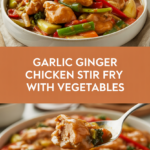
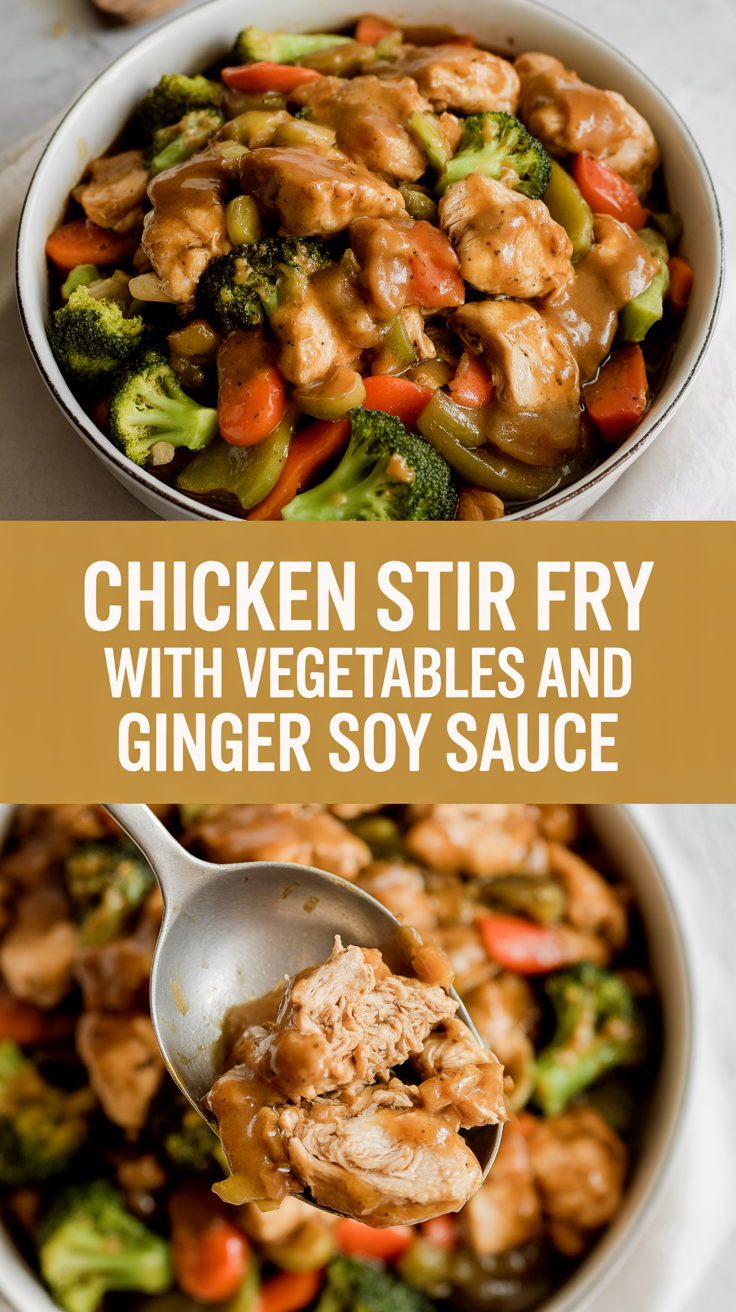
Chef’s Secret time: I’ll let you in on the little trick that turns a simple chicken stir fry into restaurant-level goodness without fancy equipment. I velvet the chicken with a quick cornstarch–soy marinade for tenderness and a silky bite, and I always finish the sauce over the highest heat my pan will take so it glazes the vegetables like a glossy apron. The result? Bright, crunchy veggies, juicy ribbons of chicken, and a ginger-soy sauce that smells like the kitchen itself decided to sing. Trust me—once you try this one technique, you’ll use it on everything from tofu to shrimp.
Quick Facts
- Yield: Serves 4
- Prep Time: 15 minutes
- Cook Time: 10 minutes
- Total Time: 25 minutes
Why This Recipe is Awesome
This stir fry delivers contrast: crisp-tender vegetables, glossy saucy chicken, and punchy ginger-soy flavor. It tastes fresh and bright, cooks fast, and feels fancy without the fuss. It’s so easy even your hangry self will forgive the 15-minute prep. Who doesn’t love sizzling aromatics and a sauce that clings to every little veggie nook?
Ingredients
For the Main Dish:
- 1.25 pounds boneless, skinless chicken breasts, thinly sliced against the grain (about 20 ounces)
- 2 tbsp cornstarch (for velveting the chicken)
- 1 tsp kosher salt and ¼ tsp black pepper
- 2 tbsp vegetable oil (or canola)
- 1 tbsp toasted sesame oil (for finishing)
- 3 cloves garlic, minced
- 1 tbsp fresh ginger, grated (about 1 tbsp)
- 1 medium red bell pepper, thinly sliced
- 1 medium yellow bell pepper, thinly sliced
- 2 cups broccoli florets (about 6 oz)
- 1 cup carrots, thinly sliced on a bias
- 1 cup snap peas or snow peas
- 2 green onions, sliced on the diagonal for garnish
- 1 tbsp sesame seeds (optional)
For the Sauce / Garnish (if applicable):
- ¼ cup low-sodium soy sauce
- 2 tbsp rice vinegar
- 2 tbsp honey or brown sugar
- 1 tbsp oyster sauce (optional but lovely)
- ½ cup chicken broth or water
- 1 tsp cornstarch mixed with 1 tbsp cold water (slurry)
- Red pepper flakes or sriracha to taste (optional)
How I Make It
Step 1:
I toss the thinly sliced chicken with 2 tbsp cornstarch, 1 tsp salt, and ¼ tsp pepper in a bowl until every piece gets a light, powdery coating. That little cornstarch blanket locks in juiciness and gives the finished chicken a silky sheen. Let it sit while you slice the veggies—this only needs about 5–10 minutes.
Step 2:
Heat a large skillet or wok over high heat until it just starts to smoke. Add 2 tbsp vegetable oil and swirl. Add the chicken in a single layer and let it sear—don’t fuss with it—until the edges turn golden, about 2–3 minutes per side depending on thickness. You’ll hear a satisfying sizzle and smell that toasty, rich aroma. Scoop the chicken out and set aside.
Step 3:
Add a splash more oil if needed, then toss in the garlic and ginger. Stir for about 20–30 seconds until fragrant—don’t let them brown or burn. Add the carrots and broccoli first, stir-frying for 2 minutes to get them starting to soften. Next stir in the bell peppers and snap peas and keep everything moving so you keep that bright color and snap. The kitchen will smell gingery, sweet, and a little toasty—my favorite combo.
Step 4:
Pour in the sauce mixture (soy sauce, rice vinegar, honey, oyster sauce, and broth). Bring it to a lively boil and add the cornstarch slurry. Stir constantly for 30–60 seconds until the sauce thickens and glazes the veggies. Return the chicken to the pan and toss to coat. Cook just long enough for the chicken to reach 165°F (use a thermometer or cut a piece open)—this takes about 1–2 minutes more. The sauce should cling like candy to the chicken and vegetables.
Step 5:
Finish with a drizzle of 1 tbsp toasted sesame oil, toss in the green onions, and sprinkle sesame seeds if you like. Serve immediately over steamed rice or noodles. Listen for the final gentle sizzle and admire the glossy, colorful plate before digging in.
Pro Tips
- Slice the chicken thin and against the grain for the most tender bites.
- Keep all ingredients prepped and nearby—this cooks fast. Mise en place saves your sanity.
- Don’t crowd the pan. Work in batches if needed so everything gets a proper sear and stays crisp.
- If the sauce thickens too much, whisk in a tablespoon of warm water to loosen it without losing shine.
Common Mistakes to Avoid
- Skipping preheating: Classic rookie move. It changes texture and bake time.
- Overmixing: Leads to dense or chewy results. Mix until just combined.
- Guessing cook time: Always use visual cues or a timer, not just vibes.
- Overcrowding pans: Give your food some breathing room to crisp properly.
Alternatives & Substitutions
- Swap chicken for firm tofu (press and pat dry) for a vegetarian option; increase cornstarch to 3 tbsp so the tofu gets a nice crust.
- Use chicken thighs instead of breasts for more fat and flavor; they stay juicier and handle high heat well.
- For gluten-free, use tamari or coconut aminos instead of soy sauce—flavor stays rich.
- Replace honey with maple syrup for a vegan-friendly sweetener; the sauce gets a slightly different caramel note.
Variations & Tips
- Make it spicy: add 1–2 tsp sriracha to the sauce or toss in sliced Thai chiles.
- Kid-friendly: reduce garlic/ginger and swap honey for less assertive brown sugar.
- Cashew twist: stir in ½ cup roasted cashews at the end for crunch and nuttiness.
- Tropical: add 1 cup pineapple chunks in step 4 for a sweet-savory pop.
- Noodle bowl: toss hot stir fry with cooked udon or rice noodles and a splash of sesame oil.
- Meal-prep: keep sauce separate until reheating so veggies don’t go soggy.
FAQ (Frequently Asked Questions)
- Can I make this ahead of time?
- Yes! Prep the chicken and vegetables ahead and store separately in airtight containers for up to 2 days. Reheat quickly in a hot skillet and add a splash of water or broth to revive the sauce.
- Can I double the recipe?
- Sure thing. Use a very large wok or cook in two batches so you don’t overcrowd the pan. Doubling the sauce ingredients keeps the balance.
- Can I substitute butter with oil?
- Technically yes, but you’ll miss that buttery magic. Use ¾ the amount of oil if swapping; sesame oil adds a similar toasty finish without the dairy.
- How do I know it’s done?
- You’ll see the chicken turn opaque with golden edges and the juices will run clear when you cut a piece. For safety, aim for 165°F internal temp. Vegetables should stay bright and slightly crisp.
- What if I don’t have ingredient X?
- No sweat. No ginger? Use ½ tsp ground ginger and a squeeze of lemon. No rice vinegar? Swap with apple cider vinegar plus a pinch of sugar to balance acidity.
How I Like to Serve It
I pile this over steaming jasmine rice and pour the extra sauce over each bowl. Sometimes I toss it with soba or udon for a slurp-friendly dinner. It also makes a killer lettuce wrap for a lighter lunch. Pair it with a cold beer or iced green tea and you’ve got a weeknight winner.
Notes
- Store leftovers in an airtight container in the fridge for up to 3 days. Reheat in a hot skillet to keep textures lively.
- Chicken safety: cook to an internal temperature of 165°F.
Final Thoughts
Closing: Now go impress someone — or just yourself — with this glossy, gingery chicken stir fry. The kitchen will smell amazing, and you’ll feel proud of a fast meal that tastes like you spent much longer on it. Enjoy!

Hi, I’m Lina, the creator of Lina Easy Recipes.Cooking has always been my passion, and I love sharing simple, homemade dishes that anyone can prepare.
Love What You See?
Join me on Pinterest and Facebook for daily cooking inspiration, new recipe ideas, and behind-the-scenes kitchen stories. Let’s cook something wonderful together!