
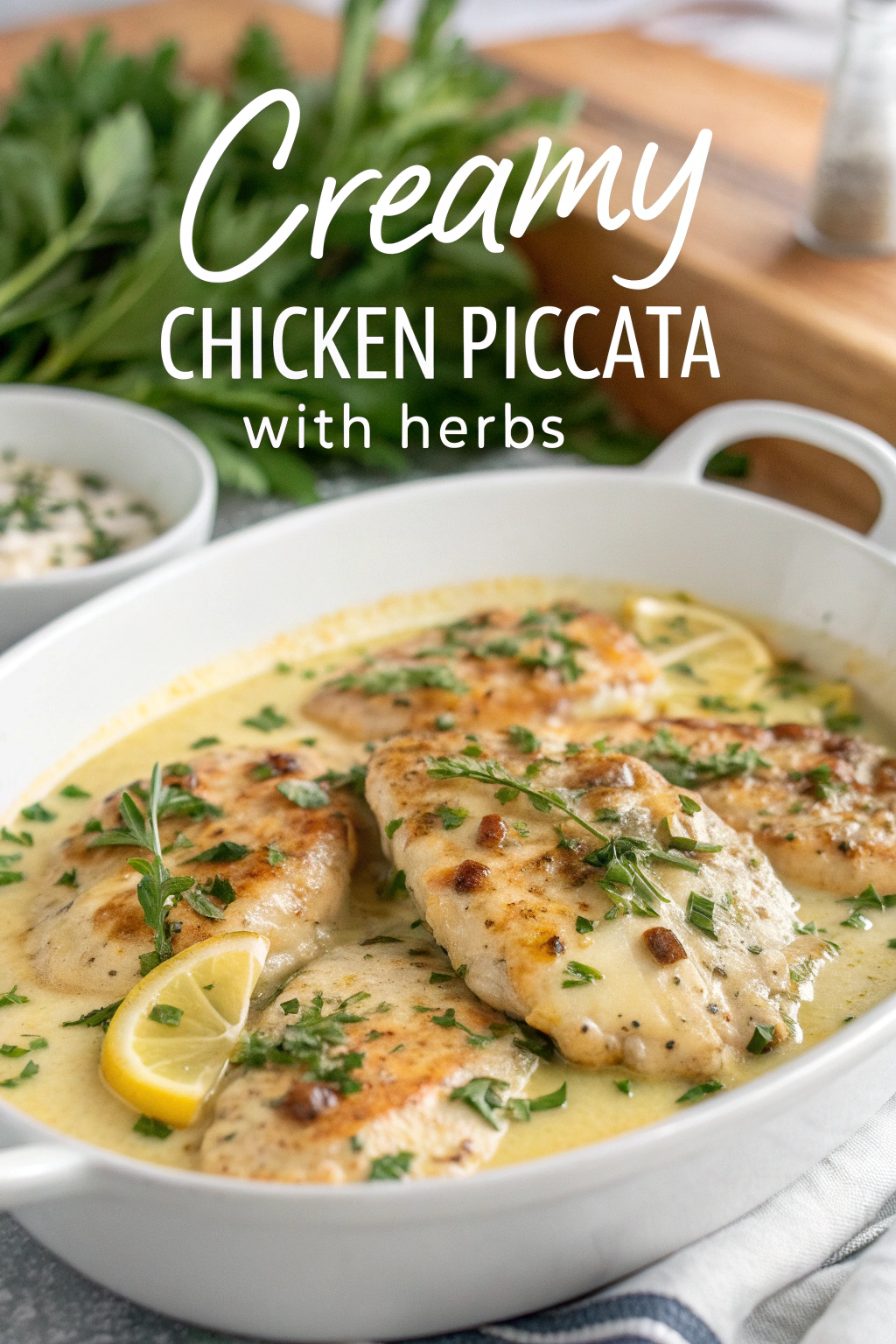
Okay — let me let you in on a little chef’s secret: the best chicken piccata doesn’t come from a fancy restaurant; it begins at your stove with a hot pan, a squeeze of lemon, and a stubborn jar of capers. I learned this after chasing down crispy chicken in too many pans and finally landed on a method that marries bright lemon with silky cream without turning the sauce into a sad, curdled mess. The aromas of sizzling butter and garlic will make you forgive any day’s mistakes. If you like tangy, herby sauce that clings to tender chicken and begs for crusty bread, this one’s for you — and I’ll walk you through every little trick I use to keep the sauce smooth and the chicken unbelievably juicy.
Quick Facts
- Yield: Serves 4
- Prep Time: 15 minutes
- Cook Time: 20 minutes
- Total Time: 35 minutes
Why This Recipe is Awesome
This creamy chicken piccata hits so many notes — bright lemon, briny capers, a velvety cream sauce, and crispy golden edges on the chicken. It’s fast enough for a weeknight yet elegant enough for guests. Plus, the sauce doubles as the best ever pasta topper or spooned over roasted potatoes. It’s so easy even your oven can’t mess it up (because we mostly cook on the stovetop), and the smell of garlic and butter hitting a hot pan makes the kitchen feel like a hug.
Ingredients
For the Main Dish:
- 1 1/2 lb boneless, skinless chicken breasts (about 3–4 pieces)
- 1/2 cup all-purpose flour, plus extra for dredging (or 1/2 cup gluten-free flour)
- 1 tsp kosher salt
- 1/2 tsp black pepper
- 2 tbsp olive oil
- 2 tbsp unsalted butter
- 2 cloves garlic, minced
- 1 small shallot, finely chopped (optional but lovely)
- 1/2 cup dry white wine or extra chicken broth
- 3/4 cup low-sodium chicken broth
- 1/4 cup fresh lemon juice (about 1–2 lemons)
- 2 tbsp capers, rinsed
- 1/2 cup heavy cream
- 2 tbsp chopped fresh parsley
- 1 tsp fresh thyme leaves (or 1/4 tsp dried)
For the Sauce / Garnish (if applicable):
- Optional: lemon slices for garnish, extra parsley, and extra butter for finishing
How I Make It
Step 1:
I start by pounding the chicken to an even thickness — about 1/2 inch — so it cooks evenly and stays juicy. Pat each breast dry and season both sides with salt and pepper. Dredge in flour, shaking off the excess. Heat a large skillet over medium-high heat until it sings when a drop of water hits it. Add 1 tbsp olive oil and 1 tbsp butter, then lay the chicken in the pan in a single layer. You should hear a lively sizzle — that’s flavor building.
Step 2:
Cook the chicken for about 3–4 minutes per side until golden at the edges and no longer pink in the center. Transfer the cooked chicken to a warm plate and tent loosely. Don’t crowd the pan — give the pieces space so they crisp. If a piece browns too quickly, turn the heat down slightly.
Step 3:
Lower the heat to medium and add the remaining 1 tbsp olive oil and 1 tbsp butter. Toss in the minced garlic and shallot and sauté until fragrant and translucent — about 30–45 seconds. Pour in the white wine to deglaze, scraping up the brown bits with a wooden spoon; listen to that satisfying sizzle and smell the bright lift. Let the wine reduce by half, then add the chicken broth, lemon juice, and capers. Simmer to concentrate the flavors for about 2–3 minutes.
Step 4:
Turn the heat to low and stir in the heavy cream. Whisk gently until the sauce becomes silky and glossy. Return the chicken to the pan, spooning the sauce over each piece. Heat everything together for another 2–3 minutes so the chicken finishes cooking and absorbs the flavor. Check doneness with a thermometer — chicken reaches safe eating temperature at 165°F in the thickest part.
Step 5:
Finish with a pat of butter and a shower of chopped parsley and thyme. Spoon the sauce over the chicken and garnish with lemon slices. Let the chicken rest for a minute — it keeps the juices where you want them. Serve hot, and soak up every drop of sauce with crusty bread or toss with pasta for a saucy dinner.
Pro Tips
- Flatten chicken evenly with a meat mallet or heavy skillet so it cooks in the same time — no surprise dry corners.
- If the sauce threatens to break, reduce heat, remove pan from direct flame, and whisk in a small splash of cream or a teaspoon of cold butter to bring it back together.
- Prefer a tangier sauce? Add another tablespoon of lemon juice at the end, tasting as you go.
- For a silkier sauce, strain out the shallot bits before adding cream, or leave them in for rustic texture — your choice.
Common Mistakes to Avoid
- Skipping preheating: Classic rookie move. It changes texture and bake time.
- Overmixing: Leads to dense or chewy results. Mix until just combined.
- Guessing cook time: Always use visual cues or a timer, not just vibes.
- Overcrowding pans: Give your food some breathing room to crisp properly.
Alternatives & Substitutions
- Swap chicken for firm tofu or thick-cut portobello mushrooms for a vegetarian take; marinate briefly for extra flavor.
- Use Greek yogurt thinned with a splash of milk instead of heavy cream for a lighter tang — the sauce becomes thicker and tangier.
- For gluten-free, dredge in cornstarch or a gluten-free flour blend instead of all-purpose flour.
- Dairy-free option: replace butter with extra olive oil and heavy cream with full-fat coconut milk (flavor will skew tropical but still delicious).
Variations & Tips
- Spicy: add a pinch of red pepper flakes when sautéing the garlic for a warm kick.
- Kid-friendly: skip the wine and capers, add a touch of honey to soften the lemon edge.
- Herb-forward: swap parsley for basil or add a tablespoon of chopped tarragon for a fancy twist.
- Pasta version: toss cooked linguine into the pan with the sauce and chicken for an easy one-skillet supper.
- Crunchy crust: press panko into the floured chicken before frying for a golden, crunchy exterior.
- Creative twist: finish with a spoonful of sun-dried tomato pesto stirred into the sauce for color and depth.
FAQ (Frequently Asked Questions)
- Can I make this ahead of time?
- Yes! Cook the chicken and make the sauce, then cool and store separately in airtight containers for up to 3 days. Reheat gently on the stove over low heat, adding a splash of chicken broth to refresh the sauce.
- Can I double the recipe?
- Sure thing. Use a larger skillet or cook in batches to avoid overcrowding; the sear matters for texture. Sauce quantities scale linearly, but taste and adjust lemon and seasoning at the end.
- Can I substitute butter with oil?
- Technically yes, but you’ll miss that buttery magic. Use ¾ the amount of oil and consider finishing with a tiny pat of butter just before serving for richness.
- How do I know it’s done?
- Look for golden, crisp edges and a juicy, tender center. The safe internal temperature for chicken is 165°F. If you don’t have a thermometer, cut into the thickest piece — juices should run clear, not pink.
- What if I don’t have ingredient X?
- No wine? Use extra chicken broth and a splash of white wine vinegar for acidity. No capers? Add chopped green olives or a teaspoon of brine for that briny pop.
How I Like to Serve It
I love spooning this creamy piccata over a bed of buttered linguine with a wedge of lemon on the side. It also sings alongside roasted asparagus or green beans and a glass of chilled white wine for a simple date-night at home. For weeknights, pile it on mashed potatoes so the sauce disappears into the creases — pure comfort.
Notes
- Store leftovers in the fridge for up to 3 days. Reheat gently over low stove heat and add a splash of broth to loosen the sauce.
- Safe internal temperature for chicken: 165°F.
Final Thoughts
Closing: Now go impress someone — or just yourself — with your homemade masterpiece!

Hi, I’m Lina, the creator of Lina Easy Recipes.Cooking has always been my passion, and I love sharing simple, homemade dishes that anyone can prepare.
Love What You See?
Join me on Pinterest and Facebook for daily cooking inspiration, new recipe ideas, and behind-the-scenes kitchen stories. Let’s cook something wonderful together!