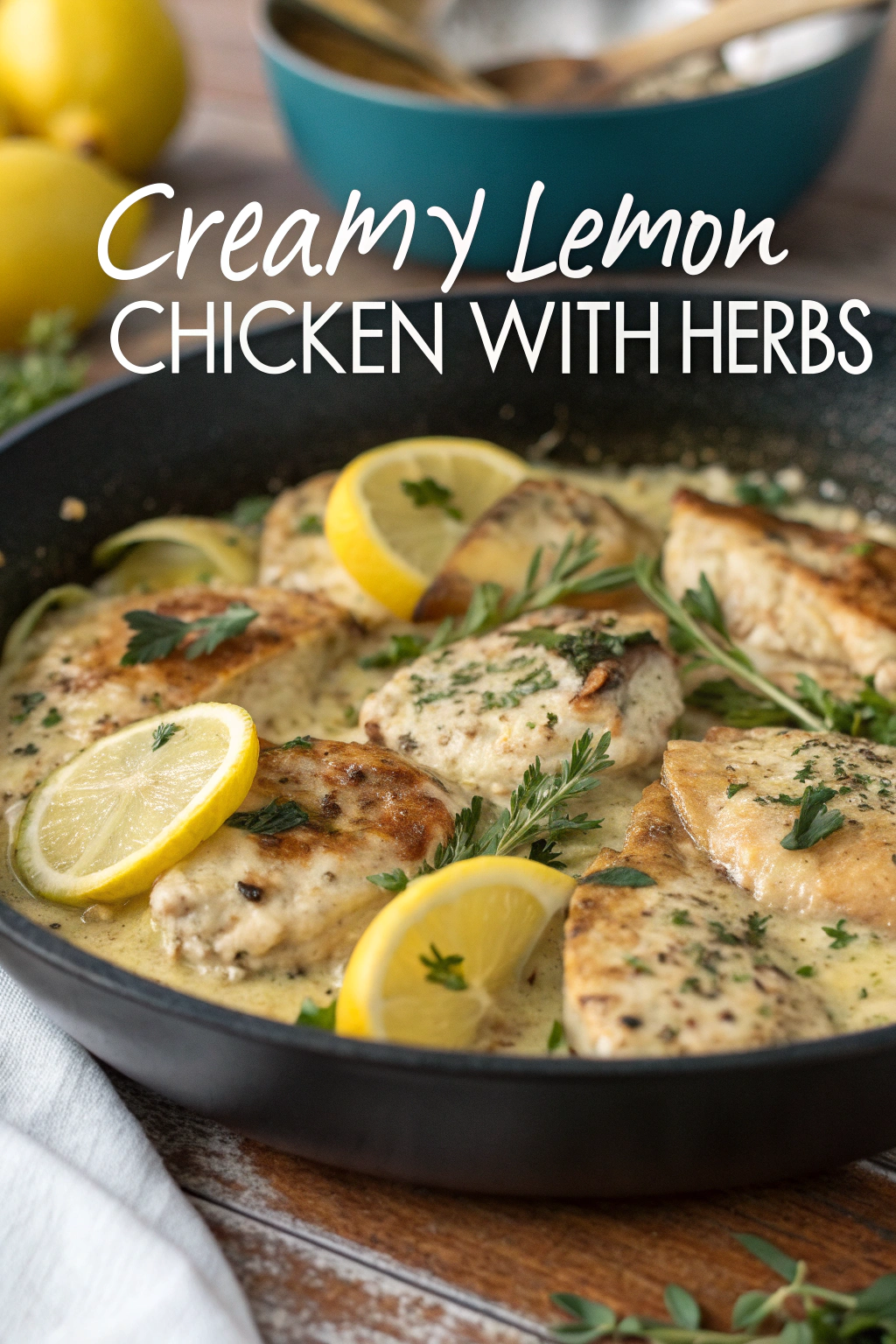
Chef’s Secret: Okay, lean in — this is the kind of weeknight trick I whisper to friends when they want dinner that tastes like effort but takes almost none. I learned to swap heavy, fussy sauces for a quick pan-reduced cream that clings to the chicken like it’s meant to be there. The bright pop of lemon wakes the dish up, the herbs add that cozy garden smell, and the whole thing comes together while your rice or pasta finishes. If you like silky sauces that make people ask for seconds, this recipe belongs in your regular rotation. Keep a wooden spoon handy and a bottle of white wine optional but highly encouraged.
Quick Facts
- Yield: Serves 4
- Prep Time: 15 minutes
- Cook Time: 20 minutes
- Total Time: 35 minutes
Why This Recipe is Awesome
It gives you a velvety, tangy sauce that clings to golden chicken — creamy without being heavy, bright from fresh lemon, and herb-forward for a fresh finish. It’s so easy even your oven can’t mess it up: sear, make the sauce, simmer, and serve. The textures sing — crisp edges, juicy centers, and a silky sauce that looks and smells gourmet. Bonus: it reheats beautifully for lunches the next day.
Ingredients
For the Main Dish:
- 1 1/2 pounds boneless, skinless chicken breasts (about 3 medium breasts; or use thighs for extra juiciness)
- 1 teaspoon kosher salt and 1/2 teaspoon black pepper, plus more to taste
- 1/2 cup all-purpose flour (for a light dredge; gluten-free swap below)
- 2 tablespoons olive oil
- 2 tablespoons unsalted butter
- 4 cloves garlic, minced (about 2 teaspoons)
- 1 cup low-sodium chicken broth
- 3/4 cup heavy cream
- 1/4 cup fresh lemon juice (about 1–2 lemons) plus zest from 1 lemon
- 1 tablespoon Dijon mustard
- 1 tablespoon fresh thyme leaves (or 1 tsp dried)
- 1/4 cup chopped fresh parsley for garnish
- Optional: 1/4 cup grated Parmesan for extra richness
For the Sauce / Garnish (if applicable):
- Extra lemon wedges and parsley for serving
How I Make It
Step 1:
Pat the chicken dry with paper towels and season both sides with 1 teaspoon kosher salt and 1/2 teaspoon black pepper. Lightly dredge each piece in 1/2 cup flour, shaking off excess. Heat a large skillet over medium-high and add 2 tablespoons olive oil and 1 tablespoon butter. When the fat shimmers and you hear that satisfying sizzle, add the chicken. Sear until the edges go golden and you hear a steady sizzle — about 4–5 minutes per side. I like a little amber crust for texture.
Step 2:
Transfer the chicken to a plate and reduce heat to medium. Add the remaining 1 tablespoon butter to the pan, then toss in 4 cloves garlic. Stir for about 30 seconds until fragrant — the kitchen will smell garlicky and warm. Pour in 1 cup chicken broth and scrape the brown bits off the bottom with a wooden spoon; those bits pack flavor. Let the broth bubble and reduce for 2–3 minutes.
Step 3:
Stir in 3/4 cup heavy cream, 1/4 cup lemon juice, 1 tablespoon Dijon, and the lemon zest. The sauce will turn glossy and slightly thickened as it simmers. Add 1 tablespoon fresh thyme leaves and taste for seasoning. If it feels too tart, a pinch of sugar or a tablespoon of butter calms it down. The aroma should go bright and creamy — almost like a lemony velvet.
Step 4:
Return the chicken to the pan and spoon sauce over each piece. Reduce heat to low and simmer gently until the chicken reaches an internal temperature of 165°F, about 6–8 minutes depending on thickness. Watch for golden edges and a juicy center — if you poke the thickest part it should feel firm but springy.
Step 5:
Turn off the heat and stir in 1/4 cup chopped parsley (and 1/4 cup Parmesan, if using) for extra silkiness. Let the pan sit for 3 minutes so the sauce settles and the flavors mingle. Serve with extra lemon wedges and sprinkle more parsley on top — the color pop makes the plate sing.
Pro Tips
- Bring chicken to room temperature for 10–15 minutes before cooking so it cooks evenly.
- Don’t overcrowd the pan when searing; cook in batches if needed to keep that golden crust.
- If your sauce separates, whisk in a tablespoon of cold butter off the heat to bring it back together.
- For thicker sauce, simmer a few extra minutes; for thinner, splash in a tablespoon of broth.
Common Mistakes to Avoid
- Skipping preheating: Classic rookie move. It changes texture and bake time.
- Overmixing: Leads to dense or chewy results. Mix until just combined.
- Guessing cook time: Always use visual cues or a timer, not just vibes.
- Overcrowding pans: Give your food some breathing room to crisp properly.
Alternatives & Substitutions
- Swap chicken breasts for boneless skinless thighs for juicier, more forgiving results (slightly richer flavor).
- Use plain Greek yogurt (½ cup) thinned with a splash of broth instead of heavy cream for a lighter sauce — add at the end off heat to prevent curdling.
- For dairy-free, replace butter with olive oil and heavy cream with full-fat coconut milk; the sauce will taste a little tropical but still lovely.
- Use cornstarch (1 tbsp mixed with 1 tbsp cold water) instead of flour for a gluten-free dredge and thicker sauce.
Variations & Tips
- Spicy: Add 1/4 tsp red pepper flakes to the sauce for a warm kick.
- Herb-forward: Swap thyme for rosemary or stir in chopped basil at the end for a summer twist.
- Kid-friendly: Leave out Dijon and reduce lemon juice to 2 tbsp for a milder tang.
- One-pan pasta: After searing, add 8 oz cooked pasta and a splash of pasta water to the sauce; toss to coat.
- Vegetarian twist: Replace chicken with pan-seared thick tofu steaks or large cauliflower steaks; adjust cook time and watch for golden color.
- Creative twist: Finish with a teaspoon of honey for a sweet-tangy contrast that tastes like sunshine.
FAQ (Frequently Asked Questions)
- Can I make this ahead of time?
- Yes! Cook the chicken and sauce, cool to room temperature, and store in an airtight container in the fridge for up to 3 days. Reheat gently on the stove over low heat, adding a splash of broth if the sauce thickens too much.
- Can I double the recipe?
- Sure thing. If you double, sear the chicken in batches so you maintain that golden crust. Use a larger pan for the sauce or make it in two batches to avoid overcrowding.
- Can I substitute butter with oil?
- Technically yes, but you’ll miss that buttery magic. Use ¾ the amount of oil.
- How do I know it’s done?
- Use an instant-read thermometer: pull the chicken at 165°F. Look for golden edges and juices that run clear. The meat should feel firm but still slightly springy.
- What if I don’t have ingredient X?
- No pan ic here — swap Dijon for a teaspoon of mustard or omit it, and use dried herbs (1/3 the amount) if you lack fresh. Lemon can come from bottled juice in a pinch, but zest from a fresh lemon lifts the flavor.
How I Like to Serve It
I pile the chicken over buttery mashed potatoes or a bed of fluffy rice so the sauce soaks in. It also pairs beautifully with steamed green beans or a crisp arugula salad and a glass of chilled Sauvignon Blanc. I serve this on weeknights for a dinner that feels special and on weekends when friends drop by unexpectedly.
Notes
- Store leftovers in an airtight container in the fridge for up to 3 days. Reheat gently on the stove over low heat and add a splash of broth if needed.
- Safe internal temp for cooked chicken: 165°F.
Final Thoughts
Closing: Now go impress someone — or just yourself — with your homemade masterpiece!

Hi, I’m Lina, the creator of Lina Easy Recipes.Cooking has always been my passion, and I love sharing simple, homemade dishes that anyone can prepare.
Love What You See?
Join me on Pinterest and Facebook for daily cooking inspiration, new recipe ideas, and behind-the-scenes kitchen stories. Let’s cook something wonderful together!