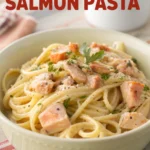
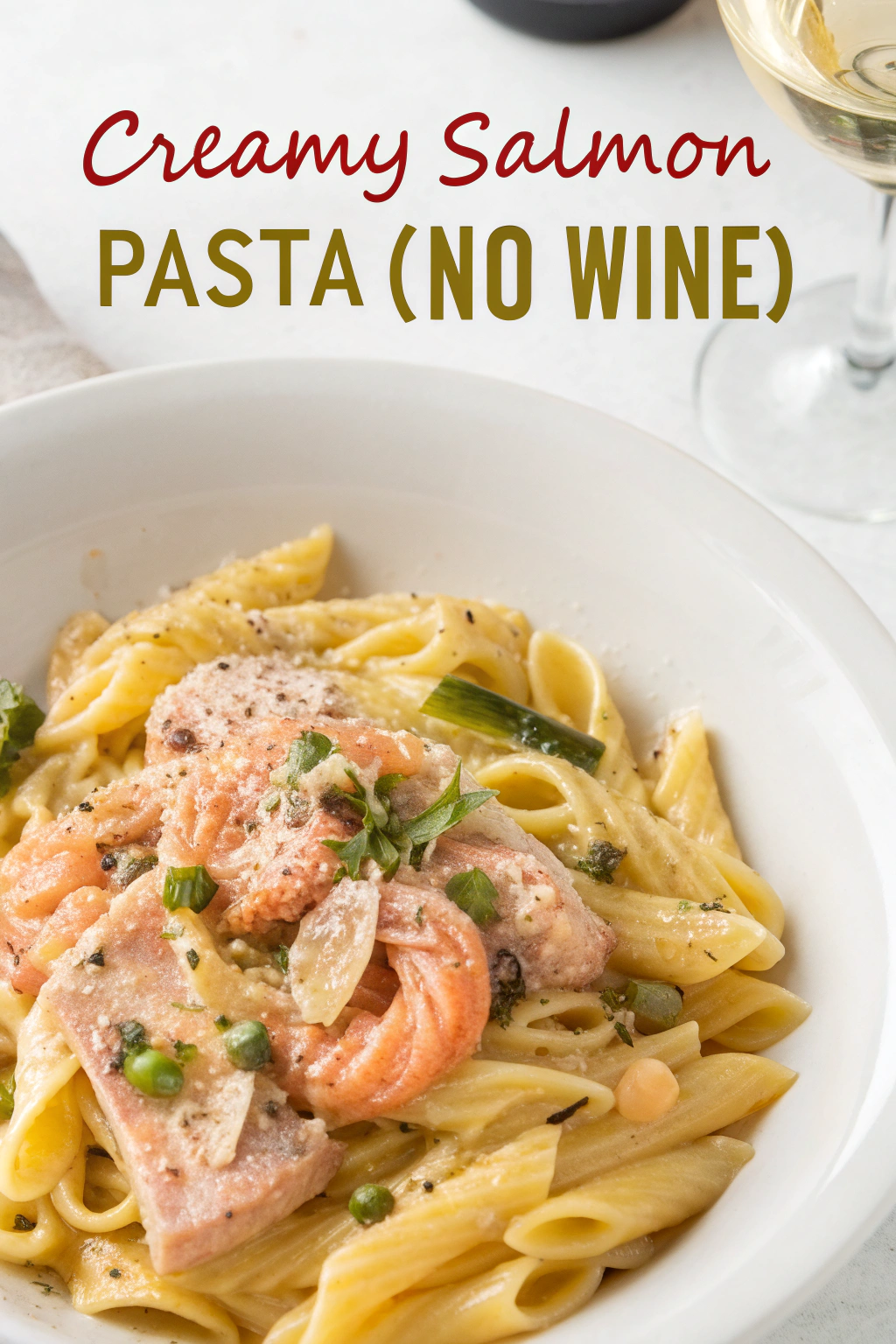
Chef’s Secret: I didn’t learn this from a cookbook — I stole it from a busy restaurant shift where we needed a fast, comforting pasta that still felt fancy. The trick? Keep the sauce silky, let the salmon shine, and skip the wine so this works for weeknights and picky eaters. Within minutes your kitchen will smell like browned butter, garlic, and lemon brightening everything up. I’ll show you how to get a creamy sauce that clings to noodles, a flaky, golden salmon, and a few little cheats that save time without sacrificing flavor.
Quick Facts
- Yield: Serves 4
- Prep Time: 15 minutes
- Cook Time: 20 minutes
- Total Time: 35 minutes
Why This Recipe is Awesome
This creamy salmon pasta comes together fast, and it tastes like you spent hours fussing in the kitchen. The sauce stays luxuriously smooth without wine — thanks to heavy cream and a splash of lemon — while seared salmon adds buttery richness and flaky texture. It’s comfort with a little polish: creamy, bright, and satisfying. Seriously, it’s so easy even your hangry self can handle it.
Ingredients
For the Main Dish:
- 12 oz pasta (fettuccine, linguine, or penne)
- 1 lb salmon fillet, skin removed or left on depending on preference
- 2 tbsp olive oil
- 3 tbsp unsalted butter
- 1 small shallot, finely chopped (or 1/4 cup yellow onion)
- 3 cloves garlic, minced
- 1 cup heavy cream
- 1/2 cup grated Parmesan cheese, plus extra for serving
- 1 tbsp lemon zest
- 2 tbsp fresh lemon juice (about 1 lemon)
- 2 tbsp chopped fresh dill or parsley (plus extra for garnish)
- Salt and freshly ground black pepper, to taste
- Red pepper flakes, optional, pinch or two
For the Sauce / Garnish (if applicable):
- 2 tbsp capers (optional, for a briny kick)
- Extra Parmesan for serving
- Fresh lemon wedges for squeezing at the table
How I Make It
Step 1:
Bring a large pot of salted water to a rolling boil and cook the 12 oz pasta until just shy of al dente (about 1–2 minutes less than package directions). Reserve 1 cup pasta water, then drain. I always taste a noodle — that tells me when it needs another minute. Toss the noodles with a drizzle of olive oil so they don’t stick while you work on the fish.
Step 2:
Pat the 1 lb salmon dry and season both sides with salt and pepper. Heat a large skillet over medium-high heat and add 2 tbsp olive oil. When the oil shimmers, lay the salmon in the pan and cook for 3–4 minutes without touching it so the surface browns. Flip and cook another 2–3 minutes depending on thickness — you want a golden crust and a tender, flaky center. Transfer salmon to a plate and gently flake into bite-sized pieces.
Step 3:
In the same skillet, lower heat to medium and add 3 tbsp butter. When it melts and starts to foam, add the chopped shallot and sauté for 2–3 minutes until soft and translucent. Add the minced garlic and cook until fragrant (about 30 seconds) — your kitchen will smell like heaven: buttery, garlicky, and slightly sweet.
Step 4:
Pour in 1 cup heavy cream and bring to a gentle simmer. Stir in 1/2 cup grated Parmesan until the sauce thickens slightly. Add 1 tbsp lemon zest and 2 tbsp lemon juice to cut the richness. If sauce looks too thick, add reserved pasta water a splash at a time until it reaches a silky, clingy texture. Taste and season with salt, pepper, and a pinch of red pepper flakes if you like heat.
Step 5:
Fold the pasta into the sauce, then gently fold in the flaked salmon and 2 tbsp chopped dill. Warm everything together for a minute so the salmon rehydrates slightly without falling apart. Plate with extra Parmesan, a sprinkle of herbs, and lemon wedges. Serve hot — the sauce should coat each noodle and the salmon should flake apart with your fork.
Pro Tips
- Use room-temperature salmon so it cooks evenly; cold fish shocks the pan and sticks.
- Reserve pasta water — that starchy liquid helps the sauce cling to noodles and saves heavy cream.
- Don’t overcook salmon: pull it at 125–130°F for tender, slightly translucent center, or 145°F for well-done per USDA guidelines.
- Grate your own Parmesan — pre-grated doesn’t melt as smoothly and can make the sauce grainy.
Common Mistakes to Avoid
- Skipping preheating: Classic rookie move. It changes texture and bake time.
- Overmixing: Leads to dense or chewy results. Mix until just combined.
- Guessing cook time: Always use visual cues or a timer, not just vibes.
- Overcrowding pans: Give your food some breathing room to crisp properly.
Alternatives & Substitutions
- Use chicken instead of salmon for a milder flavor; pan-sear and slice thinly. Texture becomes firmer and the dish skews more savory.
- Swap heavy cream for full-fat Greek yogurt mixed with a little pasta water for tangy creaminess (add off-heat to avoid curdling).
- Use gluten-free pasta — cook to package directions; texture changes slightly but flavor stays great.
- For dairy-free, replace butter with olive oil and heavy cream with canned coconut milk thinned with pasta water; flavor will turn slightly tropical.
Variations & Tips
- Make it spicy: add 1/2 tsp red pepper flakes and a dash of smoked paprika.
- Kid-friendly: skip capers and heat; stir in frozen peas for color and sweetness.
- Herb-forward: swap dill for tarragon or basil for a different aromatic profile.
- One-pan dinner: cook pasta separately and finish everything in a large skillet to save dishes.
- Seafood mix: add shrimp or scallops for a luxurious surf-and-turf pasta.
- Bright twist: finish with a drizzle of good olive oil and lemon zest for a glossy, fragrant finish.
FAQ (Frequently Asked Questions)
- Can I make this ahead of time?
- Yes! Cook the pasta and salmon separately, toss pasta in the sauce, and store everything in airtight containers in the fridge for up to 2 days. Reheat gently on the stove with a splash of pasta water or cream to revive the sauce.
- Can I double the recipe?
- Sure thing. Use a larger pot and skillet or cook in batches to avoid overcrowding. You may need to thin the sauce with more pasta water if it thickens while holding.
- Can I substitute butter with oil?
- Technically yes, but you’ll miss that buttery magic. Use ¾ the amount of oil and add a splash of extra lemon to brighten the dish.
- How do I know it’s done?
- Look for a glossy sauce that clings to noodles, and salmon that flakes easily with a fork. If you prefer firm fish, aim for 145°F; for moister, slightly pink fish, remove at 125–130°F.
- What if I don’t have ingredient X?
- No panic. Swap shallot for onion, dill for parsley, or lemon juice for a splash of white balsamic. Capers? Leave them out or use chopped green olives for a briny note.
How I Like to Serve It
I serve this pasta on weeknights when I want something cozy but grown-up — a glass of sparkling water or light white wine pairs well. For company, add a crisp green salad and garlic bread. In summer, the lemon and herbs make it feel bright and fresh; in winter, the creamy sauce feels indulgent and comforting. It works for date night, a lazy Sunday, or when you want to impress without sweating.
Notes
- Store leftovers in an airtight container for up to 2 days. Reheat gently on the stove with a splash of cream or water.
- Safe internal temp for salmon: 145°F per USDA, though many cooks prefer 125–130°F for tender flakes.
Final Thoughts
Closing: Now go impress someone — or just yourself — with your homemade masterpiece!

Hi, I’m Lina, the creator of Lina Easy Recipes.Cooking has always been my passion, and I love sharing simple, homemade dishes that anyone can prepare.
Love What You See?
Join me on Pinterest and Facebook for daily cooking inspiration, new recipe ideas, and behind-the-scenes kitchen stories. Let’s cook something wonderful together!