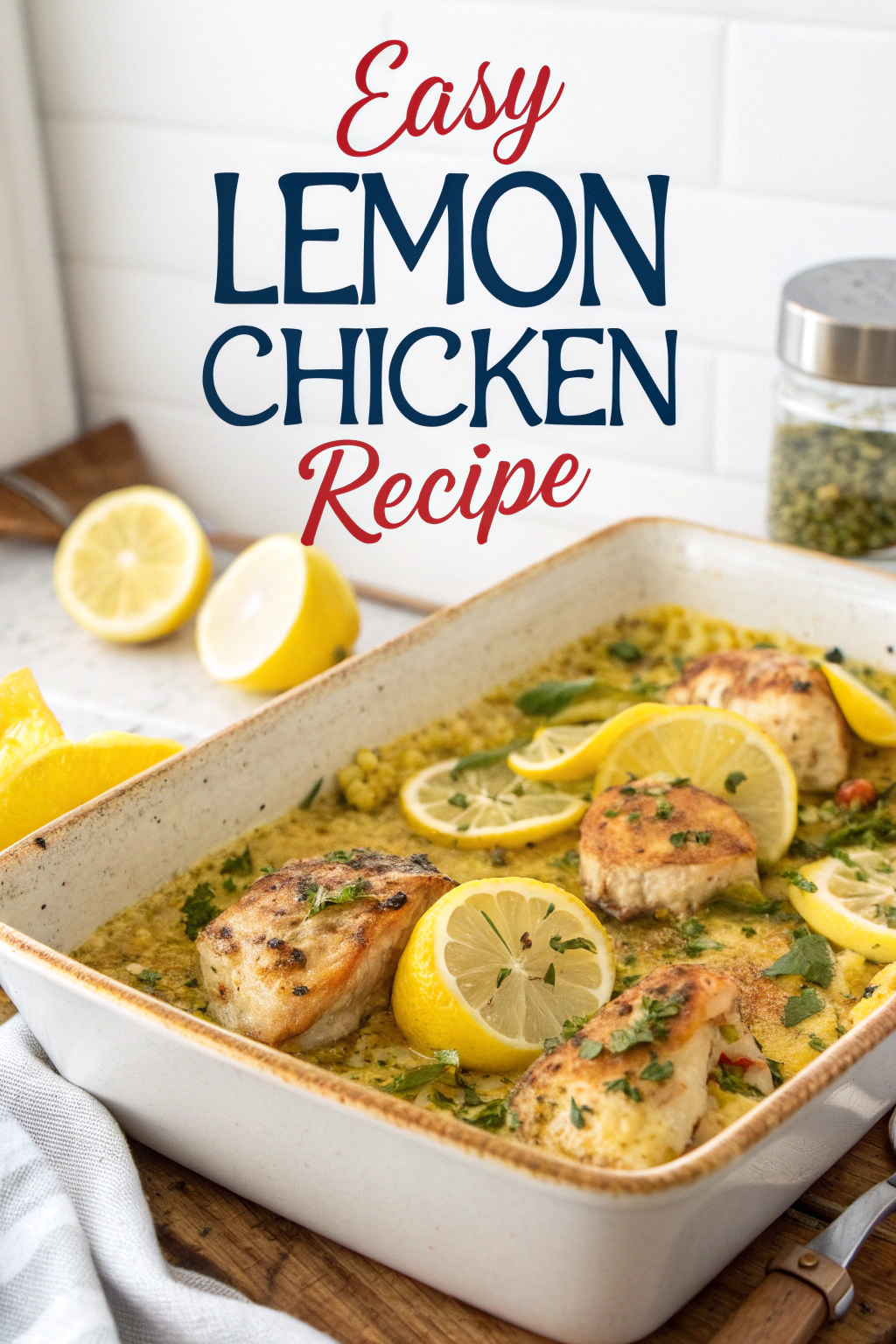
Funny story: I once tried to impress a date with a complicated roast and managed to burn the garlic, the conversation, and my confidence. After that culinary humiliation, I swore off drama and embraced simplicity — enter this Easy Lemon Chicken. It gives you that bright, zesty lemon punch, a buttery pan sauce that whispers “comfort,” and a golden crust that crunches in all the right places. Best part? It takes about the time it takes to set the table, and you still look like the kitchen hero. Trust me — your smoke alarm will finally get a night off.
Quick Facts
- Yield: Serves 4
- Prep Time: 10 minutes
- Cook Time: 20 minutes
- Total Time: 30 minutes
Why This Recipe is Awesome
This recipe works every time because it balances bright lemon with rich butter and savory garlic — the kind of combo that makes weeknight dinner feel fancy without all the fuss. You get a crisp, golden exterior with a juicy center and a glossy, slightly tangy sauce that clings to every forkful. It’s so easy even your oven can’t mess it up. Who doesn’t love crispy edges and a sauce you’ll lick off the spoon?
Ingredients
For the Main Dish:
- 1.5 pounds boneless, skinless chicken breasts (about 3 medium breasts — you can use thighs if you prefer)
- 1/2 cup all-purpose flour (for a light dredge; use gluten-free flour if needed)
- 1 tsp kosher salt
- 1/2 tsp black pepper
- 2 tbsp olive oil
- 2 tbsp butter
- 3 cloves garlic, minced (about 1 tbsp)
For the Sauce / Garnish:
- 1/2 cup low-sodium chicken broth
- 1/4 cup fresh lemon juice (about 1–2 lemons)
- 1 tbsp honey (or maple syrup)
- 1 tsp Dijon mustard
- 1 tsp lemon zest (optional but lovely)
- Fresh parsley or thyme, chopped, for garnish
- Salt and pepper to taste
How I Make It
Step 1:
Pat the chicken dry with paper towels — dryness equals better browning. Season each piece with salt and pepper, then lightly dredge in the flour, shaking off excess. Heat a large skillet over medium-high heat until hot and shimmering, then add the olive oil. You should hear the gratifying sizzle when the chicken hits the pan — that sound means flavor forming.
Step 2:
Sear the chicken for 3–4 minutes per side until the edges turn golden and you get a nice crust. Add the butter during the second side so it melts and sings with the pan juices. If pieces look too thick, flatten them slightly with the heel of your hand or a meat mallet for even cooking. Tip: don’t crowd the pan — work in batches if needed to keep that delicious crust.
Step 3:
Remove the chicken to a plate and lower the heat to medium. Add the minced garlic to the skillet and sauté for about 30 seconds until it smells aromatic and golden (not brown — burned garlic tastes acrid). Pour in the chicken broth and scrape up those browned bits; they hold concentrated flavor. Stir in the lemon juice, honey, and Dijon, and let the sauce bubble and reduce for about 2–3 minutes.
Step 4:
Return the chicken to the skillet, spoon the sauce over each piece, and let everything simmer together for another 3–5 minutes so the chicken finishes cooking and soaks up flavor. Look for golden edges and juices running clear. If you want a slightly thicker sauce, remove the chicken and simmer the sauce a minute longer; it should coat the back of a spoon.
Step 5:
Turn off the heat and sprinkle the lemon zest and chopped herbs over the chicken. Let it rest for a couple of minutes so the juices redistribute — this keeps the meat tender. Serve with a generous spoonful of sauce and an extra squeeze of lemon if you like that bright pop.
Pro Tips
- For extra-crispy edges, pat the chicken bone-dry and use a hot skillet. Hot pan + dry meat = better crust.
- Use fresh lemon juice whenever possible; bottled juice lacks the bright zip that lifts this dish.
- If your sauce tastes too sharp, add another teaspoon of honey or a pat of butter to round it out.
- Want even cooking? Pound thick parts of the breast to an even thickness so every bite finishes at the same time.
Common Mistakes to Avoid
- Skipping preheating: Classic rookie move. It changes texture and bake time.
- Overmixing: Leads to dense or chewy results. Mix until just combined.
- Guessing cook time: Always use visual cues or a timer, not just vibes.
- Overcrowding pans: Give your food some breathing room to crisp properly.
Alternatives & Substitutions
- Swap chicken for firm tofu for a vegetarian option; press tofu to remove water and sear longer for a crisp exterior.
- Use Greek yogurt instead of some butter in the sauce for creaminess with fewer calories (add off-heat to avoid curdling).
- For dairy-free, replace butter with extra olive oil or a dairy-free spread — the sauce will stay bright but lose a bit of that buttery magic.
- Need gluten-free? Use a 1:1 gluten-free flour blend for dredging.
Variations & Tips
- Spicy: Add 1/4 tsp crushed red pepper to the sauce or serve with sliced chiles for a kick.
- Herby: Fold in chopped rosemary or tarragon for an herbal twist that pairs beautifully with lemon.
- Kid-friendly: Skip the Dijon and reduce lemon juice for a milder sauce kids will love.
- One-pan meal: Toss in halved baby potatoes and green beans during the sauce step for a simple all-in-one dinner.
- Creative twist: Finish with a sprinkle of toasted breadcrumbs mixed with lemon zest for crunchy texture contrast.
FAQ (Frequently Asked Questions)
- Can I make this ahead of time?
- Yes! Cook the chicken and store the sauce separately in airtight containers for up to 3 days. Reheat gently in a skillet over medium-low and add a splash of broth if the sauce tightened up.
- Can I double the recipe?
- Sure thing. Work in batches when searing so the pan stays hot and the chicken browns properly. You may need a larger skillet or two pans to avoid overcrowding.
- Can I substitute butter with oil?
- Technically yes, but you’ll miss that buttery magic. Use ¾ the amount of oil and consider finishing the sauce with a teaspoon of olive oil for gloss.
- How do I know it’s done?
- Use a meat thermometer: the internal temperature should reach 165°F. Also look for golden crust and clear juices when you cut the thickest part.
- What if I don’t have ingredient X?
- If you don’t have Dijon, swap in 1 tsp whole-grain mustard or omit and add an extra splash of honey for balance. No chicken broth? Use low-sodium vegetable broth or water with a pinch of salt.
How I Like to Serve It
I love this over buttery mashed potatoes so the sauce soaks in, or alongside steamed asparagus for a lighter meal. It also pairs beautifully with couscous or a simple arugula salad dressed with olive oil and lemon. Pull it out for a casual weeknight or a small dinner — it looks like you tried, in the best way.
Notes
- Store leftovers in the fridge up to 3 days. Reheat gently on the stove and add a splash of broth to loosen the sauce.
- Safe cooking temp for chicken: 165°F. Use a thermometer for the most reliable doneness check.
Final Thoughts
Closing: Now go impress someone — or just yourself — with your homemade masterpiece!

Hi, I’m Lina, the creator of Lina Easy Recipes.Cooking has always been my passion, and I love sharing simple, homemade dishes that anyone can prepare.
Love What You See?
Join me on Pinterest and Facebook for daily cooking inspiration, new recipe ideas, and behind-the-scenes kitchen stories. Let’s cook something wonderful together!