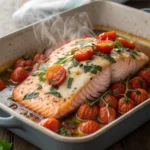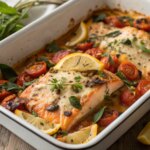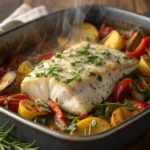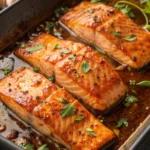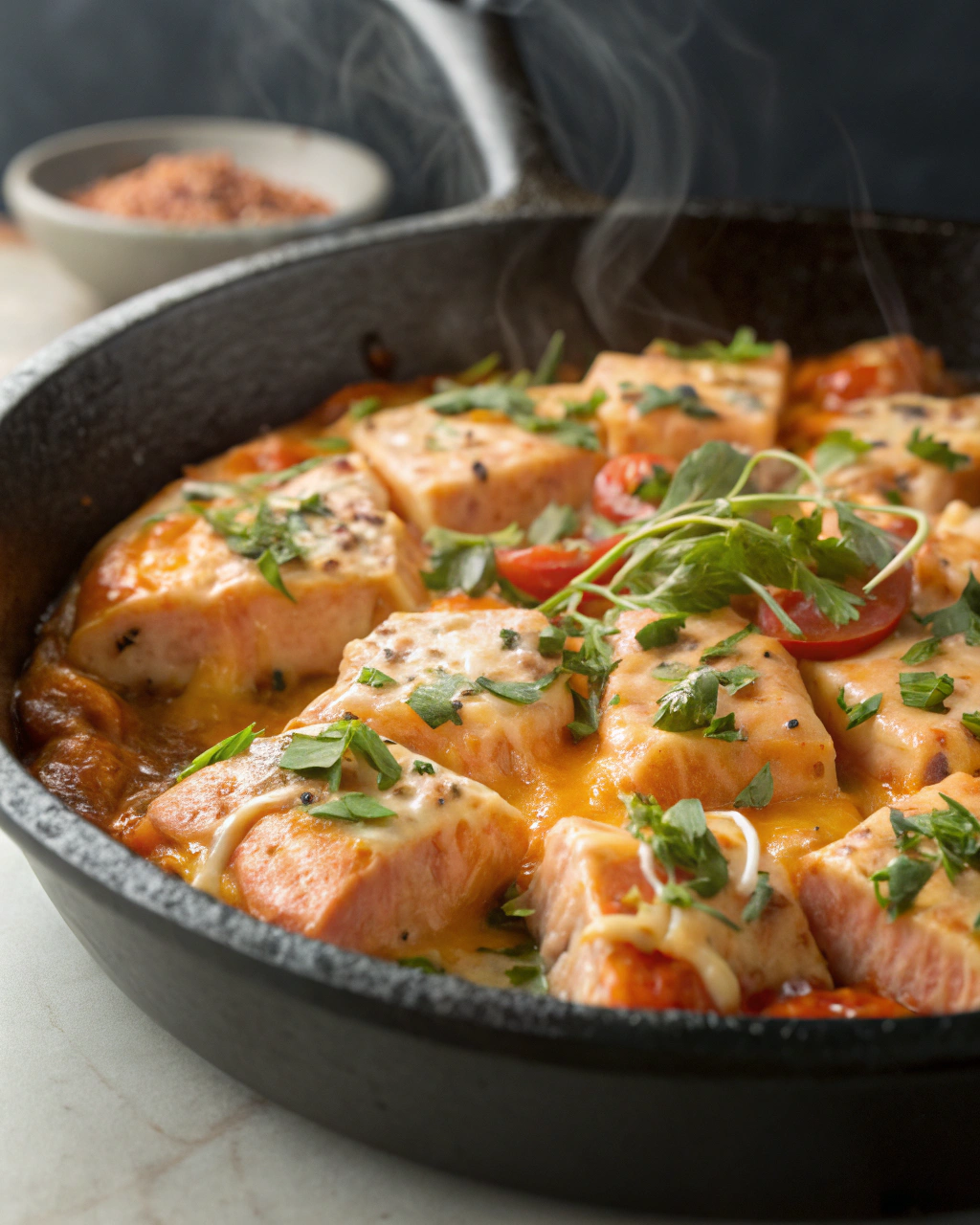

Chef’s Secret time: I’ll let you in on a tiny kitchen hack that feels like a magic trick every time — roast the salmon at a high heat for a short time, and the inside stays tender while the outside crisps up like a dream. That’s how I learned to make a Mediterranean plate that looks fancy but cooks in under 30 minutes. I call it my “50-minute restaurant cheat” (lies, it’s less). Bright tomatoes pop, briny olives sing, and a quick lemon-dill yogurt ties everything together. If you like food that smells like sunshine and tastes like a beach picnic, this one will become your weekday superstar.
Quick Facts
- Yield: Serves 4
- Prep Time: 15 minutes
- Cook Time: 15 minutes
- Total Time: 30 minutes
Why This Recipe is Awesome
This plate gives you crisp-edged, tender salmon with a bright, crunchy Mediterranean salad and a cool, tangy sauce — all in one pan and one bowl. It’s so easy even your oven can’t mess it up. Texture plays here: flaky fish, creamy yogurt, crunchy cucumber, and poppy bursts from cherry tomatoes. The flavors balance: lemon brightness, olive saltiness, and herb warmth. Plus, it looks colorful on the plate — who doesn’t love a dinner that Instagram would approve of (but tastes even better than the photo)?
Ingredients
For the Main Dish:
- Salmon: Four 6-oz skin-on fillets (about 1.5–1.75 lbs total)
- Olive oil: 2 tbsp, plus extra for drizzling
- Lemon: 1 large (zest and juice)
- Garlic: 2 cloves, minced
- Dried oregano: 1 tsp
- Salt: 1 tsp, plus extra to taste
- Black pepper: ½ tsp
- Cherry tomatoes: 1 pint, halved
- Red onion: ¼ cup thinly sliced
- Kalamata olives: ½ cup, pitted and halved
- Cucumber: 1 medium, diced
- Feta cheese: 4 oz, crumbled
- Quinoa (optional base): 1 cup cooked (about ⅓ cup dry)
For the Sauce / Garnish (if applicable):
- Greek yogurt: ¾ cup (plain, full-fat or 2%)
- Fresh dill: 2 tbsp chopped (or 1 tsp dried)
- Lemon juice: 1 tbsp
- Olive oil: 1 tsp
- Salt & pepper: pinch each
How I Make It
Step 1:
Preheat the oven to 425°F. While it warms, pat the salmon dry with paper towels — that little step helps the skin crisp up and prevents steaming. Rub each fillet with 2 tbsp olive oil total, then scatter on the fish 1 tsp dried oregano, 1 tsp salt, and ½ tsp black pepper. Zest the lemon over the fillets for a fragrant citrus punch. I like to let the salmon sit while I chop the salad — it soaks up the aromatics without much fuss.
Step 2:
Mix the salad: toss halved cherry tomatoes, diced cucumber, half a cup Kalamata, and ¼ cup thinly sliced red onion in a bowl. Drizzle with a tablespoon of olive oil, squeeze half the lemon, and season lightly. The colors should pop — deep purples, bright reds, and verdant green give a beautiful contrast to the salmon’s coral.
Step 3:
Place the fillets skin-side down on a lined baking sheet. Slide them into the 425°F oven and listen for that satisfying sizzle when the heat hits the fish. Roast for 12–14 minutes depending on thickness. You’ll see the edges turn opaque and the top will go slightly golden. The kitchen will smell like lemon and garlic — irresistible.
Step 4:
While the salmon roasts, stir the sauce: combine ¾ cup Greek yogurt, 2 tbsp chopped dill, 1 tbsp lemon juice, and 1 tsp olive oil. Season with a pinch of salt and pepper. Taste and adjust; if it feels too tangy, add a smidge more yogurt. If you prefer a looser sauce, thin with a teaspoon of water at a time.
Step 5:
Check doneness by gently pressing the top of a fillet — it should flake easily but still feel slightly firm (or use a thermometer: 145°F is the safe target, though many prefer 125–130°F for extra moistness). Plate the salmon over a bed of quinoa or straight on the plate, pile the Mediterranean salad beside it, and drizzle the lemon-dill yogurt over or serve on the side. Finish with crumbled 4 oz feta and an extra squeeze of lemon.
Pro Tips
- Pat the salmon dry for crispier skin — moisture ruins that magic. I mean it.
- If your fillets vary in thickness, pull the thinner ones a few minutes earlier — nobody likes overcooked salmon.
- Use room-temperature salmon for even cooking; cold fish straight from the fridge cooks unevenly.
- Substitute quinoa with couscous or farro for different textures; couscous cooks faster and feels lighter.
Common Mistakes to Avoid
- Skipping preheating: Classic rookie move. It changes texture and bake time.
- Overmixing: Leads to dense or chewy results. Mix until just combined.
- Guessing cook time: Always use visual cues or a timer, not just vibes.
- Overcrowding pans: Give your food some breathing room to crisp properly.
Alternatives & Substitutions
- Swap salmon with skin-on trout or cod; trout gives similar richness, cod stays flakier and milder.
- Use olive oil in place of butter for a dairy-free version (it plays nicely with Mediterranean flavors).
- Replace quinoa with couscous (vegetarian-friendly) or skip grains for a low-carb plate.
- For a dairy-free sauce, swap Greek yogurt with ¼ cup mashed avocado plus 2 tbsp lemon juice — creamy and bright.
Variations & Tips
- Spicy: add ½ tsp red pepper flakes to the salmon rub or a drizzle of harissa on the side.
- Kid-friendly: omit olives and red onion; add sweet corn or steamed peas for color and fun.
- Herb-forward: swap dill for fresh basil and add a splash of balsamic for a different herb note.
- Sheet-pan meal: roast small potatoes or asparagus alongside the salmon for one-pan cleanup.
- Creamy twist: stir a tablespoon of olive tapenade into the yogurt for a savory kick.
FAQ (Frequently Asked Questions)
- Can I make this ahead of time?
- Yes! Prep the salad and sauce up to 24 hours ahead; store separately in airtight containers. Cook the salmon just before serving for best texture, but you can reheat gently in a 300°F oven for 8–10 minutes.
- Can I double the recipe?
- Sure thing. Roast salmon in batches or on two sheet pans; don’t overcrowd. You may need an extra 2–4 minutes if your oven fills up.
- Can I substitute butter with oil?
- Technically yes, but you’ll miss that buttery magic. Use ¾ the amount of oil to match richness and avoid greasiness.
- How do I know it’s done?
- Look for opaque flesh that flakes with a gentle press, slightly firm to the touch. A thermometer reads 145°F for fully cooked fish; many cooks pull at 125–130°F for a juicier result.
- What if I don’t have ingredient X?
- Out of dill? Use parsley or basil for a fresh twist. No feta? Crumble in goat cheese or skip and add toasted pine nuts for texture.
How I Like to Serve It
I love this on a lazy weeknight with a chilled glass of sauvignon blanc or a sparkling water with lemon. For guests, serve the salmon on a big platter with warm quinoa and let everyone help themselves to the colorful salad. In summer, eat it on the patio; in winter, it brightens a gloomy dinner like a little sunbeam on your plate.
Notes
- Store leftovers in the fridge up to 2 days. Reheat gently to avoid drying out the salmon.
- Safe cooking temp for salmon: 145°F recommended by food safety guidelines; adjust to personal preference for texture.
Final Thoughts
Closing: Now go impress someone — or just yourself — with this bright, healthy Mediterranean salmon plate. It feels fancy, cooks fast, and leaves the kitchen smelling like a seaside market — win-win.

Hi, I’m Lina, the creator of Lina Easy Recipes.Cooking has always been my passion, and I love sharing simple, homemade dishes that anyone can prepare.
Love What You See?
Join me on Pinterest and Facebook for daily cooking inspiration, new recipe ideas, and behind-the-scenes kitchen stories. Let’s cook something wonderful together!