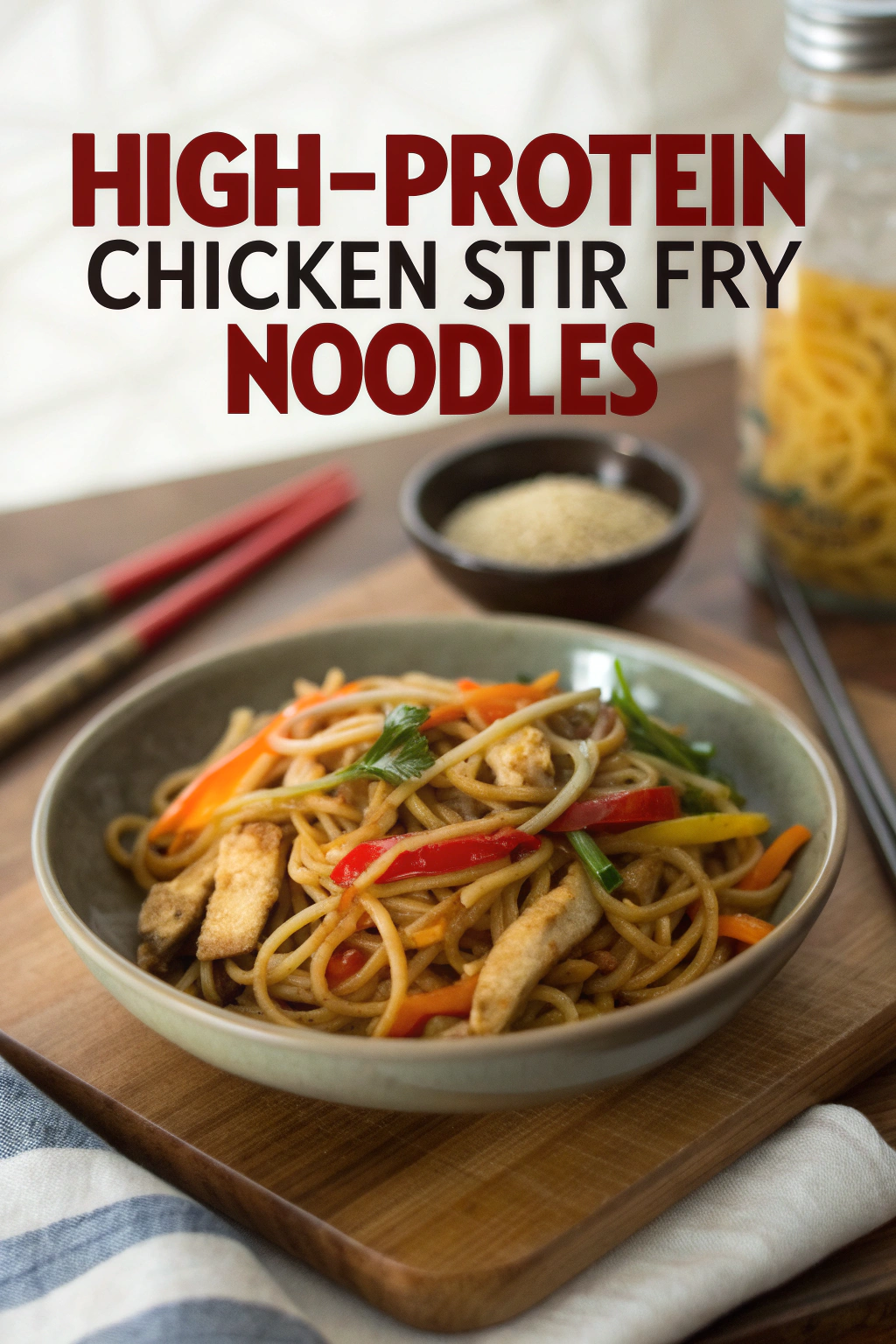
Chef’s Secret: Okay, here’s the little kitchen trick I hoard like a spice rack squirrel—this stir fry gets big protein without turning into a dry chicken scramble. I learned to toss thinly sliced chicken with a tiny cornstarch dusting and high heat, and suddenly my weekday noodles sing with a glossy, velvety sauce that clings to every strand. The sizzle when the chicken hits the pan, the fragrant hit of garlic and ginger, and that satisfying chew from soft-but-not-soggy noodles make this a go-to when I want something quick, hearty, and actually exciting on a Tuesday night. Try it once and you’ll nod every time you eat it.
Quick Facts
- Yield: Serves 4
- Prep Time: 15 minutes
- Cook Time: 15 minutes
- Total Time: 30 minutes
Why This Recipe is Awesome
This recipe packs protein from **chicken**, **edamame**, and an optional egg scramble — all in one bright, saucy stir fry. It delivers contrast: crisp veggies, tender chicken, and slippery noodles that soak up sauce. It cooks fast, smells amazing (hello garlic + ginger), and tastes like takeout but better. It’s so easy even your most distracted friend can pull it off; plus, the sauce clings instead of puddling—so every bite builds flavor.
Ingredients
For the Main Dish:
- 1 lb boneless, skinless chicken breasts, thinly sliced across the grain
- 8 oz dried noodles (lo mein, spaghetti, or rice noodles)
- 1 cup frozen shelled edamame, thawed
- 1 large red bell pepper, thinly sliced
- 2 cups broccoli florets, small
- 1 medium carrot, julienned or thinly sliced
- 3 green onions, sliced on a bias
- 3 cloves garlic, minced
- 1 tbsp fresh ginger, grated
- 2 tbsp neutral oil (canola, vegetable, or grapeseed)
- 1 tsp toasted sesame oil (for finishing)
- 2 large eggs (optional, for extra protein)
For the Sauce / Garnish (if applicable):
- 1/3 cup low-sodium soy sauce (or tamari for gluten-free)
- 2 tbsp hoisin sauce (or 1 tbsp honey + 1 tbsp soy)
- 1 tbsp rice vinegar
- 1 tbsp sriracha or chili garlic sauce (optional)
- 1 tsp cornstarch mixed with 2 tbsp water (slurry)
- 1 tbsp honey or brown sugar
- Sesame seeds and lime wedges, for serving
How I Make It
Step 1:
Bring a pot of salted water to a boil and cook the noodles according to package directions until just shy of al dente (usually 8–10 minutes for dried lo mein or spaghetti). Drain and toss with a drizzle of oil so they don’t clump. While the water heats, toss the sliced chicken with a pinch of salt, pepper, and 1 tsp cornstarch to help it brown and lock in juices—this is the little secret that gives you glossy, clingy sauce later.
Step 2:
Heat a large wok or wide skillet over high heat until it edges begin to shimmer. Add 2 tbsp oil and swirl. Add the chicken in a single layer and let it sear—don’t move it for about 2–3 minutes so it develops golden edges. Listen for that satisfying sizzle; that sound equals flavor. Flip and cook until the chicken no longer looks translucent, another 1–2 minutes. Transfer chicken to a plate.
Step 3:
Lower the heat to medium-high. Add another splash of oil if the pan looks dry, then toss in the garlic and ginger. Stir for about 30 seconds until fragrant—your kitchen should smell warm and punchy. Add the broccoli, carrot, and red pepper. Stir-fry for 3–4 minutes until veggies turn bright and crisp-tender. If you like extra char, let the broccoli touch the pan and hold it for a beat to brown.
Step 4:
Return the chicken to the pan along with the edamame and cooked noodles. Pour the sauce over everything; pour the cornstarch slurry in last. Toss vigorously for 1–2 minutes until the sauce thickens and glossy coats the ingredients. If you added eggs, push the noodles to one side, scramble the eggs until soft, then combine. Finish with a drizzle of toasted sesame oil and toss again.
Step 5:
Turn off the heat and plate immediately. Sprinkle with sesame seeds and sliced green onions, and serve with lime wedges. Take a moment to inhale—that tangy, toasty aroma means dinner’s ready. Taste and add a pinch of salt or a splash of soy if you want more umami.
Pro Tips
- Slice chicken thin across the grain so it stays tender and cooks fast.
- Keep your pan hot and work in batches if needed. Overcrowding makes food steam, not sear.
- Don’t skip the cornstarch toss on the chicken—it helps the sauce stick and gives a restaurant-style finish.
- Use tamari or coconut aminos for a gluten-free version; reduce added salt because tamari can be saltier.
Common Mistakes to Avoid
- Skipping preheating: Classic rookie move. It changes texture and sear quality.
- Overmixing: Leads to dense or chewy results. Toss gently when combining.
- Guessing cook time: Always use visual cues or a timer, not just vibes.
- Overcrowding pans: Give your food some breathing room to crisp properly.
Alternatives & Substitutions
- Chicken ↔ Tofu: Use extra-firm tofu, press it dry, and pan-fry until crispy. Texture becomes chewier and soaks flavor well.
- Noodles ↔ Zoodles or Rice: Zucchini noodles keep it lower-carb (more watery texture). Rice makes it heartier but less saucy.
- Soy sauce ↔ Tamari: Tamari gives a gluten-free swap with similar flavor.
- Dairy-free option: The whole recipe stays dairy-free—no changes needed.
Variations & Tips
- Spicy: Add extra sriracha and a pinch of red pepper flakes.
- Kid-friendly: Reduce garlic, skip sriracha, and add a splash of honey to the sauce.
- Vegetarian: Swap chicken for pan-fried tempeh or tofu and use vegetable broth in the sauce.
- Crunch boost: Top with crushed roasted peanuts or cashews for texture contrast.
- Fresh herb twist: Stir in chopped cilantro and a squeeze of lime for brightness.
- One-pan dinner: Cook noodles separately, but toss everything in the same hot pan to finish for minimal cleanup.
FAQ (Frequently Asked Questions)
- Can I make this ahead of time?
- Yes! Cook the components separately and store them in airtight containers in the fridge for up to 3 days. Reheat in a hot skillet with a splash of water or broth to revive the sauce and noodles; cover for a minute if the noodles dry out.
- Can I double the recipe?
- Sure thing. Use a very large wok or cook in two batches to avoid overcrowding; the sear and texture matter more than space saving.
- Can I substitute butter with oil?
- Technically yes, but you’ll miss that buttery magic. Use ¾ the amount of oil if switching to a lighter oil in other recipes; here the recipe uses neutral oil plus a finish of toasted sesame oil for flavor.
- How do I know it’s done?
- Chicken looks opaque and registers 165°F on an instant-read thermometer. Veggies should look bright and still slightly crisp; the sauce should coat and shine, not pool.
- What if I don’t have ingredient X?
- Swap frozen edamame with cooked chickpeas or extra veggies. No hoisin? Use a mix of soy and a touch of brown sugar or honey for sweetness.
How I Like to Serve It
I love this on a busy weeknight with a crisp cucumber salad and an ice-cold lager. It also works for meal prep—pack in microwave-safe containers for lunches. In summer, serve it on the patio with extra lime and cilantro for a bright, breezy meal. For winter comfort, pile it high and add a side of warm miso soup.
Notes
- Store leftovers in the fridge up to 3 days. Reheat in a skillet over medium heat, adding a splash of water to loosen the sauce.
- Cook chicken to a safe internal temperature of 165°F.
Final Thoughts
Closing: You’ve got a fast, protein-packed stir fry that looks impressive and tastes even better—now go impress someone (or just yourself) with this saucy, sizzly noodle dinner!

Hi, I’m Lina, the creator of Lina Easy Recipes.Cooking has always been my passion, and I love sharing simple, homemade dishes that anyone can prepare.
Love What You See?
Join me on Pinterest and Facebook for daily cooking inspiration, new recipe ideas, and behind-the-scenes kitchen stories. Let’s cook something wonderful together!