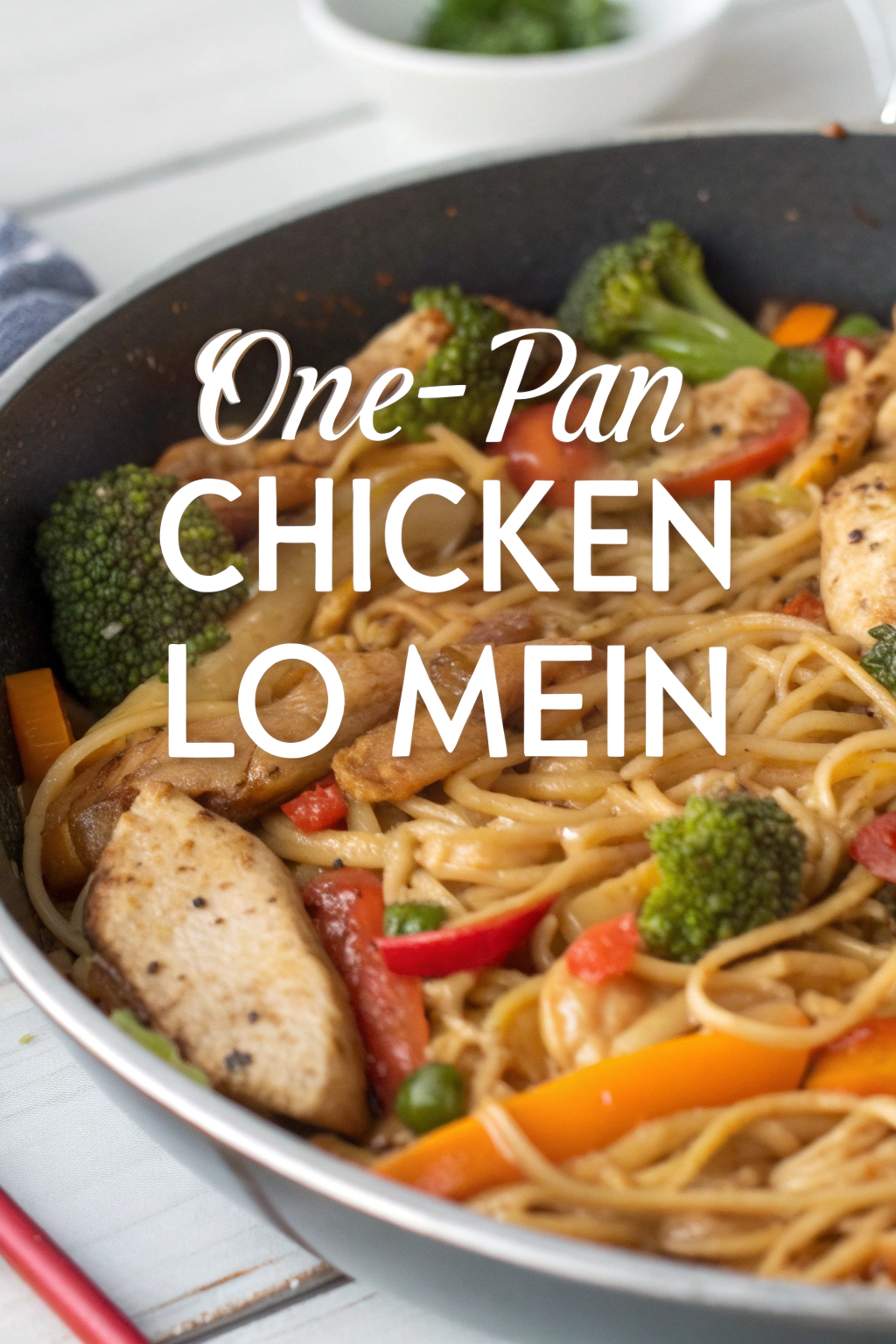
I’ll let you in on a kitchen secret: you don’t need a wok, a lot of equipment, or restaurant training to make a killer lo mein. I learned this trick when I was rushing through grad school dinners — one large skillet, a handful of pantry staples, and a tiny pretend drumroll later, dinner looked like it belonged on a takeout menu. This version packs juicy **chicken**, glossy noodles, crunchy vegetables, and a sauce that clings like a winner’s ribbon. If you love a fast, savory stir-fry that smells like garlic and sesame and still lands on the table in under 30 minutes, you’ll love this one-pan method. Consider this your new weeknight hero.
Quick Facts
- Yield: Serves 4
- Prep Time: 15 minutes
- Cook Time: 15 minutes
- Total Time: 30 minutes
Why This Recipe is Awesome
This One-Pan Chicken Lo Mein gives you glossy, saucy noodles and tender seared chicken with crunchy veggies — all in one skillet. It tastes restaurant-worthy but avoids the takeout waiting game. The noodles soak up a savory-sweet sauce; the garlic and ginger pop aromatically as you cook; the contrast of soft noodles and crisp veggies keeps every bite interesting. It’s simple, forgiving, and so fast you’ll feel like you cheated the clock. Who doesn’t love crispy edges on the chicken and a silky, flavorful sauce?
Ingredients
For the Main Dish:
- 1 lb boneless skinless chicken thighs, cut into bite-size strips (or chicken breasts)
- 8 oz lo mein noodles or spaghetti
- 2 tbsp vegetable oil (or canola)
- 3 cloves garlic, minced
- 1 tbsp fresh ginger, grated
- 1 medium carrot, julienned
- 1 red bell pepper, thinly sliced
- 1 cup snow peas or snap peas, trimmed
- 3 green onions, sliced on the diagonal
For the Sauce / Garnish (if applicable):
- 1/3 cup low-sodium soy sauce
- 2 tbsp oyster sauce (or hoisin for vegetarian)
- 1 tbsp rice vinegar
- 1 tbsp brown sugar or honey
- 1 tsp toasted sesame oil
- 1/2 cup low-sodium chicken broth (or water)
- 1 tsp cornstarch mixed with 1 tbsp cold water (slurry)
- Sesame seeds and extra sliced green onions for garnish (optional)
How I Make It
Step 1:
Boil the noodles according to package directions until just al dente, then drain and toss with a little oil so they don’t clump. While the water heats, season the chicken with a pinch of salt and pepper. Heat a large skillet over medium-high heat and add 1 tbsp oil. When the oil shimmers and smells slightly nutty, add the chicken in a single layer and sear until edges brown, about 3–4 minutes per side. Remove the chicken to a plate — don’t crowd the pan or you’ll steam instead of sear.
Step 2:
Add the remaining 1 tbsp oil to the skillet and toss in the garlic and ginger. Listen for that quick sizzle — the kitchen should smell warm and fragrant in about 20–30 seconds. Add the carrot and bell pepper and stir-fry for 2–3 minutes until they brighten and still have a little snap. If you like softer veggies, give them another minute.
Step 3:
Return the chicken and any juices to the pan. Pour in the sauce (soy, oyster, rice vinegar, brown sugar, sesame oil, and chicken broth). Stir and let the mixture come to a gentle simmer so the aromas lift and the sauce reduces slightly, about 1–2 minutes. Add the cornstarch slurry and stir until the sauce thickens and gleams — it should coat the back of a spoon.
Step 4:
Toss the cooked noodles and snow peas into the skillet. Use tongs to lift and fold everything together so the noodles soak up the sauce and the veggies stay alive with color. You’ll hear soft clinking as noodles tumble and see the sauce turn glossy — that’s your cue. Cook just until the snow peas turn bright green and the noodles feel tender, about 1–2 minutes.
Step 5:
Turn off the heat and fold in the green onions. Taste and add a splash of soy or a pinch of sugar if needed. Plate the lo mein and finish with a sprinkle of sesame seeds and extra green onions. Serve hot so the sauce stays silky and the chicken stays juicy.
Pro Tips
- Cut chicken into evenly sized pieces so everything cooks in the same time. I always slice across the grain for tender bites.
- Don’t overcrowd the pan — cook in batches if needed. A crowded skillet makes boiled, not seared, chicken.
- Make the sauce ahead and taste before adding: adjust with a little more vinegar for brightness or sugar for balance.
- If noodles stick, splash a tablespoon of broth or soy and gently toss — they’ll loosen and re-shine.
Common Mistakes to Avoid
- Skipping preheating: Classic rookie move. It changes texture and bake time.
- Overmixing: Leads to dense or chewy results. Mix until just combined.
- Guessing cook time: Always use visual cues or a timer, not just vibes.
- Overcrowding pans: Give your food some breathing room to crisp properly.
Alternatives & Substitutions
- Swap chicken for 1 lb firm tofu (press and cube) for a vegetarian version; pan-fry until golden to add texture.
- Use tamari or coconut aminos to make it gluten-free; expect a slightly different sweetness and color.
- Substitute oyster sauce with hoisin for a deeper, sweeter flavor; reduce sugar slightly to balance.
- Use whole wheat spaghetti or rice noodles if you can’t find lo mein; rice noodles make it naturally gluten-free.
Variations & Tips
- Spicy kick: add 1 tsp chili-garlic sauce or a pinch of red pepper flakes when you add the sauce.
- Kid-friendly: omit spicy elements and thin the sauce slightly so it’s less intense for picky eaters.
- Veggie-forward: double the vegetables (broccoli, mushrooms, baby corn) and reduce chicken for a lighter meal.
- Peanut twist: stir in 2 tbsp peanut butter with the sauce for a nutty, Thai-inspired spin.
- Sheet-pan variation: roast seasoned chicken and vegetables at 425°F for 15–20 minutes, then toss with noodles and sauce if you prefer oven hands-off cooking.
FAQ (Frequently Asked Questions)
- Can I make this ahead of time?
- Yes! Cook everything and store in an airtight container in the fridge for up to 3 days. Reheat in a skillet over low heat with a splash of broth to revive the sauce and noodles. Avoid the microwave if you want the best texture.
- Can I double the recipe?
- Sure thing. Use a very large skillet or cook in two batches to avoid overcrowding; doubling in a small pan steals browning and crispness.
- Can I substitute butter with oil?
- Technically yes, but you’ll miss that buttery magic. Use ¾ the amount of oil if you swap.
- How do I know it’s done?
- Chicken reaches safe doneness at an internal temperature of 165°F. Visually, look for golden edges and no pink in the center; the sauce should coat the noodles and shine.
- What if I don’t have ingredient X?
- No panic. Swap oyster sauce with hoisin, use chicken broth or water for liquid, or replace fresh ginger with ½ tsp ground ginger in a pinch.
How I Like to Serve It
I love this lo mein piled onto warm plates with extra green onions on top and a wedge of lime for brightening. It works for a cozy weeknight dinner, a casual potluck, or a lazy Sunday meal-prep batch. Pair it with a simple cucumber salad or steamed dumplings and a cold beer or jasmine tea — it feels at-home and a little indulgent at the same time.
Notes
- Store leftovers in an airtight container for up to 3 days. Reheat gently in a skillet with a splash of broth to refresh the texture.
- Safe cooking temp for chicken: 165°F. Use an instant-read thermometer if you want perfect confidence.
Final Thoughts
Closing: Now go impress someone — or just yourself — with your homemade One-Pan Chicken Lo Mein. It’s quick, comforting, and ridiculously satisfying.

Hi, I’m Lina, the creator of Lina Easy Recipes.Cooking has always been my passion, and I love sharing simple, homemade dishes that anyone can prepare.
Love What You See?
Join me on Pinterest and Facebook for daily cooking inspiration, new recipe ideas, and behind-the-scenes kitchen stories. Let’s cook something wonderful together!