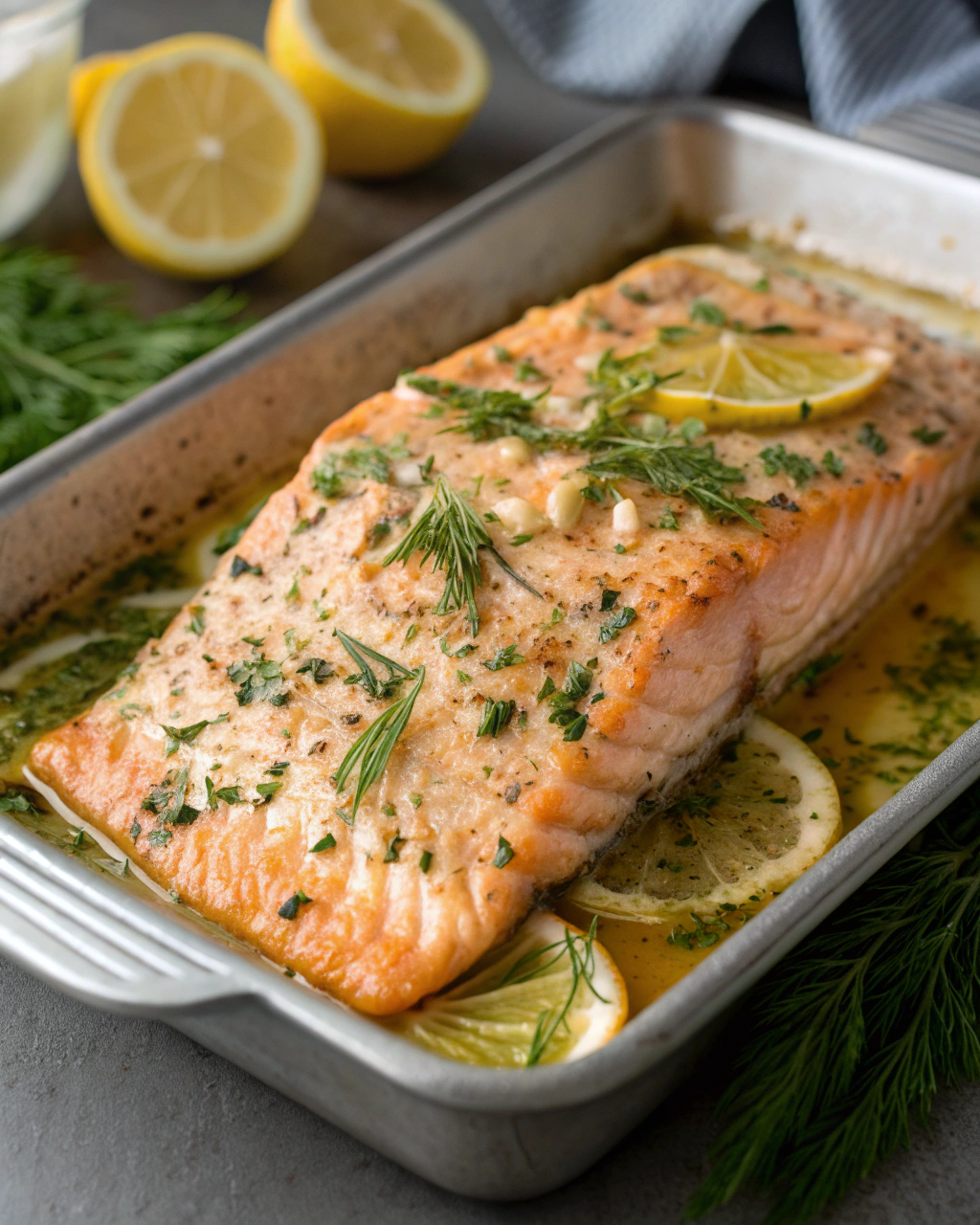
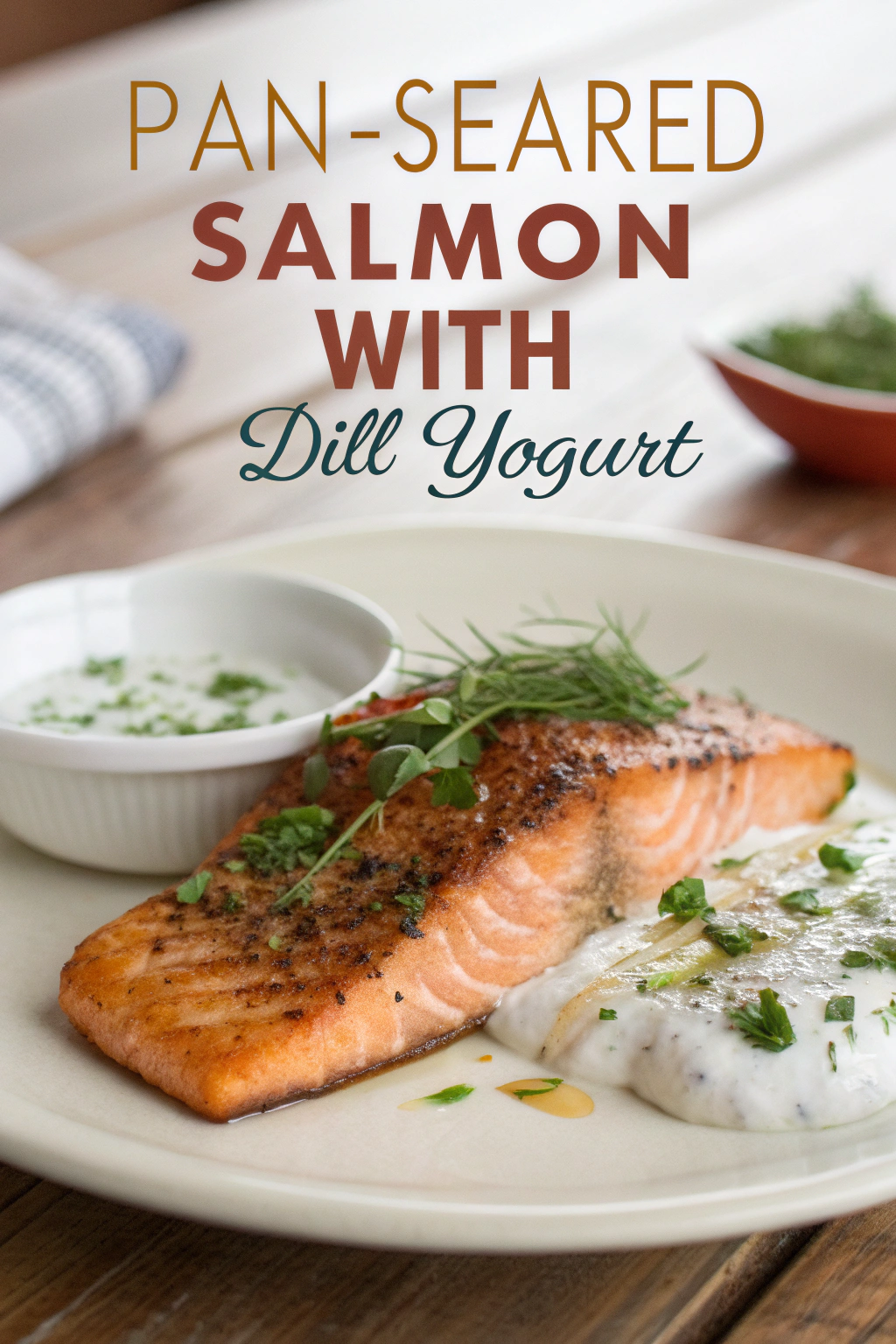
Chef’s Secret: Okay, lean in — I’m about to tell you something my old line cook swore by: the easiest way to make restaurant-style salmon at home doesn’t involve crazy marinades or fancy gadgets. Heat, salt, and timing do the heavy lifting. I keep a shallow, heavy pan on high heat until it just begins to smoke, then I let the salmon sing in the oil. You’ll get that crackly, golden edge, and a tender, almost buttery center. This dill-yogurt sauce? It’s basically the cool, tangy sidekick that brightens every bite. Trust me — it feels fancy but comes together faster than your takeout order.
Quick Facts
- Yield: Serves 2
- Prep Time: 10 minutes
- Cook Time: 10 minutes
- Total Time: 20 minutes
Why This Recipe is Awesome
This recipe delivers crisp, golden edges and a silky, flaky center — hello, texture contrast! The pan-sear adds that toasty, slightly nutty aroma, while the bright, herby dill yogurt cools everything down with a lemony zing. It’s fast, forgiving, and fancy enough for guests. Plus, it’s so easy even your most kitchen-shy friend can pull it off. Who doesn’t love a dinner that looks and smells like you spent hours, but really took twenty minutes?
Ingredients
For the Main Dish:
- 1 lb salmon (about 2 fillets, skin-on if possible, 6–8 oz each)
- 1 tsp kosher salt (plus more to taste)
- ½ tsp black pepper
- 1 tbsp olive oil
- 1 tbsp butter (optional, for finishing)
- 1 clove garlic, minced
- 1 lemon (zest and 1 tbsp juice, plus wedges for serving)
For the Sauce / Garnish (Dill Yogurt):
- ½ cup plain Greek yogurt (full-fat or 2%)
- 2 tbsp fresh dill, finely chopped
- 1 tsp Dijon mustard
- 1 tsp honey (or maple syrup)
- 1 tbsp lemon juice
- Salt and pepper to taste
- Optional: ¼ cup finely diced cucumber for crunch
How I Make It
Step 1:
Pat the salmon dry with paper towels — moisture prevents a crisp sear. Season both sides with 1 tsp kosher salt and ½ tsp black pepper. While you do this, whisk the sauce: combine ½ cup Greek yogurt, 2 tbsp chopped dill, 1 tsp Dijon, 1 tsp honey, and 1 tbsp lemon juice. Taste and adjust. The sauce should taste bright and tangy; if it tastes flat, add a pinch more salt or a squeeze of lemon.
Step 2:
Heat a heavy skillet (cast iron or stainless steel) over medium-high until it’s shimmering. Add 1 tbsp olive oil. You want the oil just starting to ripple — it should smell warm and faintly fruity, not burnt. Carefully place the salmon in the pan, skin-side down if it has skin. Press gently with a spatula for the first 10 seconds to keep the skin flat against the pan.
Step 3:
Sear the salmon without moving it. Listen for a steady sizzle and watch for the color to shift up the fillet. For a ¾–1 inch fillet, cook 4–5 minutes skin-side down until the edges turn golden-brown and crisp. The skin should release easily from the pan when ready. Flip and add 1 tbsp butter and the minced garlic to the pan — spoon the melted butter over the top to baste. Cook another 1–2 minutes for medium-rare, or until the center looks opaque and flakes easily.
Step 4:
Use visual cues: look for a translucent strip shrinking toward the center, and test with a fork — the fish should flake but still feel juicy. If you prefer a precise temp, aim for 125–130°F for medium-rare or 145°F for well-done (USDA recommends 145°F). Remove from the heat and let the salmon rest for a minute; carryover heat finishes the cooking and keeps it tender.
Step 5:
Plate the salmon, spoon a generous dollop of the dill yogurt alongside, and finish with lemon zest and wedges. Sprinkle extra dill or a drizzle of olive oil if you’re feeling fancy. The cool, creamy sauce contrasts the warm, crisp fish — that first bite should be bright, tangy, and buttery.
Pro Tips
- Bring the salmon to room temperature for 10–15 minutes before cooking so it sears evenly.
- Use a heavy-bottomed pan and don’t crowd it — give each fillet breathing room to crisp.
- If your salmon sticks, it isn’t ready to flip. Give it another minute; it will release when the crust forms.
- For extra flavor, finish with a pat of butter and a quick spoon-baste — it adds glossy, nutty flavor.
Common Mistakes to Avoid
- Skipping preheating: Classic rookie move. It changes texture and bake time.
- Overmixing: Leads to dense or chewy results. Mix until just combined.
- Guessing cook time: Always use visual cues or a timer, not just vibes.
- Overcrowding pans: Give your food some breathing room to crisp properly.
Alternatives & Substitutions
- Swap salmon for trout or steelhead for a similar texture and flavor.
- Use olive oil only if you prefer dairy-free; the finish will taste lighter and less rich.
- Replace Greek yogurt with plain dairy-free yogurt for a vegan-friendly sauce; expect a slightly thinner texture.
- For a lower sodium option, reduce the salt and add a squeeze of lemon at the end to brighten flavors.
Variations & Tips
- Spicy: Add ½ tsp smoked paprika and a pinch of cayenne to the rub for heat and smoke.
- Kid-friendly: Omit garlic and serve the sauce plain with lemon on the side.
- Herby twist: Swap dill for chopped tarragon or parsley for a different herbal note.
- Summer crunch: Fold ¼ cup diced cucumber and a little mint into the yogurt for a tzatziki-like twist.
- Sheet-pan version: Roast salmon at 425°F for 10–12 minutes if you prefer hands-off cooking.
- Creative twist: Brush a thin layer of honey-mustard on top before searing for a caramelized glaze.
FAQ (Frequently Asked Questions)
- Can I make this ahead of time?
- Yes! Make the dill yogurt up to 24 hours ahead; cover and chill. Cook the salmon just before serving for best texture. Reheat gently in a 300°F oven for 6–8 minutes or pop under a hot broiler for a minute to revive the crust.
- Can I double the recipe?
- Sure thing. Use a larger pan or two pans to avoid crowding. Cook in batches so each fillet gets proper sear time.
- Can I substitute butter with oil?
- Technically yes, but you’ll miss that buttery magic. Use ¾ the amount of oil and finish with a small knob of butter if you can—that last-minute butter gives a richer mouthfeel.
- How do I know it’s done?
- Look for golden, crisp edges and a center that flakes with a fork but still looks moist. For accuracy, check with a thermometer: 125–130°F for medium-rare, 145°F for fully cooked.
- What if I don’t have ingredient X?
- No panic: swap fresh dill for 1 tsp dried dill (use slightly less), Dijon with a quick mash of mustard powder and a drizzle of vinegar, or honey with maple syrup or a pinch of sugar.
How I Like to Serve It
I love this salmon over a pile of buttered couscous or simple greens dressed with lemon and olive oil. On weeknights, I pair it with roasted asparagus or a crisp salad. For guests, serve on a wooden board with lemon wedges and extra yogurt in a pretty bowl — it feels elegant but stays relaxed. This dish works great for spring and summer when dill and lemons shine.
Notes
- Store leftovers in an airtight container for up to 2 days. Reheat gently to avoid drying out.
- Safe cooking temp note: USDA recommends cooking fish to 145°F, but many cooks prefer salmon at 125–130°F for a moister result.
Final Thoughts
Closing: Now go impress someone — or just yourself — with your homemade masterpiece!

Hi, I’m Lina, the creator of Lina Easy Recipes.Cooking has always been my passion, and I love sharing simple, homemade dishes that anyone can prepare.
Love What You See?
Join me on Pinterest and Facebook for daily cooking inspiration, new recipe ideas, and behind-the-scenes kitchen stories. Let’s cook something wonderful together!