
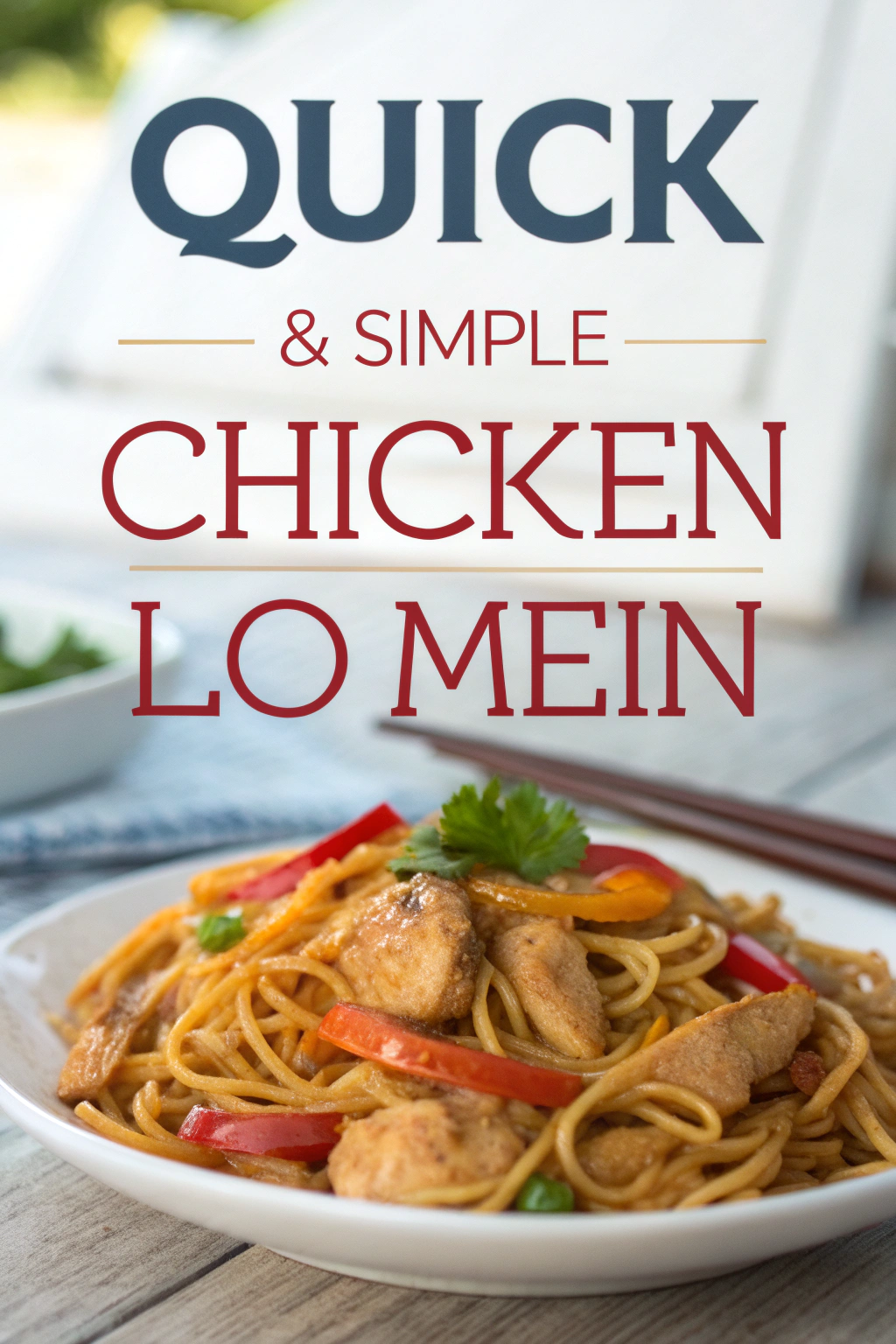
Want to hear a kitchen secret that tastes like takeout but takes under 30 minutes? I’ll let you in: the trick to restaurant-style lo mein isn’t a mysterious sauce or fancy equipment — it’s all about timing, high heat, and a quick cornstarch slurry that gives the sauce that glossy cling everyone raves about. I discovered this after burning a dozen attempts and learning when to toss the noodles so they soak up flavor without going soggy. In this recipe I show you how to get glossy, slightly chewy noodles, juicy strips of **chicken**, and vegetables that still snap when you bite. If you love bold flavors and crunchy textures, this little secret will become your weeknight MVP.
Quick Facts
- Yield: Serves 4
- Prep Time: 15 minutes
- Cook Time: 10 minutes
- Total Time: 25 minutes
Why This Recipe is Awesome
This Quick & Simple Chicken Lo Mein tastes like the good kind of takeout but actually arrives faster and fresher. You get glossy, savory sauce that coats every noodle, tender **chicken** with golden edges, and vegetables that still have snap and color. It’s forgiving, fast, and flexible — perfect for busy weeknights when you crave comfort without fuss. Also? It smells amazing: garlic and ginger hitting hot oil gives your kitchen that irresistible, “what’s for dinner?” aroma. It’s so easy even your busiest self can pull it off.
Ingredients
For the Main Dish:
- 8 oz package **lo mein noodles** or spaghetti (fresh or dried)
- 1 lb boneless, skinless **chicken breasts**, thinly sliced against the grain
- 2 tbsp cornstarch
- 1 tsp salt
- 1/2 tsp black pepper
- 2 tbsp vegetable oil (or canola)
- 2 cloves **garlic**, minced
- 1 tbsp fresh **ginger**, grated
- 1 medium **carrot**, julienned or thinly sliced (about 1 cup)
- 1 red **bell pepper**, thinly sliced (about 1 cup)
- 2 cups shredded **green cabbage** (or Napa cabbage)
- 3 scallions, sliced on the bias
For the Sauce / Garnish (if applicable):
- 3 tbsp **soy sauce** (use low-sodium if preferred)
- 1 tbsp **oyster sauce** (optional for depth)
- 1 tbsp **sesame oil**
- 2 tbsp hoisin sauce or 1 tbsp brown sugar (for a touch of sweetness)
- 3 tbsp water
- 1 tsp cornstarch (for slurry)
- Sesame seeds for garnish (optional)
How I Make It
Step 1:
Start by tossing the thinly sliced **chicken** with 2 tbsp cornstarch, 1 tsp salt, and 1/2 tsp black pepper. This light coating puckers the surface and gives the chicken a silky bite. Boil the noodles according to package directions but undercook them by about 1 minute — they’ll finish in the pan and stay chewy instead of mushy. Drain and toss with a drizzle of oil so they don’t stick.
Step 2:
Heat a large skillet or wok over high heat until it starts to shimmer, about medium-high to high. Add 2 tbsp vegetable oil and let it get hot — you want that quick sizzle when the chicken hits the pan. Add the chicken in a single layer and sear for 2–3 minutes per side until golden at the edges and just cooked through. Remove the chicken and set it aside; it will finish cooking when everything reunites.
Step 3:
In the same hot pan, add a splash more oil if needed and toss in **garlic** and **ginger**. Let them sizzle for 20–30 seconds until fragrant and the kitchen fills with that warm, spicy aroma. Add **carrot** and **bell pepper** and stir-fry for about 2 minutes so they keep some crunch and vibrant color. Then throw in the cabbage and stir for another minute — you want sound and snap, not limp mush.
Step 4:
Mix the sauce: in a small bowl whisk 3 tbsp soy sauce, 1 tbsp oyster sauce (if using), 1 tbsp sesame oil, 2 tbsp hoisin or 1 tbsp brown sugar, and 3 tbsp water. Whisk 1 tsp cornstarch into the sauce until smooth. Add the noodles and chicken back to the pan, pour the sauce over, and toss vigorously for 1–2 minutes. The sauce will thicken and become glossy, coating every noodle.
Step 5:
Finish with sliced **scallions** and a sprinkle of sesame seeds. Taste and adjust with a splash more soy if you want salt, or a squeeze of lime for brightness. Serve immediately while the noodles still have that slightly chewy texture and the edges of the chicken stay golden.
Pro Tips
- Use a very hot pan. High heat gives you quick sear and flavor without overcooking the chicken.
- Slice the chicken thin across the grain for tender bites that chew easily.
- If you don’t have lo mein noodles, use spaghetti — cook it al dente and treat it the same.
- Make the sauce ahead and keep it in the fridge for quick weeknight assembly.
Common Mistakes to Avoid
- Skipping preheating: Classic rookie move. It changes texture and bake time.
- Overmixing: Leads to dense or chewy results. Mix until just combined.
- Guessing cook time: Always use visual cues or a timer, not just vibes.
- Overcrowding pans: Give your food some breathing room to crisp properly.
Alternatives & Substitutions
- Chicken ↔ **Tofu**: Use firm tofu pressed and cubed; fry until edges brown. Texture becomes firmer and dish becomes vegetarian.
- Soy sauce ↔ **Tamari** (gluten-free): Keeps the flavor but removes gluten.
- Hoisin or brown sugar ↔ **maple syrup**: A natural sweet swap with a slightly different flavor profile.
- Sesame oil is strong; use half for a lighter sesame note or omit for a neutral flavor (dairy-free naturally).
Variations & Tips
- Spicy: Add 1–2 tsp chili garlic sauce or a few dashes of sriracha to the sauce.
- Kid-friendly: Cut bell pepper small and reduce ginger for milder flavor.
- Veg-forward: Double the veggies and swap chicken for extra tofu or edamame.
- One-pan dinner: Use a wide skillet so everything cooks together and clean-up stays minimal.
- Creative twist: Finish with a drizzle of peanut butter thinned with warm water for a Thai-inspired peanut lo mein.
FAQ (Frequently Asked Questions)
- Can I make this ahead of time?
- Yes! Cook noodles and chicken separately and refrigerate for up to 2 days. Reheat in a hot skillet with a splash of water or broth, tossing to revive the sauce. Avoid microwaving for long periods; it makes noodles gummy.
- Can I double the recipe?
- Sure thing. Use a very large wok or two pans so you don’t overcrowd. Cook in batches to maintain high heat and proper sear.
- Can I substitute butter with oil?
- Technically yes, but you’ll miss that buttery magic. Use ¾ the amount of oil if swapping, or finish with a tiny pat of butter off-heat for richness.
- How do I know it’s done?
- Chicken should show no pink inside and feel springy; juices run clear. Noodles should remain slightly chewy (al dente) and the sauce should shine and cling to each strand.
- What if I don’t have ingredient X?
- Swap **oyster sauce** with extra soy + a pinch of sugar, or replace fresh ginger with 1/4 tsp ground ginger in a pinch. Use what you have — flavor adjusts nicely.
How I Like to Serve It
I plate this lo mein in shallow bowls with extra sliced scallions and a wedge of lime on the side. Pair it with steamed broccoli or a quick cucumber salad for freshness. It works as a weeknight comfort meal, a casual dinner for friends, or a potluck standout — you can keep it warm in a low oven for a bit if needed.
Notes
- Store leftovers in an airtight container in the fridge for up to 3 days. Reheat in a skillet with a splash of water to loosen the sauce.
- Safe cooking temp for chicken: 165°F. Check with an instant-read thermometer if unsure.
Final Thoughts
Closing: Now go impress someone — or just yourself — with your homemade masterpiece!

Hi, I’m Lina, the creator of Lina Easy Recipes.Cooking has always been my passion, and I love sharing simple, homemade dishes that anyone can prepare.
Love What You See?
Join me on Pinterest and Facebook for daily cooking inspiration, new recipe ideas, and behind-the-scenes kitchen stories. Let’s cook something wonderful together!