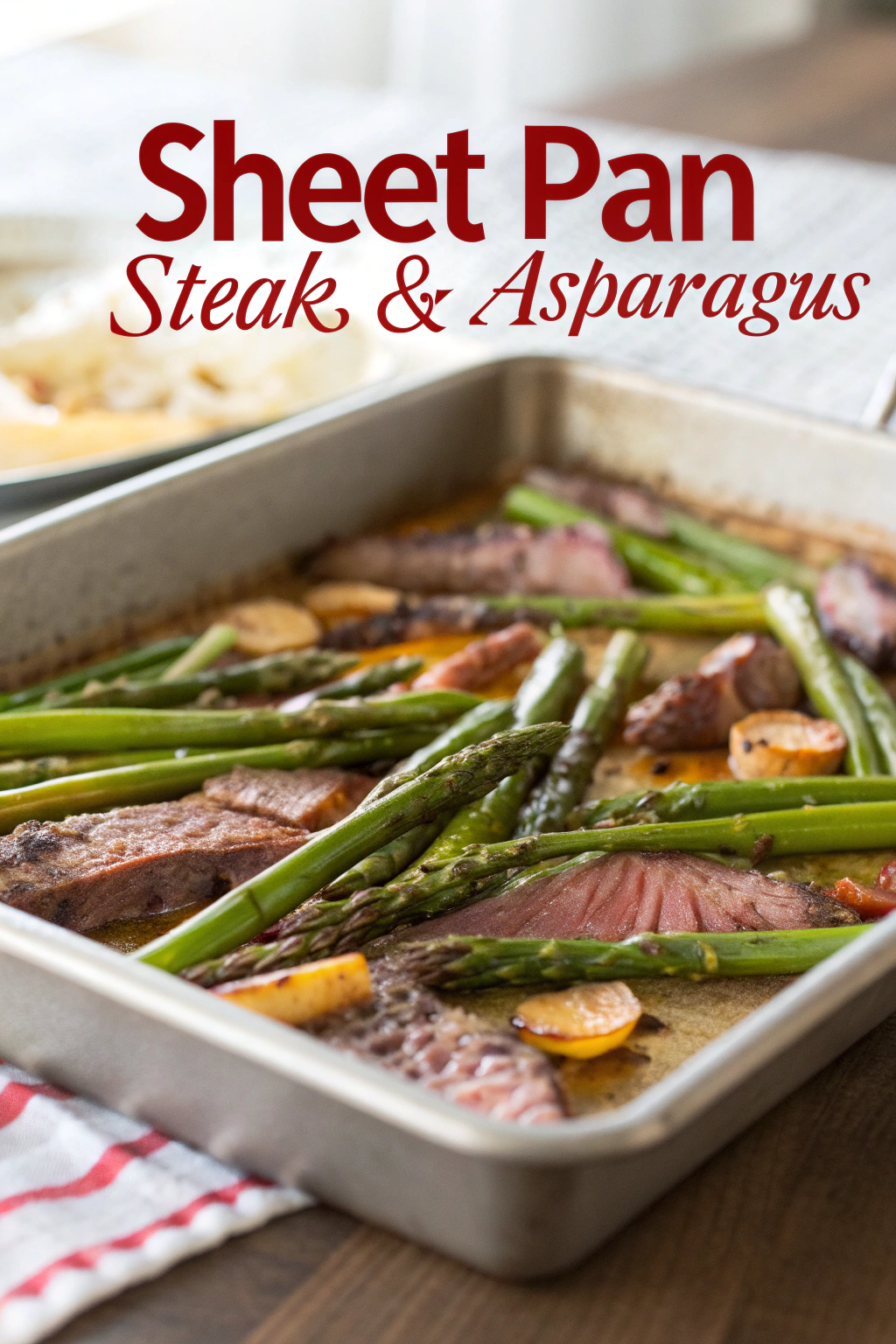
Okay, let me tell you a little kitchen secret I stole from a restaurant friend: you don’t need a grill or a cast-iron pan to get a steak with a crust that sings. I learned that the trick lives in the oven — high heat, a roomy sheet pan, and timing everything so the asparagus and steak finish together. This recipe feels like a shortcut to dinner-night glory: a sizzling sheet pan, the smell of garlic and browned meat, and bright, crisp-green asparagus that snaps when you bite it. Follow my steps and I’ll show you how to get a steak that’s juicy in the middle and veggies that still have bite, all with minimal fuss and maximum flavor.
Quick Facts
- Yield: Serves 3–4
- Prep Time: 10 minutes
- Cook Time: 12–15 minutes (plus 5–10 minutes rest)
- Total Time: 25 minutes
Why This Recipe is Awesome
This is one-pan weeknight magic: the steak develops a savory crust while the asparagus roasts to bright green perfection. The kitchen fills with that mouthwatering meaty aroma and the citrus-garlic finish brightens every bite. It’s fast, forgiving, and so simple that your oven basically does the heavy lifting. Who doesn’t love crispy edges on the asparagus and a juicy center on the steak?
Ingredients
For the Main Dish:
- 1½ lb flank or skirt steak (about 1–1.5 inches thick)
- 1 lb asparagus, woody ends trimmed
- 2 tbsp olive oil, plus extra for drizzling
- 3 cloves garlic, minced
- 1 tsp kosher salt
- ½ tsp black pepper, freshly ground
- 1 tsp smoked paprika (optional, for a smoky note)
- 1 tbsp soy sauce or Worcestershire sauce (for umami)
- 2 tbsp unsalted butter (for finishing)
- 1 lemon, zested and juiced
For the Sauce / Garnish (optional):
- 2 tbsp chopped parsley
- 1 tsp honey or maple syrup (balances the lemon)
- Pinch of red pepper flakes (if you like heat)
How I Make It
Step 1:
Preheat the oven to 425°F. Pat the steak dry with paper towels — dryness gives you a better crust. Toss the asparagus in a bowl with 1 tablespoon olive oil, a pinch of salt, and a little black pepper. Mix the minced garlic with the remaining olive oil, soy sauce, smoked paprika, and rub that all over the steak. Let it sit on the counter while the oven heats; that short rest helps the steak come up just a touch toward room temp for even cooking.
Step 2:
Lay a rimmed sheet pan on the counter and drizzle with a little oil so the steak won’t stick. Place the steak on one side of the pan and spread the asparagus in a single layer on the other side — the key is breathing room so things roast instead of steam. Slide the pan into the oven and roast for 8 minutes.
Step 3:
After 8 minutes, flip the steak and gently toss the asparagus so the thinner ends get the heat. Return the pan to the oven and roast for another 4–7 minutes, depending on your steak thickness and how you like it: aim for about 125°F internal for rare, 130–135°F for medium-rare, and 140°F to touch toward medium. Use an instant-read thermometer — it saves dinner-night panic.
Step 4:
When the steak hits your target temp, pull the pan out and immediately top the steak with the butter, a squeeze of lemon juice, and a sprinkle of lemon zest. Let the butter melt and spoon it over the meat; the citrus cuts through the fat and brightens the whole plate. Rest the steak for 5–10 minutes before slicing — resting lets the juices redistribute so every slice stays juicy.
Step 5:
Slice the steak thinly against the grain and toss the asparagus with the optional parsley, honey, and red pepper flakes if you want a sweet-spicy lift. Serve the steak over the asparagus or off to the side, spooning any pan juices and that lemon-butter over everything for glossy, savory goodness.
Pro Tips
- Buy a 1–1.5 inch thick steak for predictable cook times. Thinner steaks cook too fast and can dry out.
- Use an instant-read thermometer and pull the steak 5°F below your desired temp; carryover heat finishes it while it rests.
- If your asparagus varies in thickness, stagger thicker stalks to the hotter side of the pan or cut very thick stalks in half lengthwise for even cooking.
- Want a charred exterior? Broil for the last 30–60 seconds but watch closely — broilers burn quickly.
Common Mistakes to Avoid
- Skipping preheating: Classic rookie move. It changes texture and bake time.
- Overmixing: Leads to dense or chewy results. Mix until just combined.
- Guessing cook time: Always use visual cues or a timer, not just vibes.
- Overcrowding pans: Give your food some breathing room to crisp properly.
Alternatives & Substitutions
- Swap flank steak for sirloin or hanger steak — hanger gives a similar bold flavor; sirloin stays tender for a bit more forgiving cook.
- Use olive oil instead of butter for a dairy-free finish; you’ll lose some richness but gain a lighter note.
- Replace soy sauce with coconut aminos for gluten-free and lower-sodium option.
- Make it vegetarian: roast thick sliced portobello mushrooms in place of steak; they give a meaty texture and soak up the marinade beautifully.
Variations & Tips
- Spicy twist: add 1 tsp chili powder and a pinch of cayenne to the steak rub.
- Herby: swap parsley for chopped tarragon or basil in the garnish for a fresh finish.
- Kid-friendly: skip the red pepper flakes and cut the steak into strips before resting so kids can grab and go.
- Make it smoky: add 1 tsp smoked paprika or finish with a drizzle of liquid smoke for a BBQ vibe.
- Creative twist: top sliced steak with quick-pickled red onions (thinly sliced red onion, 2 tbsp vinegar, 1 tsp sugar) for tang and color.
FAQ (Frequently Asked Questions)
- Can I make this ahead of time?
- Yes! Marinate the steak up to 24 hours and keep the asparagus separate. Roast everything the day you plan to serve for best texture. Store cooked leftovers in an airtight container up to 3 days and reheat gently in a 350°F oven until warm to avoid drying the steak.
- Can I double the recipe?
- Sure thing. Use two sheet pans rather than crowding one; rotate pans halfway through if your oven has hot spots.
- Can I substitute butter with oil?
- Technically yes, but you’ll miss that buttery magic. Use ¾ the amount of oil.
- How do I know it’s done?
- Look for a browned, slightly crusty exterior and use an instant-read thermometer: 130–135°F for medium-rare. The asparagus should be bright green with slightly charred tips and still a little snap.
- What if I don’t have ingredient X?
- Out of lemon? Use a splash of vinegar (white wine or apple cider) to add brightness. No soy sauce? Use a pinch of salt and a splash of Worcestershire.
How I Like to Serve It
I serve this with buttery mashed potatoes on cozy nights or with a simple herbed couscous for something lighter. It shines at a casual dinner party because everyone loves meat and you can prep most of it ahead. For drinks, a medium-bodied red like a Malbec or a chilled Sauvignon Blanc for folks who prefer white pairs beautifully.
Notes
- Store leftovers in the fridge for up to 3 days. Reheat gently in a 350°F oven or slice thin and warm in a skillet with a splash of broth.
- Safe cooking temps: steak is safe to eat at lower temps if you prefer (e.g., 130–135°F for medium-rare), but always use a reliable thermometer for accuracy.
Final Thoughts
Closing: You just turned a simple sheet pan into a dinner that looks and tastes like you worked harder than you did — now go impress someone — or just yourself — with your homemade masterpiece!

Hi, I’m Lina, the creator of Lina Easy Recipes.Cooking has always been my passion, and I love sharing simple, homemade dishes that anyone can prepare.
Love What You See?
Join me on Pinterest and Facebook for daily cooking inspiration, new recipe ideas, and behind-the-scenes kitchen stories. Let’s cook something wonderful together!