
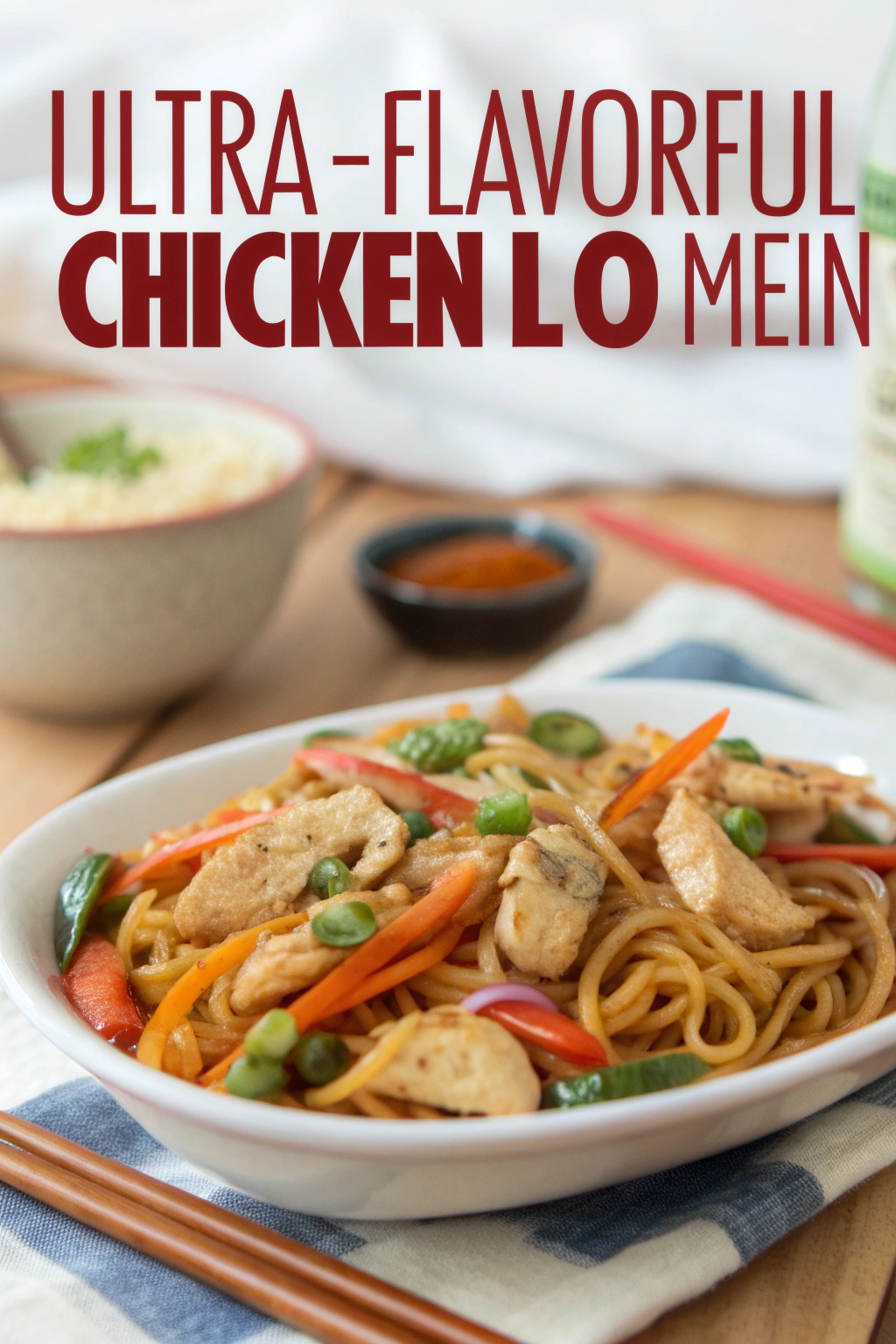
I’m about to spill a tiny kitchen secret: the trick that makes restaurant-style lo mein sing. I learned it working a busy weeknight line—tiny changes, big payoff—so this recipe reads like a backstage pass. I’ll show you how a quick cornstarch toss, a kiss of sesame oil, and a fast, furious stir-fry turn humble noodles and chicken into something glossy, chewy, and wildly comforting. Follow my timing and you’ll get glossy sauce clinging to each strand, bright-crisp vegetables, and chicken that stays tender instead of drying out. Ready for the pro move that makes everyone ask, “Where did you learn to cook like this?”
Quick Facts
- Yield: Serves 4
- Prep Time: 15 minutes
- Cook Time: 15 minutes
- Total Time: 30 minutes
Why This Recipe is Awesome
This version of chicken lo mein hits all the notes: glossy sauce that clings like a hug, chewy noodles with a little bite, and pockets of crunchy, colorful vegetables. It’s fast enough for weekday dinners, forgiving if you swap ingredients, and so easy even your takeout-app will feel jealous. The textures jump—the snap of snow peas, the tender chicken, the silky noodles—and the sauce balances salty, sweet, and toasty sesame notes. Who doesn’t love a one-wok flavor party?
Ingredients
For the Main Dish:
- 8 oz fresh or dried lo mein noodles (or spaghetti)
- 1 lb boneless skinless chicken breasts or thighs, thinly sliced against the grain
- 1 tbsp cornstarch (for chicken toss)
- 2 tbsp vegetable oil, divided
- 2 cloves garlic, minced
- 1 tbsp fresh ginger, grated
- 1 medium carrot, julienned (about 1 cup)
- 1 bell pepper (red or yellow), thinly sliced
- 1 cup shredded cabbage or bok choy
- 1 cup snow peas or snap peas
- 3 stalks green onions, sliced on bias
For the Sauce / Garnish (if applicable):
- 3 tbsp low-sodium soy sauce (or tamari for gluten-free)
- 1 tbsp oyster sauce (optional, adds depth)
- 1 tbsp rice vinegar or apple cider vinegar
- 1 tbsp honey or brown sugar
- 1 tsp toasted sesame oil
- 1 tsp cornstarch mixed with 2 tbsp cold water (slurry)
- Freshly ground black pepper, to taste
- Sesame seeds, for garnish (optional)
How I Make It
Step 1:
I start by prepping everything—this dish moves fast. Bring a pot of water to a rolling boil and cook the noodles according to package directions until just al dente, 1–2 minutes less than fully done. Drain and toss with a drizzle of sesame oil to keep them from sticking. While the noodles boil, toss the thinly sliced chicken with 1 tbsp cornstarch and a pinch of salt; that cornstarch gives the chicken a silky coating that locks in juices and helps the sauce cling.
Step 2:
Whisk together the sauce: 3 tbsp soy sauce, 1 tbsp oyster sauce (if using), 1 tbsp rice vinegar, and 1 tbsp honey. Add the cornstarch slurry but hold it back until later. Heat a large wok or skillet over high heat until it smokes just a touch—this is where flavor happens. Add 1 tbsp vegetable oil.
Step 3:
Slide the chicken into the hot pan in a single layer and let it sear without moving for about 1 minute, then stir-fry until nearly cooked through, about 2–3 minutes. You want slightly golden edges and juicy centers. Transfer the chicken to a plate. In the same pan add the remaining 1 tbsp oil, then the garlic and ginger—listen for that sizzle and inhale the toasty aroma. Stir in the carrots, bell pepper, and cabbage and stir-fry for about 2 minutes until bright and slightly tender.
Step 4:
Return the chicken to the pan along with the drained noodles. Pour the prepared sauce over everything and toss vigorously so the sauce coats every strand—use tongs or two spatulas and a little elbow grease. When the sauce starts to thicken, add the cornstarch slurry and stir until glossy, about 30–60 seconds. Finish with the snow peas and green onions so they stay crisp-tender and bright green.
Step 5:
Taste and adjust with more soy or a splash of vinegar for brightness. Plate the lo mein while it’s hot and shimmering, sprinkle with sesame seeds, and add an extra drizzle of toasted sesame oil if you want that nutty hit. Serve immediately—this dish delights with steam rising, noodles clinging to sauce, and a chorus of textures.
Pro Tips
- Cut the chicken thin and against the grain so bites shred slightly and stay tender when you chew.
- Use a very hot pan and don’t overcrowd it—work in batches if necessary to get those golden edges.
- If you want an even silkier chicken, add a tiny pinch of baking soda to the chicken toss (about 1/8 tsp) and marinate 10 minutes; rinse quickly if desired and pat dry before cooking.
- Save the cornstarch slurry until the end—adding it too early can over-thicken the sauce and make it gluey.
Common Mistakes to Avoid
- Skipping preheating: Classic rookie move. It changes texture and bake time.
- Overmixing: Leads to dense or chewy results. Mix until just combined.
- Guessing cook time: Always use visual cues or a timer, not just vibes.
- Overcrowding pans: Give your food some breathing room to crisp properly.
Alternatives & Substitutions
- Swap chicken for firm tofu (press, cube, and pan-fry) for a vegetarian option; the texture becomes chewier and soaks up sauce beautifully.
- Use tamari or coconut aminos to make it gluten-free — flavor stays, salt level changes slightly (taste and adjust).
- If you don’t have oyster sauce, add a splash more soy and ½ tsp fish sauce or Worcestershire for depth.
- For dairy-free: the whole recipe already avoids dairy; keep sesame oil and soy sauce as flavor anchors.
Variations & Tips
- Spicy twist: add 1 tbsp chili garlic sauce or a pinch of red pepper flakes with the sauce.
- Kid-friendly: omit oyster sauce and dial back vinegar; add extra carrots and snap peas for sweetness.
- Crunchy finish: toss in roasted cashews or chopped peanuts right before serving.
- Bright herb twist: finish with fresh cilantro and a squeeze of lime for a tangy edge.
- Seafood swap: use shrimp (cook 1–2 minutes per side) instead of chicken for a lighter version.
- Creative twist: stir in a small spoon of Chinese black bean paste for smoky umami notes if you want something bold.
FAQ (Frequently Asked Questions)
- Can I make this ahead of time?
- Yes! Prep the vegetables and slice the chicken a day ahead. Cook the full recipe, cool to room temperature, and refrigerate up to 2 days. Reheat in a hot skillet with a splash of water or broth so noodles loosen; avoid the microwave if you want the best texture.
- Can I double the recipe?
- Sure thing. Use a very large wok or two pans and cook in batches so you don’t steam the ingredients—keeping heat high matters when you scale up.
- Can I substitute butter with oil?
- Technically yes, but you’ll miss that buttery magic. Use ¾ the amount of oil.
- How do I know it’s done?
- Look for golden edges on the chicken and slightly translucent noodles that still have a chew. Vegetables should remain bright and slightly crisp. Chicken should reach a safe temp of 165°F.
- What if I don’t have ingredient X?
- Swap pantry staples: no rice vinegar? Use apple cider vinegar. No oyster sauce? Add a touch of fish sauce or extra soy and sugar. No fresh ginger? Use ½ tsp ground ginger but add it earlier.
How I Like to Serve It
I love this lo mein on a hectic weeknight with simple cucumber pickles on the side and a cold lager. It also shines at potlucks—bring it in a wide dish and keep a bowl of extra soy and chili sauce nearby. In winter, I pair it with hot green tea; in summer, a crisp white wine works wonders. It’s flexible, unfussy, and always a crowd-pleaser.
Notes
- Store leftovers in an airtight container up to 2 days. Reheat in a skillet with a splash of water to avoid dryness.
- Safe internal temp for chicken: 165°F. Use an instant-read thermometer if unsure.
Final Thoughts
Closing: Now go impress someone — or just yourself — with your homemade masterpiece!

Hi, I’m Lina, the creator of Lina Easy Recipes.Cooking has always been my passion, and I love sharing simple, homemade dishes that anyone can prepare.
Love What You See?
Join me on Pinterest and Facebook for daily cooking inspiration, new recipe ideas, and behind-the-scenes kitchen stories. Let’s cook something wonderful together!